


Trip Duration
17 Days
Group Sizes
1-16 People
Transportation
Land Transportation
Destination
Nepal
Max. Altitude
3,840m. / 12,598ft.
Activities
- Trekking

Difficulty
Difficult
Meals
- 16 Breakfast
- 15 Lunch
- 15 Dinner

Accommodation
- Hotel
- Guest House
Trip Highlights
- Discover the historic royal and religious heritage of the medieval town Lo-Manthang within its fortress walls.
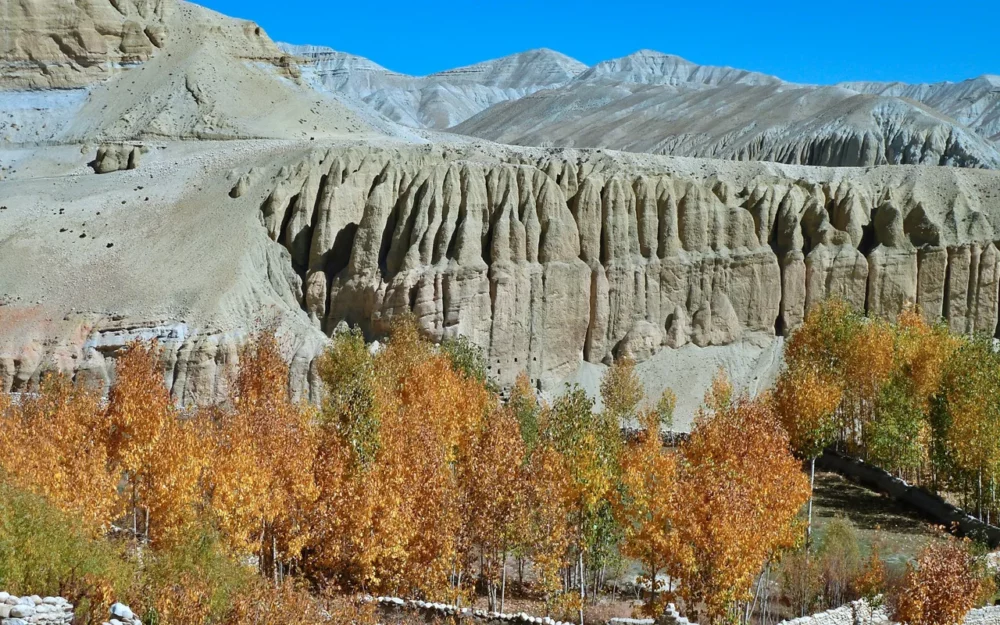
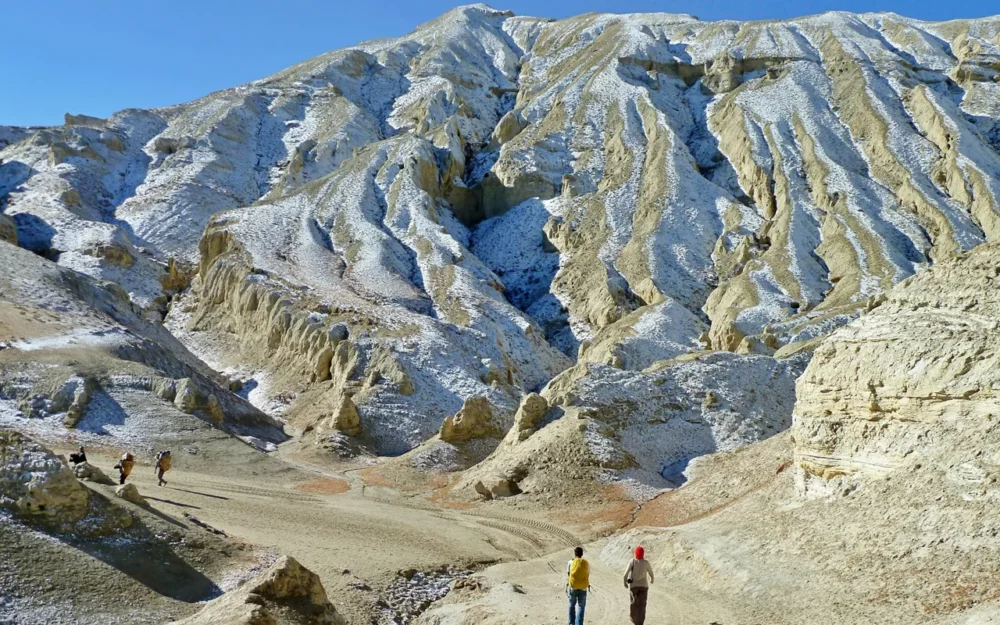
- Gaze upon the strange desert terrain marked by red rock formations and ancient caves plus exposed valleys.
- Discover how Tibetan Buddhism lives in its monasteries and spiritual centers. View the mechanisms of prayer and join religious ceremonies.
- Entrance to Ghar Gompa from 1200 years ago can bring your wishes to life.
- Experience the strength of Tiji Festival featured by historical dance performances and long-standing Buddhist rituals in May.
- Walk past historic villages of Kagbeni, Charang, and Drakmar where residents live in mud-brick houses.
- Walk over the remote mountain ridges Nyi La and Yamda La to see unique Himalayan environments.
- Connect with the area’s locals who maintain their Tibetan cultural practices and lifestyle.
- Breathtaking mountain scenery of Annapurna, Dhaulagiri, Nilgiri, and Tilicho waits for you while you walk this path.
- Enjoy time beside the Kali Gandaki River which runs through the deepest gorge on Earth and contains sacred Shaligram fossils.
Overview of Upper Mustang Trek
Upper Mustang Trek gives Nepal visitors the chance to explore a historic Himalayan kingdom that was closed to the public. This rolling desert trek from Nepal into Tibetan territory shows you Tibetan Buddhist villages and reaches high altitude lands before you arrive at Lo-Manthang’s medieval walled town.
Two distinct zones mark the start and end of the trek route which passes between Jomsom’s urban environment and Lo-Manthang’s ancient walled urban core. Beyond its physical demands this trek exposes travelers to untouched historical architecture of royal palaces as well as ancient Buddhist establishments to create an unreal cultural adventure.
This trek delivers a true experience of traditional Himalayan way of life and is viable in pretty much all season due to its location, which is in a rain shadow area.
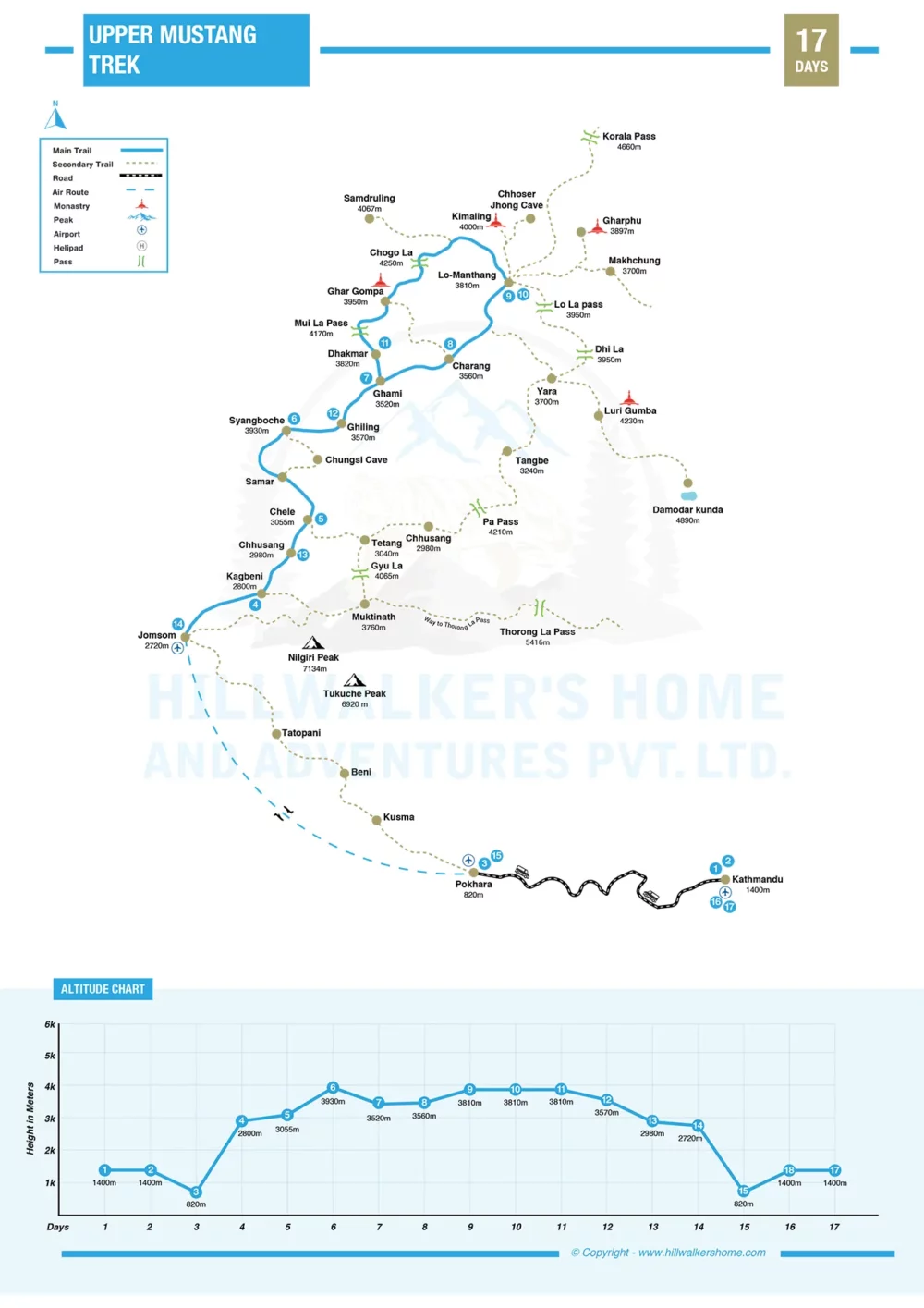
Itinerary of Upper Mustang Trek
Day 01: Arrive in Kathmandu and Transfer to Hotel
When you land in Kathmandu as the capital city of Nepal people welcome you there and take you to your hotel in Thamel which has excellent restaurants and shopping destinations.
Once settled you can choose to explore Kathmandu Durbar Square before enjoying leisure time. Your initial Nepal experience combines both modern daily life and old-world wonders.

Accommodation
Hotel
Meals
Lunch
Max Altitude
1350mDay 02: Kathmandu Sightseeing Tour
As your day starts you will discover the UNESCO-designated attractions of Kathmandu under professional guidance. Visit the spiritual Pashupatinath Temple and experience the serenity of Boudhanath Stupa known as the sacred Monkey Temple.
The Himalayan religious community emerges through the decorated flags of worship and the active believers among peaceful temples and monasteries.

Activity
Sightseeing
Accommodation
Hotel
Meals
Breakfast, Lunch
Max Altitude
1350mDay 03: Drive to Pokhara
You will leave Pokhara after breakfast and drive westward to the town of Pokhara where the Annapurna range looms overhead. The drive to sight various sections of agricultural fields, flowing rivers, and small farmstead settlements.
After arriving in Pokhara find your peace at Phewa Lake or roam around the cafe-filled Lakeside district while gazing at the mountains.
Activity
Drive
Accommodation
Hotel
Meals
Breakfast, Lunch, Dinner
Max Altitude
822mDay 04: Fly to Jomsom and trek to Kagbeni
You will enjoy a quick flight from Pokhara to Jomsom starting your trekking adventure. The path to Kagbeni passes through strong winds for the Kali Gandaki River while showing bare Himalayan terrain and spaced-out settlements.
Life in Kagbeni stands out with Tibetan influence from its tight streets to old religious structures and sights of Nilgiri and Dhaulagiri.
Activity
Flight
Accommodation
Guest House
Meals
Breakfast, Lunch, DinnerDay 05: Trek from Kagbeni to Chele
Starting from Kagbeni requires a permit check at the entrance before heading into Upper Mustang. Your path through the Kali Gandaki valley enters a drier and more powerful environment.
You will encounter Tangbe’s row of white buildings with apple trees and prayer flags. The climate grows windy and dry showing desert features until you find Chele next to a mountain wall with strong Tibetan roots and fantastic views of deep gorges plus distant Himalayas.
Activity
Trek
Accommodation
Guest House
Meals
Breakfast, Lunch, DinnerDay 06: Trek to Syangboche
The modern day hike demands strong leg muscles through constant uphill and downhill trips across rocky height lines and narrow chasms. People trekking this route gain excellent sightlines of Nilgiri and Tilicho when they pass through Taklam La and Dajori La passes.
You can find Samar settlement while hiking and choose to explore old meditation caves that were built into the rock. You will experience the thin air as you reach Syangboche to rest in this small rural high-cliff village.
Activity
Trek
Accommodation
Guest House
Meals
Breakfast, Lunch, DinnerDay 07: Trek to Ghaymi
You will face demanding walk and stunning scenery when you adventure to Ghaymi. Traversing through the Yamda La and Nyi La passes gives trekkers perfect Mustang photography moments as they see sheer cliffs above flat plates of stone with many chorten structures.
You will experience the longest Buddhist prayer wall in Nepal on your descent to Ghaymi which ranks as the largest village in Upper Mustang. Ghaymi stands out for its cultural environment at the base of tall red cliffs while providing fantastic farm settings.
Activity
Trek
Accommodation
Guest House
Meals
Breakfast, Lunch, DinnerDay 08: Trek to Charang
After leaving Ghaymi you will traverse through multiple mani walls and prayer wheels as you move from one surreal moonlike area to another. The trail runs through empty hills and deep gorges through unpopulated areas to arrive at Charang.
This village shows visitors the Buddhist roots of Mustang through its Charang Monastery and royal palace ruins. The visit to the red monastery for its statue and thankas creation stands out among all cultural experiences.
Activity
Trek
Accommodation
Guest House
Meals
Breakfast, Lunch, DinnerDay 09: Trek to Lo-Manthang
The route today provides sightseeing opportunities and cultural discoveries along the path. After going through Charang the trail gently leads upward onto a plateau with strong winds then shows your first complete view of Lo-Manthang the historic walled capital of Upper Mustang.
You travel back in time when you enter the village because the narrow pathways lead to historic monasteries standing next to the royal palace. Tibetan customs live strongly within the city while prayer flags hang from the tops of whitewashed houses. This place exudes spiritual power that feels good for every person.
Accommodation
Guest House
Meals
Breakfast, Lunch, DinnerDay 10: Rest Day in Lo-Manthang
The rest day in Lo-Manthang lets you discover its rich cultural heritage. Experience peaceful monk prayers at Namgyal Monastery then trek northwest to Tingkhar which remains the final community in the kingdom.
The Amchi Museum shows visitors the history of Tibetan medical practices. The quickest hike through Chhoser offers trekkers the opportunity to visit mysterious cave dwellings that exist on cliff walls. This day lets you fully experience Lo-Manthang’s spiritual Himalayan way of life.
Activity
Rest
Accommodation
Guest House
Meals
Breakfast, Lunch, DinnerDay 11: Trek to Drakmar
Your return trip from Lo-Manthang offers you stunning variations and shows you fresh landscapes. Hikers will discover the powerful Ghar Gompa Buddhist monastery which was founded in 793 AD and holds special significance as the resting place of Guru Rinpoche who granted wishes to devotees.
After descending from the red cliffs you will find Drakmar resting at the base of beautiful sandstone formations. People love this region’s natural landscape and see its spectacular caves along with its colorful formations while enjoying peaceful surroundings.
Activity
Trek
Accommodation
Guest House
Meals
Breakfast, Lunch, DinnerDay 12: Trek to Ghiling
Our expedition covers an easier section of the trail that serves to amaze our group. The trail runs across dry open spaces while offering numerous distant views of the Himalayan peaks.
While walking through farmlands and solitary chorten structures you will arrive at Ghiling where the village stands amidst barren hills and delicate green growth. The strong air gusts make this region unique but traditional mud homes and peaceful surroundings encourage visitors to pause and consider their trekking progress.
Activity
Trek
Accommodation
Guest House
Meals
Breakfast, Lunch, DinnerDay 13: Trek to Chhuksang
The route between Ghiling and Chhuksang features desert valleys and windswept ridges with constant Mustang winds at the face. Everyone will find small villages hidden within the desert area when they walk downhill.
The trail leads you back to known points at Samar and Chele until you arrive at the welcoming town of Chhuksang located near the Kali Gandaki River. Your mixed feelings about returning home are matched with deeper respect for the terrain you gained throughout your adventure.
Activity
Trek
Accommodation
Guest House
Meals
Breakfast, Lunch, DinnerDay 14: Trek Back to Jomsom
Your last trekking route leads you back to Jomsom as you finish the whole loop. You experience a noticeable change to greener surroundings and the air feels more stimulating with more oxygen as you retrace your steps through Lower Mustang.
Your thoughts return to the strong path of Kali Gandaki as you drift in memories from your remarkable adventure. After sleeping outdoors in the dusty desert for many days the comforts of a shower and bed respond to any weariness.
Activity
Trek
Accommodation
Guest House
Meals
Breakfast, Lunch, DinnerDay 15: Fly to Pokhara
Your morning flight carries you from Himalayan views to the tropical scenery around Pokhara. The contrast is stunning and you can appreciate the lake district experience while eating well and enjoying a peaceful paddle on Phewa Lake which perfectly mirrors Machhapuchhre.
As a complete opposite from Upper Mustang’s solitude Pokhara offers visitors a picturesque sanctuary filled with quality cafés and mountain scenery.
Activity
Flight
Accommodation
Hotel
Meals
Breakfast, Lunch
Max Altitude
822mDay 16: Drive Back to Kathmandu
Your return trip from Kathmandu displays the landscape with rice terrace fields and rural communities as you follow the same highway path. You will get to appreciate Nepal’s various landscapes through this final drive.
As your Himalayan trip ends in Kathmandu leisurely spend your last nights between dining and shopping for souvenirs before visiting favorite cafes to celebrate your mountain experiences.
Activity
Drive
Accommodation
Hotel
Meals
Breakfast, Lunch
Max Altitude
1350mDay 17: Final Departure
All memories of this unforgettable trip and all photos of its amazing sights are ready to take you back one last time. Your available flight time lets you either step up for a last walk or enjoy that daily coffee.
The team will drive you to the airport while saying good bye with fond memories and end of your Upper Mustang Trek Itinerary.
Meals
Breakfast
Max Altitude
1350mTrip Information - Good to Know
Best Time to Trek to Upper Mustang
Travelers should plan their Upper Mustang trek between March and November with spring and autumn as the most dependable seasons. Since Upper Mustang stands in a rain shadow area you can visit it during monsoon time unlike other Nepal treks with shorter seasons.
Summer provides perfect conditions to witness Tiji Festival while spring features blooming flowers and clear mountain vistas. In fall the skies remain transparent and days stay cozywithout extreme heat.
During winter months (December to February) temperatures become dangerously low and local tea house operations automatically stop. You need to arrange your trip to enjoy the desert environment and take part in the famous local customs that define Mustang.
Tiji Festival
Every year the Tiji Festival showcases a three-day Buddhist celebration inside Lo Manthang, Upper Mustang, Nepal. During the 15th century Tiji Festival people recall how Dorje Jono fought his demon father Ma Tam Ru Ta to shield Lo Manthang from danger.
Local people refer to the festival as Tiji because it comes from the Buddhist term Tempa Chirim which means “Prayer for World Peace.”
The festival features performed masked dances by monks from Choedhe Monastery. Through dance the monks depict how Dorje Jono fought and defeated the demon to bring balance to the world.
In May people travel from near and far for the Tiji Festival to experience the deep traditions of Mustang region.
Difficulty and Fitness Level of Upper Mustang Trek
The Upper Mustang Trek Nepali demands strong stamina from hikers because it ranks at the medium difficulty level. Your walking distance ranges from five to seven hours each day across many types of terrain on this trek yet there are no steep climbing routes.
You will encounter dusty and windy paths including multiple uphill and downhill walks while trekking in exposed areas. The trek’s high elevation reaches 4,000 meters but increases difficulty slowly.
People who train through both cardio and strength exercises at a good fitness level can enjoy this trek. Accomplishing the trek becomes possible for every healthy person who keeps their determination high. A helper porter simplifies the trip while a responsible tour guide protects and drives your motivation.
Altitude Sickness and Acclimatization
Trekkers must protect themselves from altitude sickness because it strikes everyone above 3,000 meters and Upper Mustang Trek frequently reaches 3,500 meters in elevation. During steady hikes and long stretches of dry air participants may start feeling headache or vomiting sensations while remaining fatigued.
Your trek plan includes slow walking stages and waits at Lo-Manthang to help you adjust to the growing altitude pressure. Going slow while walking plus staying hydrated with water protects you from altitude sickness.
You must descend fast as soon as your symptoms become more troublesome. The guide staff receives special training to detect symptoms early so they can react quickly. By following both internal alerts and information about acclimation checks your trek stays safe and brings you happy memories.
Upper Mustang Trek Essential Permits
To travel through Upper Mustang Trek Nepal you need both Restricted Area Permit (RAP) and Annapurna Conservation Area Permit (ACAP).
As a key cultural and close-to-Tibet location the Nepal government controls access to this region. You must pay $500 per person for 10 days with $50 added for each consecutive day on the RAP permit, where as the ACAP fee is $20.
All trekkers must join groups handled by official trekking offices with licensed local guides for these expeditions. The permits are typically handled by your tour provider ahead of your trek.
Keep several duplicates of your passport and passport photos at hand. Officials frequently check passes when entering or leaving both Kagbeni and Lo-Manthang gates.
Flora and Fauna on the Upper Mustang Trek
Even though Upper Mustang Trek experiences little plant life its rocky surface still provides an interesting variety of living things.
The lower part of the land hosts juniper buckthorn and pine shrubs but plant life grows scarce above as the dry arid conditions take over. Himalayan blue poppies come up from the ground first to decorate Upper Mustang’s empty fields with their purple petals.
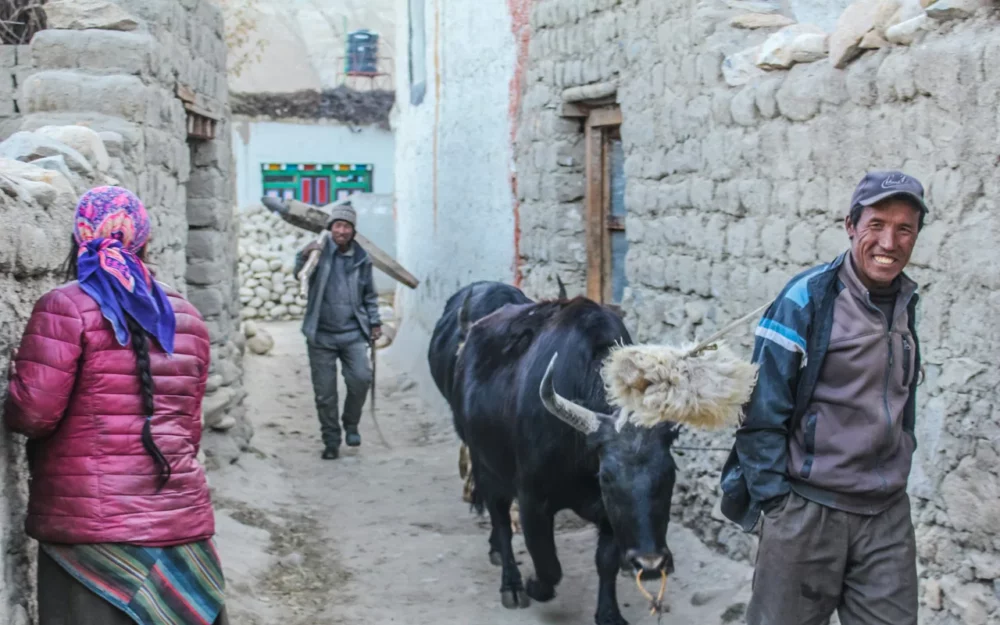
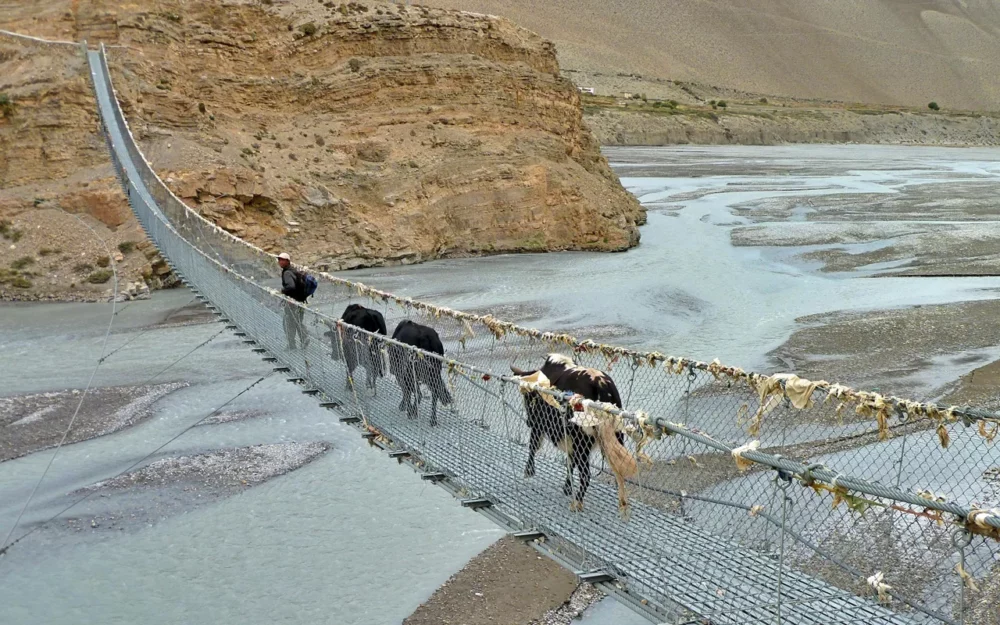
Blue sheep, marmots, and Himalayan griffon vultures live in this area while the snow leopard remains hidden even though people look for it. Yak and dzos (crossed yak-cow hybrids) play important roles in local business operations.
Birdwatchers will find abundant great altitude bird species to observe. Though the land seems lifeless to start it hosts organisms that thrive in this tough climate and terrain.
Cultural Experience during the trek
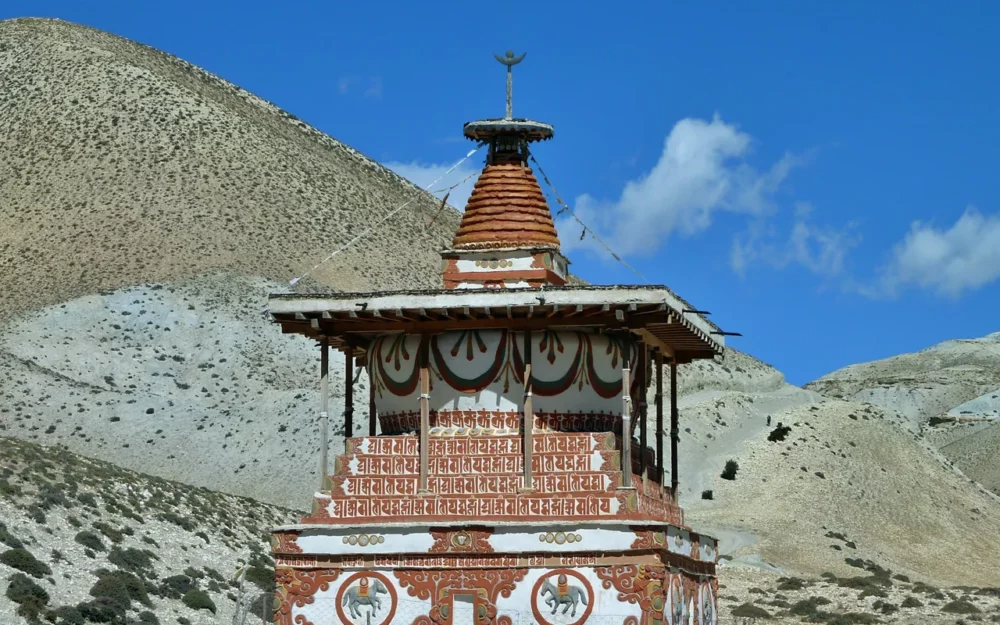
Upper Mustang Trek Nepal brings together a cultural adventure with an active physical experience. The area carries Tibetan Buddhist heritage through its monasteries plus sky caves and chortens all alongside prayer flags across the land.
Lo-Manthang villages exist unchanged with white houses made from local mud and residents wearing Tibetan robes. Monks conduct their prayers and engage in prayer wheel spins and offering activities.
You will enjoy unique traditional ceremonies that honor divine protection through masked dances and spiritual traditions during the Tiji Festival when you travel here. You can build cultural connections in every conversation with people you meet including herders, monks and students when visiting this protected area.
Food and Accommodation along the Route
The accommodations and meals during the Upper Mustang trek are basic but satisfying to enjoy. The mountain lodges that serve as teahouses offer twin rooms with common shower spaces. Warm hospitality accompanies the basic lodging options.
Every day’s meal plan consists of traditional Dal bhat (boiled lentils with rice), vegetables, Tibetan bread, momos, thukpa soup, and rare apple pie servings. Guests can choose porridge eggs or toast at their breakfast meals.
The dining options in Jomsom and Lo-Manthang villages feature a wider range of pasta and fried rice alongside other dishes. It is possible to buy boiled drinking water and take advantage of hot showers and phone charging facilities for a nominal payment.
You should pack food and water purification tablets for this trip. Food supplies the right nourishment to help hikers tackle their walking routes effectively.
Travel Insurance for Upper Mustang Trek
Travel insurance must be purchased before beginning the Upper Mustang trek. There is no cost-effective medical rescue from this mountaintop terrain without insurance that covers helicopter evacuations.
Select an insurance plan that covers your trekking to over 4,000 meters high and will arrange emergency evacuations. The policy should protect you from trip.Reverse payments and other travel inconveniences that frequently affect tourists in Jomsom because of local weather risks.
Carefully read through the terms to make sure trekking is not classified as an adventure activity. Have both your insurance policy in digital and printed forms when you travel. Your guide will start rescue procedures in an emergency but proper insurance brings real safety to your mind.
Frequently Asked Questions
What kind of power options are available during the trek?
Trekkers receive power from solar panels or limited electricity sources while charging costs from $2 to $3. Take a portable battery charger because there will be no reliable power supplies in the wilderness.
How cold does it get on the Upper Mustang Trek Itinerary?
The temperature falls below freezing point every night throughout all elevation areas above 3,000 meters. Days are mild (10°C to 20°C). Bring both insulating and warming clothes plus an advanced sleeping bag for the trip.
Can I use my phone on the Upper Mustang Hill Trek, and what’s the network coverage like?
The main villages of Upper Mustang offer decent mobile coverage though NTC provides better service than other providers. Guests can access Wi-Fi at local teahouses but will need to make a payment for it since speeds are slow. No service in remote passes.
Are there any ATMs or card payment options on the Upper Mustang Trek Itinerary?
No ATMs or card payments after Jomsom. Head to Kathmandu or Pokhara before your trek to get Nepalese rupees to pay for meals and services plus gratuities and anything you need personally.
What kind of gear is available for rent in Kathmandu?
You can lease sleeping gear, insulation coats, and trekking aids from both Kathmandu and Pokhara rental services. The prices for equipment are affordable plus the items used for trekking typically maintain good quality.
Do I need a guide or porter for the Upper Mustang trek?
Guides must hold a legal license to operate. You must have a guide to travel alone in Upper Mustang. Hiring a porter provides helpful support to walk longer distances with less effort.
Trip Reviews
 Write a Review
1450 US$
Group Discount Price
-
1 -
1 person
US$ 1500
-
2 -
5 people
US$ 1450
-
6 -
10 people
US$ 1425
-
11 -
16 people
US$ 1400
-
17 + people
9999
US$ 1400
Total Cost:
US$ 1500


How to book a trip?

make free inquiry

