



Trip Duration
5 Days
Group Sizes
1-16 People
Transportation
Land Transportation
Destination
Nepal
Max. Altitude
4,500m. / 14,764ft.
Activities
- Trekking

Difficulty
Moderate
Meals
- 4 Breakfast
- 3 Lunch
- 3 Dinner

Accommodation
- Hotel
- Guest House
Trip Highlights
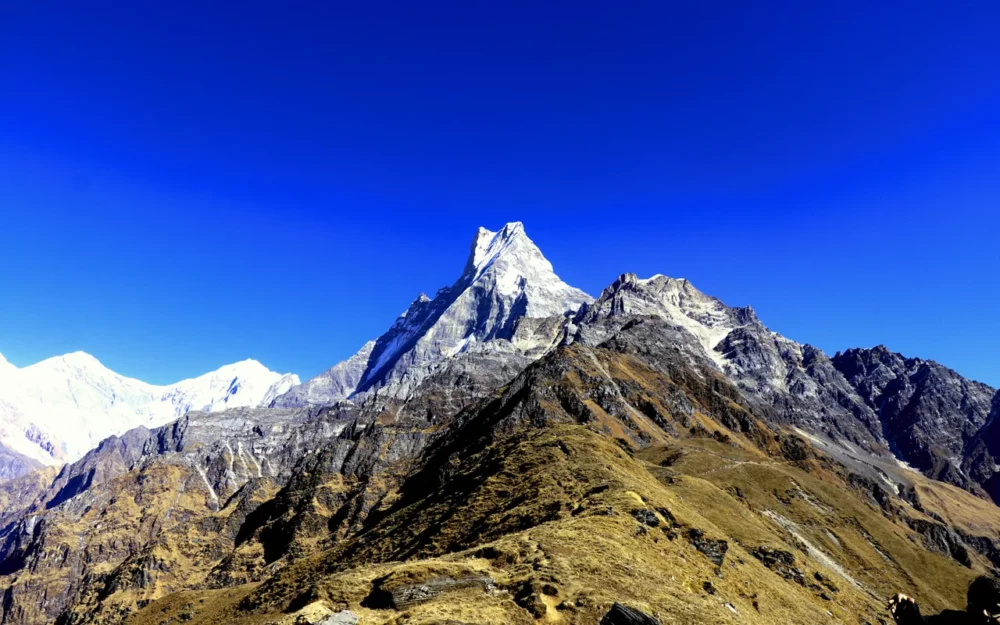
- View the mountain peaks such as Machhapuchhre, Annapurna South, and Hiunchuli from the ridge path and Upper View Point.
- See the Annapurna peaks from their vantage points at High Camp and Badal Danda.
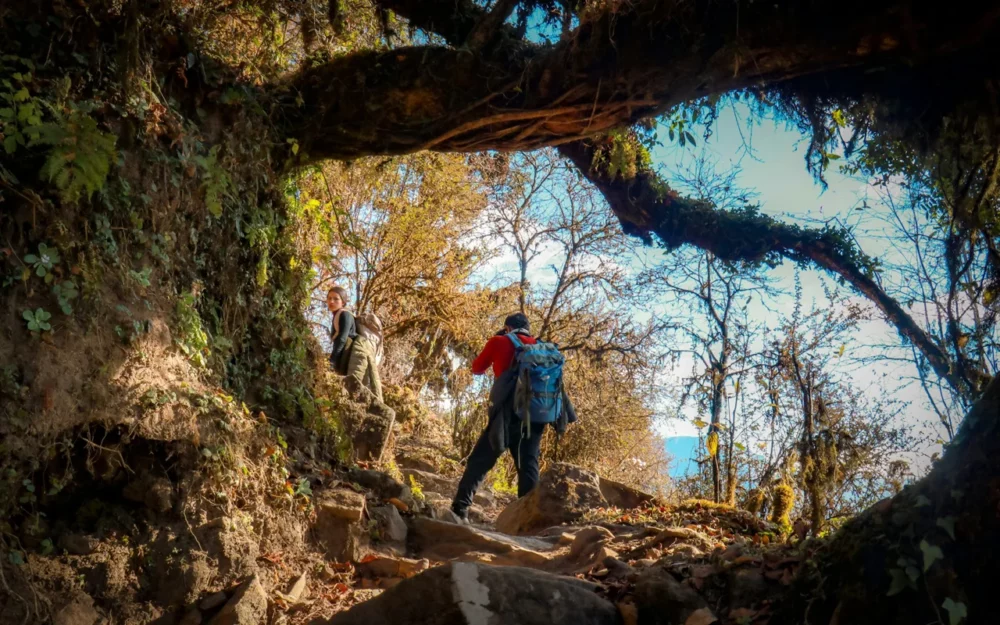
- Take pleasure in strolling through forests full of rhododendron trees, oak, and maple trees which bloom abundantly during springtime.
- Watch the energetic life of Gurung and Magar villagers in towns such as Dhampus and Sidhing.
- Avoid crowded popular paths like Everest Base Camp or Annapurna Base Camp.
- Traverse narrow ridgelines offer 360-degree panoramic mountain vistas without technical climbing.
- Experience the untouched natural surroundings of the Annapurna Conservation Area and find its unique Himalayan wildlife and plant life.
- Witness Danphe pheasants and their animal such as langurs and musk deer among the forest trees.
- Try genuine Nepali Dal Bhat and Tibetan tea bread dishes provided by teahouses during your hike.
- Take the memorable short trek to Mardi Himal which delivers scenic views and appeals to all levels of hikers
Overview of Mardi Himal Trek
People start on an amazing adventure through Nepal’s Annapurna region by experiencing the Mardi Himal Trek. The trek is made for nature lovers wanting to avoid heavy traffic on popular paths while enjoying a short yet pleasing trip.
The Mardi Himal exploration takes you 5 days from lower forested areas to alpine ridges before culminating at a 4500-meter high base camp. Everyone who walks this route finds excellent views of Himalayan peaks Machhapuchhre and Annapurna South.
Along the trail, visitors can find basic local teahouses which offer places to sleep and eat. You can explore the trail most comfortably during spring or fall seasons since wildflowers like rhododendrons burst into bloom during spring while the air remains clear and cool after the monsoons.
Mardi Himal Trek provides natural enthusiasts and beginner trekkers their first Himalayan experience above the basecamp level.
Who can do the Mardi Himal Trek?
The Mardi Himal Trek 5 days offers an appropriate challenge for both first-timers and experienced mountain hikers. Regular walking fitness and daily trekking for 5 to 7 hours meet all the requirements for this trek.
The path advances reasonably smoothly until Base Camp which increases demands with its steeper parts and colder temperatures. This trek attracts families as well as solo travelers and those over 50 who can endure it because the route passes through lower-altitude regions ending close to the base camp.
People between 12 and 65 successfully finish their adventure in Mardi Himal. Working with local guides and porters helps you to learn more about the trek and receive the necessary help. Mardi Himal Trek is a preferred hiking trail for newcomers who want a comfortable Himalayan adventure with no need to scale demanding peaks.
History of Mardi Himal
Before the opening to visitors in 2012 Mardi Himal belonged to the Annapurna range but remained unfamiliar to most people. Before 2012 this region remained secret to the world as it was only visited by nearby herders and daring mountaineers.
People discovered Mardi Himal after tourist numbers increased so the route was developed to better serve hikers and visitors. Nepal upholds its dedication to maintaining several trekking paths through the Mardi Himal Trek development.
The trail takes its name from the 5,587-meter Mardi Himal peak below Machhapuchhre and shows the mountain ranges worshiped by Nepalese locals for years. Before becoming popular the trail existed in isolation meant few visitors shielded this landscape and wild animals lived here undisturbed.
The route gained international recognition because people discovered it offers rare sustainable and authentic trekking in the Himalayas.
Itinerary of Mardi Himal Trek
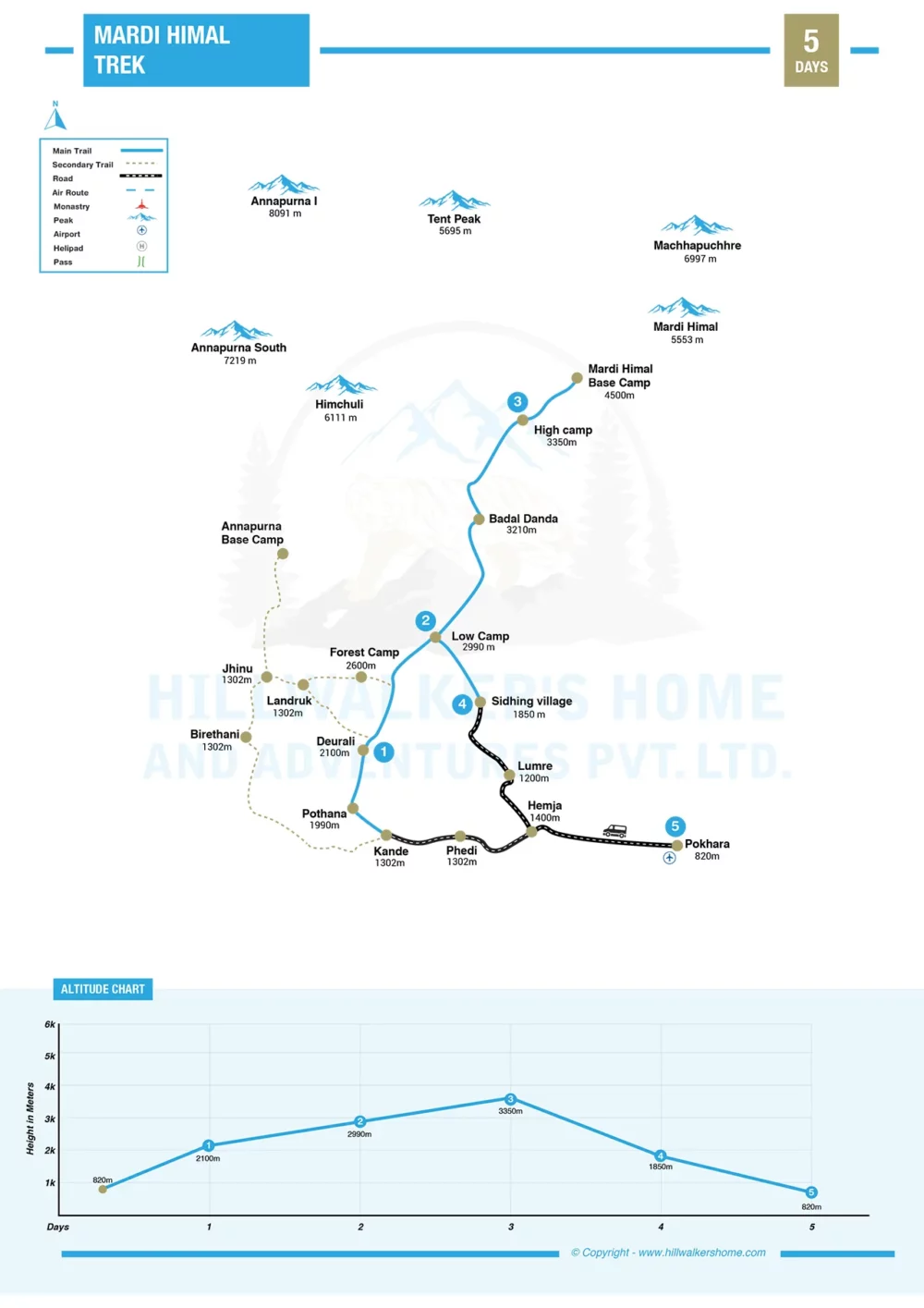
Day 01: Drive to Kande and Trek to Deurali via Pothana
The Mardi Hima Trek Itinerary begins in Pokhara and lasts an hour to reach Kande. You begin the excursion with a smooth walk through the forested landscape among several villages. The trail climbs above Pothana where people enjoy looking at farm terraces plus admire the Annapurna mountain line.
The staircase leads you to Deurali where you stop for your overnight rest. Deurali serves as an ideal starting point for the Mardi Trail because of its welcoming mountain views from the ridge.

Activity
Trek
Accommodation
Guest house
Meals
Breakfast, Lunch, DinnerDay 02: Trek from Deurali to Low Camp
As breakfast concludes the pathway leads you into a forest that features oak trees surrounded by rhododendron and maple plants. The Mardi Himal trail has its easiest and quietest walk through dense forestry in this section.
Rising steadily on the hike you will enjoy the misty shade and picturesque plant life. At Low Camp, you arrive for your first afternoon stop while seeing clear views of Fishtail Mountain for the first time. Elevated heights bring fresher breathing air as the mountainside unveils before you.
Activity
Trek
Accommodation
Guest house
Meals
Breakfast, Lunch, DinnerDay 03: Trek from Low Camp to High Camp
Today, the landscape changes dramatically. After climbing above the tree line you will walk on alpine meadows where rhododendron shrubs grow between you and the endless blue sky.
Halfway through your path leads you to Badal Danda where the moving clouds bring dreamlike scenery to the area. After staying briefly at the location you will walk up to High Camp which stands at 3,550 meters. High Camp gives you stunning views of both the Annapurna massif and the large shape of Machhapuchhre mountain.
Activity
Trek
Accommodation
Guest house
Meals
Breakfast, Lunch, DinnerDay 04: Visit Mardi Base Camp and Trek down to Siding
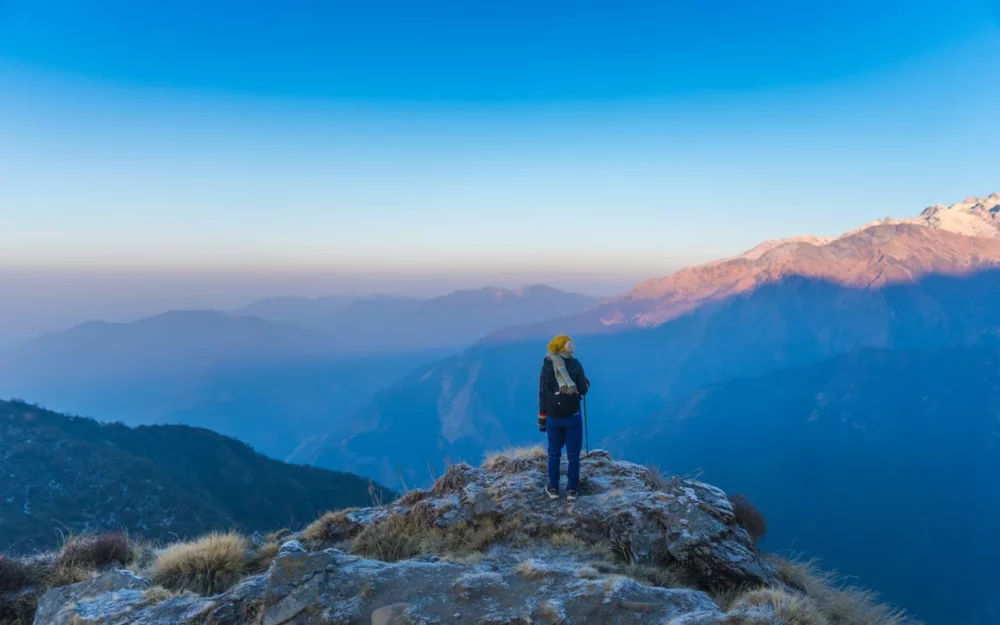
This experience offers the greatest sense of excitement throughout our entire adventure. Begin your day in darkness to watch the sunrise at the top from your vantage. The trail rises hard when you continue to reach the Mardi Himal Base Camp at 4,500 meters.
The sunshine in the morning from the Himalayas enhances the beauty of Machhapuchhre Peak. After admiring the views you take the descent back to High Camp for breakfast before trekking past dense forests and ridges to reach Siding. The entire descent through the trail leads you to fresh discoveries of nature’s wonders as you return to the region.
Activity
Trek
Accommodation
Guest house
Meals
Breakfast, Lunch, DinnerDay 05: Drive back to Pokhara
Your day in Siding finishes on a comfortable drive back into Pokhara where your trekking adventure will conclude. You will emerge as a different person because this trip gave you peacefulness while testing your strength and filling you with deep mountain spirit.
Activity
Drive
Accommodation
Hotel
Meals
Breakfast, Lunch
Max Altitude
822mTrip Information - Good to Know
Best Time to Trek to Mardi Himal
You should consider the spring and fall seasons (March to May and September to November) as the best times to hike Mardi Himal. The spring and fall months provide excellent stable weather and clear skies with full view of the Annapurna range.
During the spring season, rhododendrons bloom all over the forest while the fall brings refreshing air and magnificent mountain views which appear once the monsoon ends.
In winter from December to February snow layers the upper sections of this hike making it an exciting challenge that needs adequate planning for safe passage. The monsoon season (June to August) remains unpopular because hiking is dangerous when trails become slick and hide landslides with poor mountain views.
You will find more polished trails and sightseeing opportunities with fewer risks by booking the Mardi Himal Base Camp Trek during the spring or autumn seasons according to officials and local guides.
Weather Conditions during Mardi Himal Trek
Weather on the Mardi Himal Trek ranges depends on the season and elevation. During spring months (March to May) you will enjoy temperatures between 15°C and 22°C during daytime and between 5°C and 10°C at night when you can see rhododendrons blooming under clear skies.
Autumn offers perfect weather conditions of fresh air and reliable conditions plus excellent views over the upcoming months of September to November.
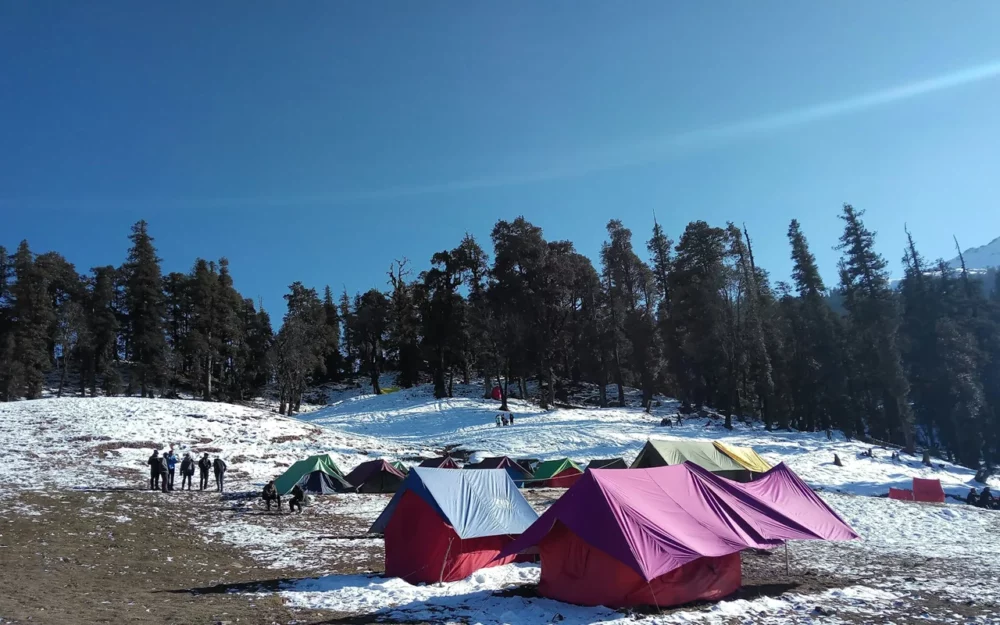
The winter period from December to February offers colder temperatures particularly around the 3000-meter mark with night temperatures hitting -10°C and snowy paths above that level.
The Monsoon period from June through August delivers excessive rainfall with slippery pathways and dangerous leeches which seriously affects the views during this time. During busy seasons you will feel freezing temperatures early in the morning at both High Camp and Base Camp.
Weather changes fast on mountaintops so carry multiple clothing layers especially rain protection and warm underwear. Knowledge about weather patterns improves your safety and sightseeing experience during the Mardi Himal Base Camp Trek.
Difficulty and Fitness Level of Mardi Himal Trek
Most people with normal physical abilities can complete the Mardi Himal Trek 5 days due to its moderate rating. You do not require rock climbing expertise but you must be willing to trek 5 to 7 hours daily along bumpy paths while climbing approximately 1,000 meters each day.
At Low Camp, you start pushing up through forest paths but the trail grows steeper before reaching High Camp and Mardi Base Camp at 4,500 meters. The route becomes more demanding when snow or rain covers the trails during winter time.
Most novice trekking groups including families can finish the route with sufficient stamina and mental readiness. You need cardiovascular exercise combined with walking uphill and light backpack practice to accomplish this goal. Travelers in good health find the trek difficult only in specific sections but manage this remarkable journey without problems.
Altitude Sickness and Acclimatization
Trekkers should be aware that AMS can affect them on the Mardi Himal Trek 5 days after crossing 3,000 meter markers. Going from 2,000 meters sea level to 4,500 meters Base Camp quickly puts strain on many travelers.
Headaches, nausea, dizziness, and trouble breathing make up the signs of this condition. You need to go up slowly while drinking enough water and avoid drinking alcohol and strenuous activities to reduce your risk of altitude sickness.
A planned ascent slope helps most trekkers, yet expecting a rest day for acclimatization is needed for healthier hiking. Professional guides on the trek have oximeters to monitor vital signs and handle emergencies when clients develop symptoms.
The short length of this trek poses more dangers to your safety which you need to monitor through your body signals. You need to show proper respect to high altitude during the Mardi Himal Trek and take precautionary actions.
Mardi Himal Trek Essential Permits
Two documents serve as prerequisites to do the Mardi Himal Trek, namely Annapurna Conservation Area Permit and Trekkers’ Information Management System Card.
The Annapurna Conservation Area Permit (ACAP) costs NPR 3,000 (about $25) for foreign trekkers and helps fund conservation efforts in the Annapurna region. The TIMS (Trekkers’ Information Management System) Card operates for NPR 2000 to support trekker safety and emergency response.
You need these two documents for the entire trek and authorities will verify them at different stages. You can get your permits from either trekking agencies near Kathmandu or Pokhara or the Nepal Tourism Board offices in Kathmandu or Pokhara themselves.
Take both permits with your passport because authorities at the Kande and Deurali checkpoints will ask to see them. You must have the permits to trek sustainably while supporting the Nepal Tourism Board’s work to preserve nature and develop tourism.
Flora and Fauna on the Mardi Himal Trek
The Mardi Himal Trek offers biodiversity lovers a prime sanctuary in the heart of the Annapurna Conservation Area. During the early stages of trek, you walk through beautiful rhododendron forest and later pass oak, maple, hemlock, and bamboo trees.
You will pass through alpine meadows that contain a mix of shrubs and moss. Many Himalayan monals, langurs, and barking deer live on the Mardi Himal trail. Snow leopards and Himalayan thar appear less often in higher mountain regions.
Travelers encounter common wildlife encounters at both Badal Danda and Forest Camp. You will see various environments throughout the trek as it moves between subtropical forest down near Dhampus and high mountain territory at High Camp (3,550m).
The wide variety of plants and animals improves both the amazing beauty and peaceful environment of the Mardi Himal route.
Cultural Experience during the trek
The Mardi Himal Base Camp Trek offers quiet cultural experiences to travelers. You enter the trek at Gurung and Magar communities of Dhampus and Landruk where stone houses and farming terraces show authentic Himalayan lifestyles.
Each local community warmly welcomes guest visitors and shows them the traditional practices that define their culture in dance and storytelling. Teahouses serve as both restaurants and social meeting areas for travelers and locals to share their cultures while eating Dal Bhat or Tibetan bread.
Despite minimal village access compared to traditional paths the small settlements of Sidhing share Nepalese rural and Buddhist heritage. Teahouses show prayer flags while featuring small shrines in their premises. Steps merging human connection with natural destinations present an uncommercialized path to explore Nepalese life.
Food and Accommodation along the Route
Over the Mardi Himal Trek, you will stay at basic teahouses that provide twin rooms and shared dining areas. Accommodation quality rises at lower elevations before decreasing toward the higher valleys.
You will have to share bathroom facilities while enjoying solar-powered electricity at these guesthouses which offer Wi-Fi for a small daily fee ($1 to $2). They serve energy-rich meals with dishes like Dal Bhat, fried noodles, pancakes, Tibetan bread, soup, and momos as well as occasional pasta and pizza options.
At breakfast people eat toast, eggs or porridge and dinner meals commonly consist of lentil soup paired with rice. Vegetarians are well-catered for. The food preparation maintains clean methods to create balanced Nepalese and Tibetan food. Travelers should choose purified water instead of local drinking water because cleanliness levels differ between elevation zones.
Drinking Water Availability
You can find drinking water all along the Mardi Himal Trek but need to exercise care when using it. Travelers visiting Dhampus and Forest Camp can find either purified or bottled drinking water to purchase.
Teahouses at higher camps including Low Camp and High Camp provide boiled or purified water to their customers at a price range of $1 to $3 per liter. Due to high disease risk trekkers depend on water purification tablets and filters more than on natural sources when refilling their bottles.
The trek does not have a steady pipe water supply above a certain elevation so trekkers must bring their own supplies or rely on teahouse services. Your trip to Mardi Himal must include a reusable bottle of filtered water and water purification tablets to practice trekking while protecting the environment.
Despite water availability, it can be hard to find and expensive unless you take steps to prepare for your hike.
Travel Insurance for Mardi Himal Trek
Any Mardi Himal Base Camp Trek hikers should buy travel insurance before their climb because the path goes all the way to Base Camp which stands at 4,500 meters. Travel insurance provide safety coverage when traveling above 4,000 meters while also covering emergency helicopter evacuations plus medical expenses and trip cancellation compensation.
You need travel insurance for Mardi due to its moderate challenge because AMS problems plus slippery slopes following Low Camp and unpredictable weather pose real dangers. Make sure your insurance policy includes both Annapurna region treks and is active in Nepal.
Popular trekking companies Himalaya Trip and Base Camp Hike believe tourists need to buy insurance from respected providers before they arrive. A helicopter evacuation without insurance will set you back $4,000 to $6,000 for the initial service. It gives you an affordable way to rest easy during Himalayan trekking adventures.
Comparison with other treks
Visitors seeking an undeveloped trekking alternative can opt for Mardi Himal which delivers shorter distances away from most popular trails and with fewer crowds. Travelers can cover the Mardi Himal Trek Itinerary in either 4 or 7 days since it requires less walking time than the Everest Base Camp or Annapurna Circuit tracks.
The trail receives fewer visitors than Annapurna Base Camp while staying off the tourist development path. The hike takes trekkers up to 4,500 meters (just below Everest Base Camp at 5,364 meters) yet beyond Annapurna Base Camp at 4,130 meters.
Both new and expert trekkers find it suitable but may not discover extensive local culture compared to longer treks including the Manaslu Circuit. Teahouse services on Mardi Himal are slowly getting better at the same time they still fall short compared to Everest Base Camp facilities.
For people seeking the beauty of the Himalayas without extended adventures and dense crowds, Mardi Himal delivers an excellent experience.
Frequently Asked Questions
What kind of power options are available during the trek?
You can find power at teahouse eating areas through solar panels and access to some parts of the electric grid. Clients need to pay extra for power services and this fee usually amounts to $1 to $2 with the exception of mountain tops.
How cold does it get on the Mardi Himal Trek?
High Camp experiences temperatures falling to -5°C in spring-autumn seasons with winter being even colder (-15°C). Below 3,000m the day temperatures remain pleasant but the early morning and nighttime temperatures become quite cold.
Can I use my phone on the Mardi Himal Trek, and what’s the network coverage like?
The NTC and Ncell network covers lower parts of the trail sufficiently. Higher areas have patchy reception. Morning teahouse visitors can rent Wi-Fi internet for one or two US dollars per day but the service remains slow.
Are there any ATMs or card payment options on the Mardi Himal Base Camp Trek?
The Mardi Himal Base Camp Trek does not feature automated teller machines or card transactions. Bring enough Nepalese cash (NPR) before you set out from Pokhara. All the teahouses and stores in this area require payment in cash.
What kind of gear is available for rent in Pokhara?
Pokhara offers renting options for sleeping bags, lightweight jackets, walking poles, backpacks, ice cleats and other equipment. People can find shopping at reasonable rates situated throughout Lakeside area.
Do I need a guide or porter for the Mardi Himal Trek Itinerary?
Guides are optional for Mardi Himal Trek but they improve your journey with protective measures and introduce you to local surroundings. Trekking with porters eases the journey because they transport your gear for you.
Trip Reviews
 Write a Review
550 US$
Group Discount Price
-
1 -
1 person
US$ 600
-
2 -
5 people
US$ 550
-
6 -
10 people
US$ 500
-
11 -
16 people
US$ 500
-
17 + people
9999
US$ 500
Total Cost:
US$ 600


How to book a trip?

make free inquiry

