



Trip Duration
19 Days
Group Sizes
1-16 People
Transportation
Land Transportation
Destination
Nepal
Max. Altitude
4,870m. / 15,978ft.
Best Season
Mar-May/sept-Nov
Activities
- Trekking

Difficulty
Difficult
Meals
- 18 Breakfast
- 17 Lunch
- 17 Dinner

Start & End Point
Kathmandu
Accommodation
- Hotel
- Guest Hoouse
Trip Highlights
- See amazing panoramas of Everest, Lhotse, Baruntse and Kanchenjunga from Shipton La Pass (4127 m).
- Savor the pure beauty of the alpine lakes, cascading waterfalls, and the roughness of the cliffs that surround the Valley of Barun.
- Visit Makalu Barun National Park to emerge in an area rich with biodiversity filled with elusive snow leopards, red pandas and Himalayan monals.
- Learn about Sherpa and Rai communities and their traditions, ways of life and friendly hospitality in small villages that are remote.
- Trek through high altitudes pass such as Shipton La and Keke La giving view to glacier and snow-covered peaks.
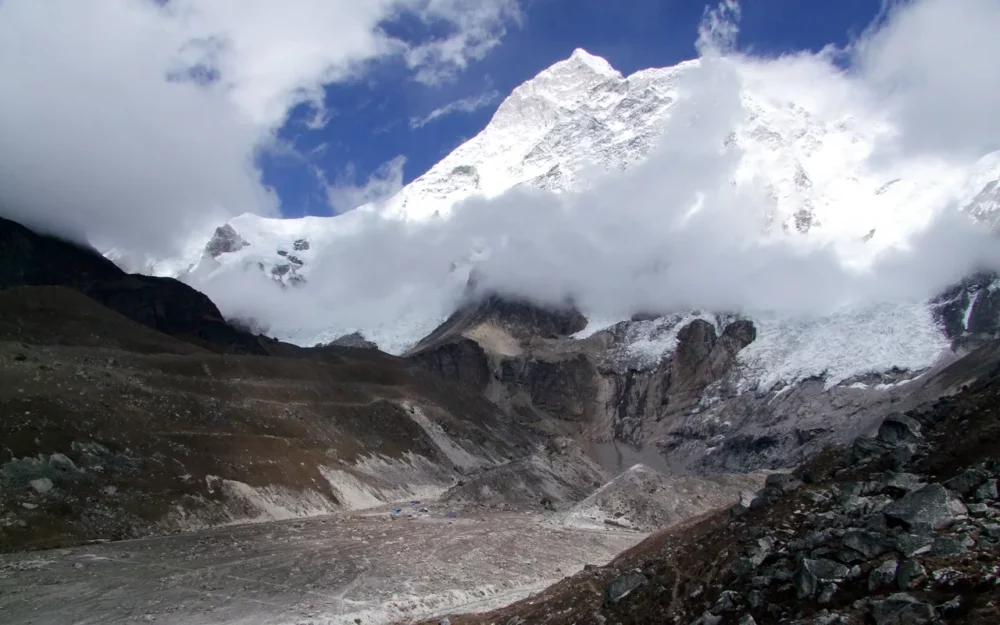
- Walk to Makalu Base Camp (4870m) with rugged mountains and high alpine wilderness.
Overview of Makalu Base Camp Trek
The Makalu Base Camp Trek offers you picturesque landscapes and has a large number of natural and cultural attractions, making it an unforgettable adventure.
Dense rhododendron forests pop out in colorful reds and pinks in the springtime, and you will have the opportunity to experience them. From the high altitude passes, it provides great views of Everest, Lhotse, Kanchenjunga and Baruntse.
You cross Shipton La and Keke La and will be amazed by rugged glaciers, alpine lakes and huge ice formations. Dramatic cliffs, cascading waterfalls and untouched wilderness offer rare wildlife to be found in the Barun Valley, including snow leopard and Himalayan monal.
The Makalu Base Camp Trek goes through isolated highland meadows with yak herders who maintain their ancient traditions and finishes up at Makalu Base Camp with magnificent peaks and massive glaciated scenery all around.
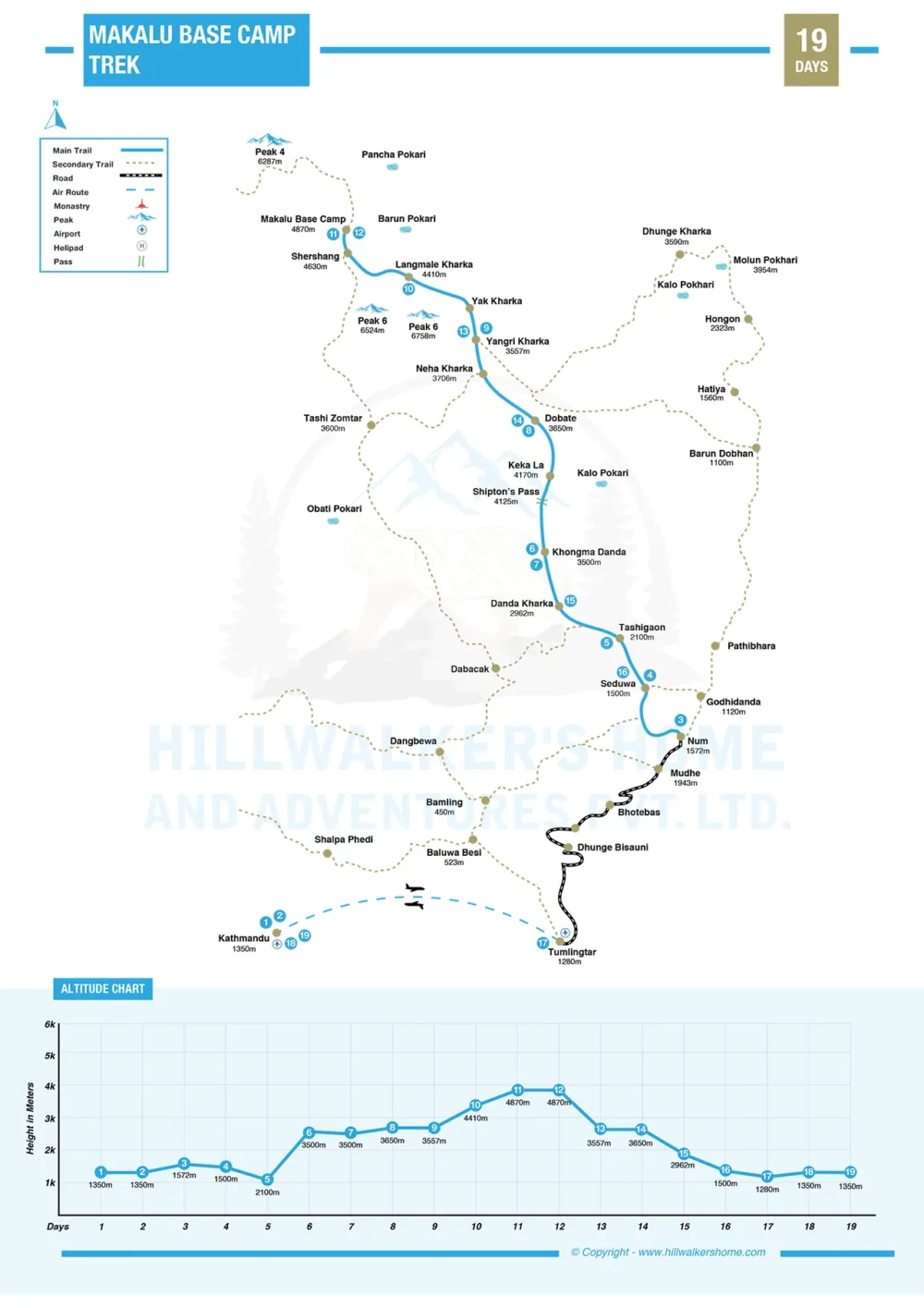
Itinerary of Makalu Base Camp Trek
Day 01: Arrival in Kathmandu (1,400m)
Kathmandu, also known as Nepal’s lively capital, is where we welcome our guests into the whirling streets filled with livelines yet filled with ancient temples to stand next to the modern marketplace.
Once they arrive their hotel, we go around Kathmandu Durbar Square with a guided tour of intricate palaces that narrate tales of the past. The view of the valley get breathtaking and you have to pay a visit to Swayambhunath (Monkey Temple).
Makalu Base Camp Trek Itinerary briefing is carried out in the evening and all preparations are made for the adventure to kick off.

Accommodation
Hotel
Meals
Dinner
Max Altitude
1400mDay 02: Permit Preparation & Kathmandu Sightseeing
We organise all our permits, including Makalu Barun National Park and Special Restricted Area permits and head into the mountains. During the inner check, we transfer trekkers to Pashupatinath Temple, where they can behold Hindu rituals straight from the Bagmati River.
They spend time at Boudhanath Stupa chanting away Buddhist prayers over fluttering prayer flags. This day too involves gear checks, last-minute shopping and the final preparation for the upcoming expedition.
Accommodation
Hotel
Meals
Breakfast, Lunch, Dinner
Max Altitude
1350mDay 03: Fly to Tumlingtar (410m) & Drive to Num (1,560m)
A morning flight to Tumlingtar marks the start of Makalu Base Camp Trek Itinerary which affords spectacular Himalayan views from the air. When we arrive we drive our guests on a 4-5 hour rugged 4WD ride thorough scenic ridges and terraced fields.
We also stop at picturesque Gurung village Chichila to admire traditional stone houses. At a tea house in Num, we ensure their comfort before starting on the trekking adventure.
Accommodation
Guest House
Meals
Breakfast, Lunch, Dinner
Max Altitude
1561mDay 04: Trek from Num to Seduwa (1,500m)
Starting with a descent through very dense forests to the Arun River, across a suspension bridge, an uphill climb will be undertaken. On the way, we stop at Sherpa and Rai villages to meet the people and stay with them and experience their traditional lifestyle.
We arrive at Seduwa after 6-7 hours, where we will have a rest in a tea house, eat hot meal before heading deeper to the mountains.
Accommodation
Guest House
Meals
Breakfast, Lunch, Dinner
Max Altitude
1500mDay 05: Trek from Seduwa to Tashigaon (2,100m)
The walk up through Seduwa to Tashigaon leads us up over dense forests, terraced fields and cardamom plantations, with the people working in their fields. Wooden bridges are crossed, and small streams are admired for their serene beauty of nature.
Scattered around are traditional Sherpa and Rai homes, giving a view into mountain life. We enter pine and rhododendron forests through which the scenery changes as red and pink bursts of blooms come in spring until we arrive in Tashigaon’s welcoming tea houses.
Accommodation
Guest House
Meals
Breakfast, Lunch, Dinner
Max Altitude
2100mDay 06: Trek from Tashigaon to Khongma Danda (3,500m)
Today we begin the day by climbing a stiff ascent up through the dense forests up until the clearing of Danda Kharka and it’s Makalu views. We spot wildflowers and yak pastures descending down to pass alpine meadows.
As you reach Khongma Danda, the terrain changes to rocky and with snow patches, the nature of high-altitude wilderness is now near. Food and warm Nepali meals are provided in tea houses at Khongma.
Accommodation
Guest House
Meals
Breakfast, Lunch, Dinner
Max Altitude
3500mDay 07: Acclimatization Day at Khongma Danda
We have a rest day to adjust to the altitude, hiking on short trails to Khongma La Ridge with just unbelievable wide views of Kanchenjunga, Everest, and Lhotse. We visit local shrines and prayer flags for the taste of the Himalayan spiritual essence.
We can also catch sight of Himalayan monals, Nepal’s national bird, giving colour to the rough landscape. It ends with final preparation for the most challenging but also nicest part of the trek, Shipton La Pass.
Accommodation
Guest House
Meals
Breakfast, Lunch, Dinner
Max Altitude
3500mDay 08: Trek from Khongma Danda to Dobate (3,068m)
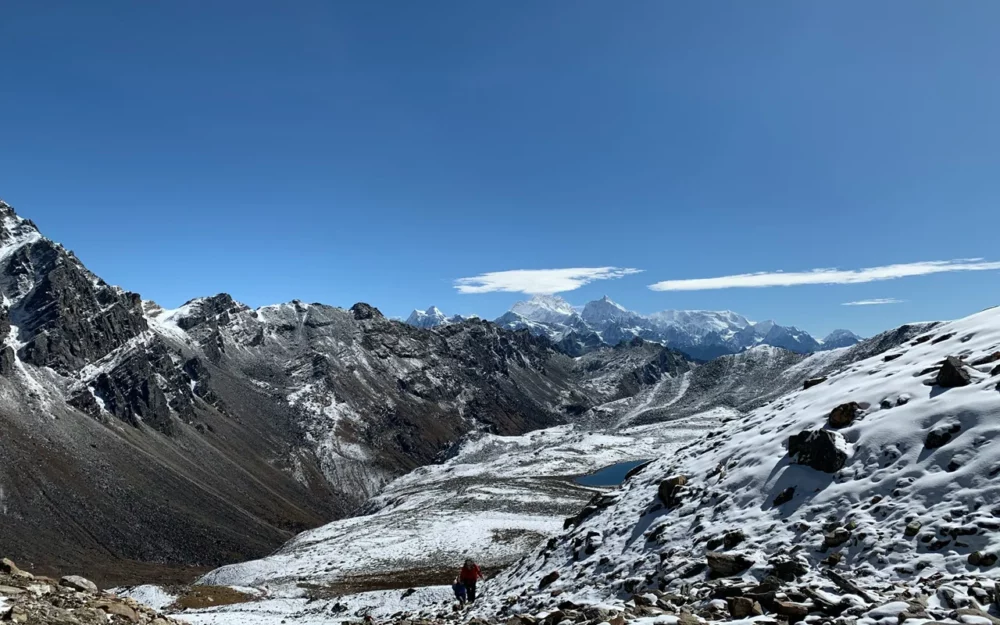
We have a thrilling day crossing Shipton La Pass (4127m) with marvelous views of Makalu, Baruntse and Chamlang peaks. Kalo Pokhari (Black lake), a glacial lake situated on the top of the cliffs and reflects the beauty of the high Himalayas, is a highlight.
Keke La Pass (4170m), has excellent mountain views further ahead before descending through rhododendrons with superb waterfalls and cliffs to Dobate (3 hrs), a most peaceful retreat.
Accommodation
Guest House
Meals
Breakfast, Lunch, Dinner
Max Altitude
3085mDay 09: Trek from Dobate to Yangri Kharka (3,557m)
Starting the day we descend through rhododendron forests where Himalayan monals sometimes flutter among the trees. While trekking through deep valleys and tall cliffs following the Barun River, we will make river crossings for an added adventure.
As we go further, we come out to alpine meadows with yak herder pastures, prayer flags, showing the spiritual nature of the Himalayas. After a final stretch over suspension bridges and through rocky ground, we reach Yangri Kharka with dramatic cliffs in relation and an ideal place for rest before entering the high altitude wilderness.
Accommodation
Guest House
Meals
Breakfast, Lunch, Dinner
Max Altitude
3557mDay 10: Trek from Yangri Kharka to Langmale Kharka (4,410m)
We continue to follow the Barun Valley and walk over very expansive grasslands with occasional sightings of blue sheep grazing in deep ravines. We cross over sections of prehistoric glacial moraine where the last vestiges of ice formations gone by leave them untouched by man for centuries.
The alpine streams that feed their way through the forests are fed by towering waterfalls and when we trek higher, we are greeted by the seasonal yak pasture, Langmale Kharka. In this part of the trail, the landscape changes to a high-altitude world that is made up of snow-covered peaks and breathtaking Makalu views intact from the Himalayan wilderness.
Accommodation
Guest House
Meals
Breakfast, Lunch, Dinner
Max Altitude
4410mDay 11: Trek to Makalu Base Camp (4,870m)
Our reach to Makalu Base Camp is probably the most awaited at this moment. As altitude climbs, the gradient remains steady and challenging, riding along and up rocky ridges and exposed terrain to test endurance.
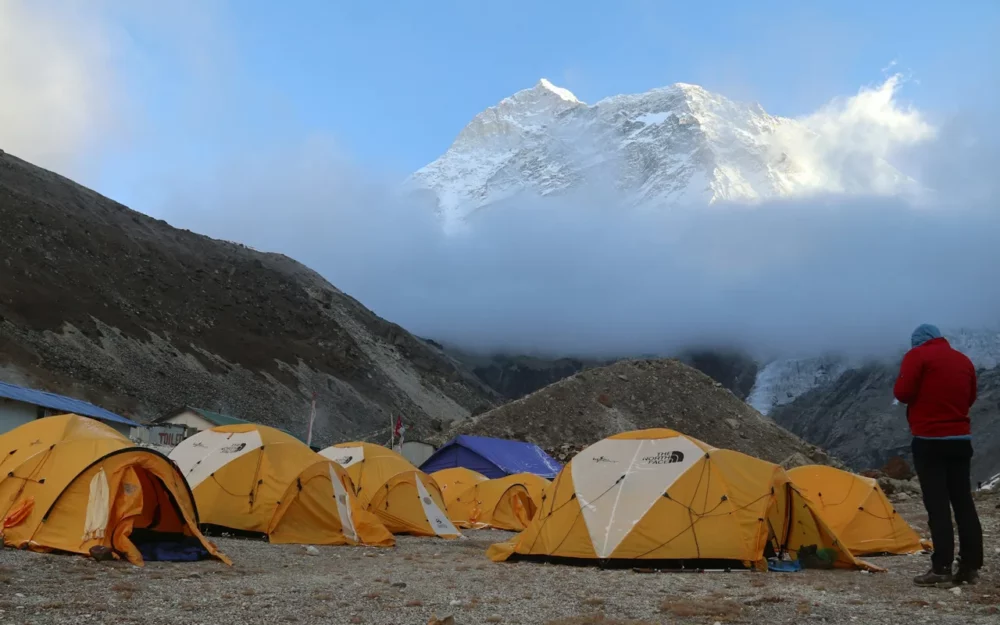
Forming almost in the isolation of a glacial river zone named Shershong, we step on the Mount Makalu (8485m) rises bare in front of us. After a laborious approach, we are treated to wide views of Everest, Makalu, Lhotse and Baruntse surrounded by icy moraines and ice layers.
On this day, they celebrate the surreal beauty of the untouched wilderness that they spent the day absorbing and soaking in.

Activity
Trek
Accommodation
Guest House
Meals
Breakfast, Lunch, Dinner
Max Altitude
4870mDay 12: Exploration Day at Makalu Base Camp
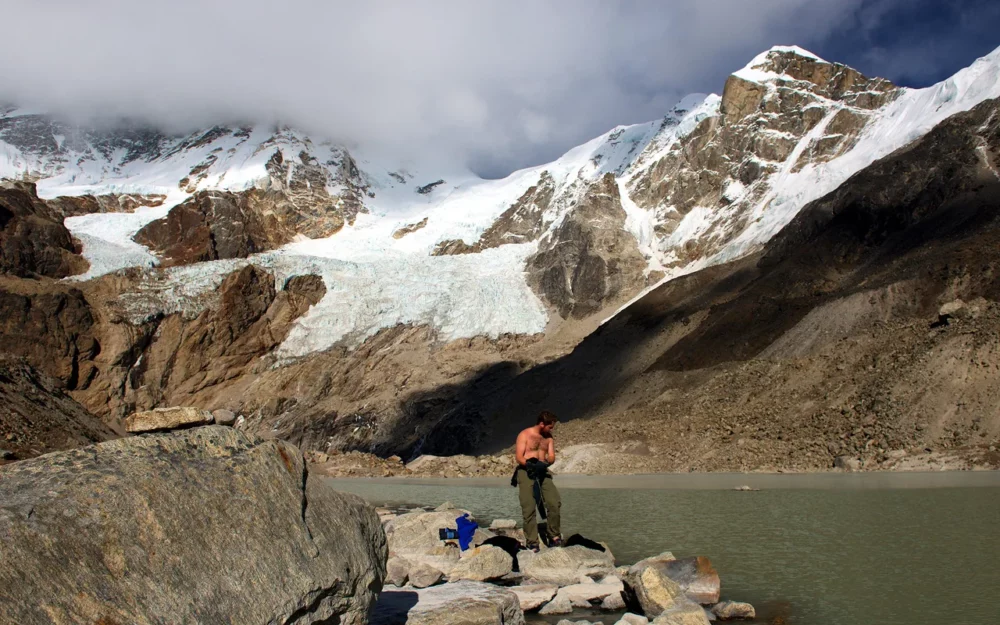
It happens to be a full-day trek to Makalu Base Camp where trekkers explore the raw grandeur of the Himalayas. We hike up to the Barun Glacier, the size of which and the ice walls, deep crevasses, we find display the immense power of nature.
A sight for the sore eyes, sunlight and shifting clouds cover the ice, a mesmerizing sight for photographers. We venture to higher vantage points and have closer views of Makalu’s dominant south face, feeling the silence of the high Himalayas.
Some trekkers get involved with the mountaineering expeditions, seeing the preparations for attempts to climb. And so the day ends, and we reminisce of this amazing trip before starting the descent.
Accommodation
Guest House
Meals
Breakfast, Lunch, Dinner
Max Altitude
4870mDay 13: Return Trek to Yangri Kharka
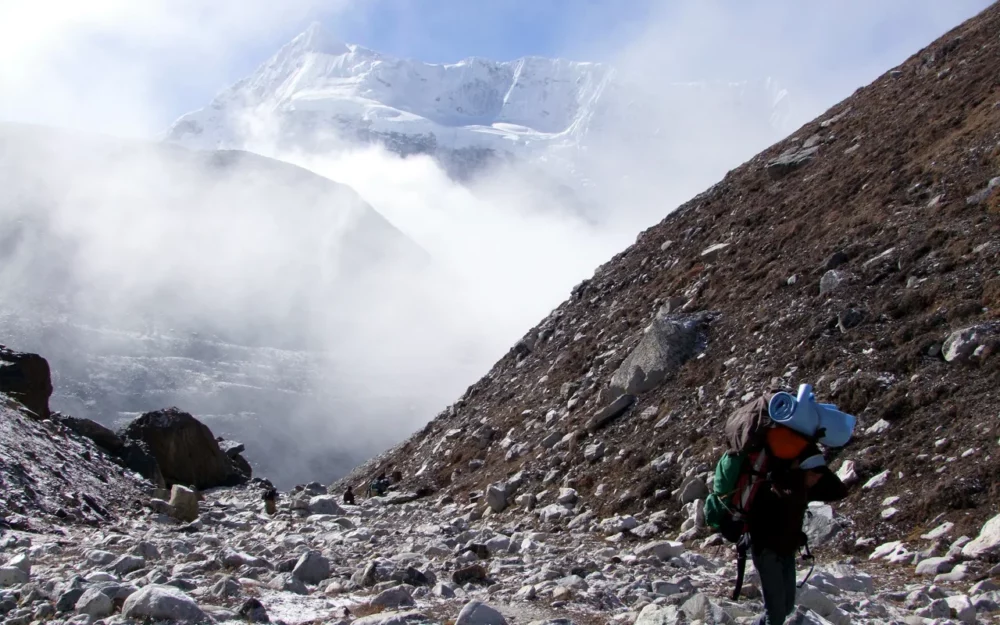
We now leave Makalu Base Camp, retracing the Barun River’s glacial landscape on our descent which follows. Returning your home, towering ice formations, rugged moraines, and distant snow-covered peaks are anew to be seen.
Langmale Kharka allows us to pass through yak pasture and alpine meadows down below before entering greenery. The trekkers have one more stop at Shershong before entering Yangri Kharka, which offers breathtaking views of mountains with beautiful waterfalls and open valleys surrounding the place.
Accommodation
Guest House
Meals
Breakfast, Lunch, DinnerDay 14: Trek back to Dobate
Trekking deeper into the Barun Valley revolves past insane cliffs, deep forests, and spiritual prayer flag sites. Himalayan monals fly through rhododendron forests that once again house wildlife and hidden waterfalls glide through the steep rock faces and create a new tranquil natural beauty.
We cross wooden suspension bridges over glacially supplied streams, rock around a bit and head to Dobate,a peaceful mountain refuge between two ridges.
Activity
Trek
Accommodation
Guest House
Meals
Breakfast, Lunch, DinnerDay 15: Trek to Danda Kharka (2,900m)
The return trek passes through forested descents, scenic ridge crossings, and dense vegetation and makes a nice stretch of this section. Passing through pine, juniper and rhododendron forest, we unearth caves hidden in the rock and old rock formations.
The epic adventure is occasionally reminded by glimpses of Mount Makalu through the trees. With the wind of the trek that takes you deep into the remote land, we stumble upon Danda Kharka, a village that takes your breath away with its stunning views and well-baked hospitality.
Activity
Trek
Accommodation
Guest House
Meals
Breakfast, Lunch, Dinner
Max Altitude
2900mDay 16: Trek down to Seduwa
Along with this, we move down into lower elevations where the climate warms and terraced farmland, colorful forests and mountain villages reappear. We cross traditional wooden bridges and rolling hills across which the local agricultural practices survive in the communities of the mountains.
We get to Seduwa and settle in a tea house, thinking of the breathtaking views and never-to-be-forgotten moments of this trek.
Activity
Trek
Accommodation
Guest House
Meals
Breakfast, Lunch, DinnerDay 17: Trek to Num & Drive to Tumlingtar
We start our descent from Seduwa, and we walk familiar terrain that used to be a hard uphill climb. We pass through dense forests with a great variety of animals, and cross suspension bridges over swift rivers, and gradually find the temperature rises and falls as we descend and ascend.
After we arrive at Num, we rest a short while before arriving to another jeep ride for 4 to 5 hours, including a drive through winding mountain roads, through remote villages and terraced farmlands. We say goodbye to Mount Makalu, which slowly recedes into the distance and we arrive at Tumlingtar for some rest before we return to Kathmandu.
Accommodation
Guest House
Meals
Breakfast, Lunch, DinnerDay 18: Fly back to Kathmandu
We fly from Tumlingtar to Kathmandu in the morning and, after days in the remote wilderness, complete our adventure. The 40 to 50 minute flight retraces the stunning aerial views of deep valleys, snow-covered peaks and the Himalayas one last time.
Upon reaching there, the trekkers check into hotels and are provided time to shop for souvenirs, visit local markets or get a glimpse of nearby places such as Boudhanath Stupa and Pashupatinath Temple. We spend the evening winding down the evening with a farewell dinner and celebrating our time, reminiscing on our unbelievable journey.
Accommodation
Hotel
Meals
Breakfast, Lunch, Dinner
Max Altitude
1350mDay 19: Departure from Kathmandu
Departure from Kathmandu
On the last day, we exit Kathmandu smoothly on our way out of Nepal. Trekking trekkers can catch a last stroll through the ancient parts of the city before departing to Tribhuvan International Airport, depending on the flight schedules.
On being on board you depart with remembering memories of soaring high peaks, beautiful landscape and cultural experience, thus making Makalu Base Camp Trek an unforgettable adventure.
Meals
Breakfast
Max Altitude
1350m1750 US$
-
1 -
1 person
US$ 1900
-
2 -
6 people
US$ 1750
-
7 -
14 people
US$ 1650
-
15 + people
9999
US$ 1600
Trip Information - Good to Know
Best Time to Visit Makalu Base Camp Trek
The right time to visit the Makalu Base Camp Trek is during the spring (March to May) and autumn (September to November) seasons when the weather is most agreeable.
The trail is stunningly colorful with clear skies, blooming rhododendron forests, and colorful alpine meadows in the spring. But autumn comes with crisp air, stable weather, and a perfect unobstructed view of Mount Makalu and its vicinity peaks.
Heavy snowfall in winter and heavy rainfall accompanied by slippery trails during monsoon make trekking very difficult. The temperatures could go highly below freezing which requires proper winter gear to trek, and monsoon is typically avoided as of the risks with leeches and landslides.
During spring and autumn, the ideal conditions for comfortable trekking temperatures and safe high-pass crossings are the best time for trekking here, when the views are nonetheless incredible. The best wildlife spotting opportunities also coincide with these seasons, as the weather changes, animals come down the mountains from the top of the mountain.
Trek Difficulty and Fitness Requirements
Makalu Base Camp Trek is a high altitude, challenging trek in need of excellent physical fitness and endurance. The ascents are steep, the ridges rocky, there are glaciers to cross, and high-altitude passes at Shipton La (4,127 m) and Keke La (4,170 m) to cross.
Trekking during the day takes between six and eight hours, and some trails involve tricky climbs over 1,000 meters in elevation gain. Extremely good fitness, strong cardiac fitness and a previous trekking experience are highly recommended.
An adequate acclimatization, sufficient hydration, and maintaining a steady pace prevent altitude sickness. Before the trek, habituation of strength training and hiking practice improves stamina.
Although nonspecialized in terms of climbing, the trail’s remoteness, its weather extremes, the trail requires you to prepare physically and mentally.
Permits and Regulations
Two important permits are required for the Makalu Base Camp Trek, which include the Makalu Barun National Park permit and the Restricted Area permit for entry into the region.
By using the Makalu Barun permit, the national park’s unique biodiversity and ecosystems are preserved, as well as the sustainable trekking in the zone. It is to regulate tourism and the protection of local communities that a restricted area permit is required, as the region is remote.
These permits can be obtained in Kathmandu or Tumlingtar and trekkers have to have valid identification and trekking paperwork on them at all times.
It is additionally important to adhere to the arrangements of respecting for local customs, not to disturb wildlife, and to follow environmental conservation rules to keep the natural beauty of the Makalu region pristine.
Flora & Fauna of Makalu Barun National Park
Biodiversity in Makalu Barun National Park is extraordinarily rich with dense rain forest to alpine terrain. At lower elevations, rhododendrons, magnolias and orchids bloom spectacularly in spring and pines, firs and junipers prevail at higher altitudes.
Rarest of the rare wildlife, such as the snow leopard, red panda, Himalayan black bear, and musk deer, are found in the park. Himalayan monals, Nepal’s colorful national bird, may be spotted in their wild habitat along ridges and meadows.
Besides being home to over 3,000 plant species and 440 bird species, the protected ecosystem is a haven for nature enthusiasts. Its location offers remote isolation as wildlife remains untouched, thus giving trekkers a chance to explore Nepal’s untouched wilderness at its best.
Local Culture & Communities Along the Route
Rai, Sherpa and Gurung communities are found in remote villages and settlements in high altitudes and you will come across them as you tread through these settlements. Warm smiles from locals in Seduwa and Tashigaon will also welcome you and provide information about their agricultural way of life.
In higher regions, Buddhist monasteries, prayer wheels and chortens make manifest the deep spiritual relationship of the Sherpa people with the mountains. At high passes, you’ll see colourful prayer flags fluttering at sacred sites.
You can be invited for fresh butter tea by the yak herders in alpine meadows, which lets you see a bit of their nomadic life. It will make the foreign culture welcoming and your Makalu Base Camp Trek meaningful.
Packing List & Essential Gear
Makalu Base Camp Trek calls for packing smart to ensure your comfort and safety during the trip all the better. Your wardrobe will require you to be layered, that is, base clothing moisture-wicking layer, an insulated jacket and a waterproof shell to deal with varying weather.
You will also wear sturdy trekking boots with ankle support to protect your feet on rough terrain. Restful nights are assured with a warm sleeping bag (rated to -15ºC) in high-altitude lodges.
It is necessary to bring supplies to carry essential medicines, altitude sickness tablets and a well-stocked first aid kit for emergencies. Don’t forget to pack the trekking poles that help relieve pain on your knees when descending.
Convenience and enjoyment to your trek are brought by a headlamp, water purification tablets and high-energy snacks.
Altitude Sickness and Precautions
The air gets thinner above 3,500m which explains the altitude sickness. At Khongma Danda, you’ll need to pace yourself for gradual climbs and take proper acclimatization days. Staying hydrated, not drinking alcohol, and avoiding excessive caffeine keeps oxygen level stable and prevents dehydration.
Early symptoms such as headache, dizziness, and nausea, you should recognize, and if symptoms worsen should seek immediate help by descending. Acetazolamide is known as Diamox, and some will carry it for acclimatization, but deep breathing exercises and slow trekking are the best natural methods to adjust.
Guides will also be available to take care of altitude-related matters if needed, all throughout the journey.
Accommodation & Food Options
Basic yet cozy tea houses will lodge you on your Makalu Base Camp Trek Route through Tashigaon, Khongma Danda and Dobate. Higher up, their rooms are shared and the blankets help against the cold.
Simple but nourishing meals are eaten such as dal bhat (rice and lentils), Tibetan bread, momos and noodle soup essential energy. In alpine areas, local yak cheese and butter tea is available with a taste of the high life.
At higher elevations, you will be limited in your food choices and you have to carry extra snacks. This adventure will be best had if you stay flexible and enjoy local hospitality.
How to Reach the Trailhead
Your Makalu Base Camp Trek will start from Kathmandu to Tumlingtar, a flight of 40 to 50 minutes which offers a great view of the Himalayan range. We organize a 4 to 5 hour jeep ride passing through remote villages, terraced farms and forested ridges from Tumlingtar to Num (1,560m) which is the official starting point of the trek.
The roads are rugged, and the adventure is included. For comfort, some trekkers will venture by a private vehicle, however, for those who wish to really feel the experience, it’s a jeep. Trekking route from Num goes towards Seduwa, then Tashigaon, gradually ascending in altitude while on this adventure.
Makalu Base Camp Trek Cost
The Makalu Base Camp Trek Cost depends on the size of the group, type of service, permits and other personal choices. The average trek costs between $2,000 to $3,500 per person to include permits, guide and porter fees, meals and stays at tea house.
A Makalu Barun National Park Permit is required ($30) and the Restricted Area Permit is necessary too ($20 per week). Also, additional costs are incurred like purchasing trekking gear, travel insurance, personal snacks and lodging in Kathmandu.
Group treks enable budget travelers to cut costs while those who opt for extra comfort have a personal guide, better lodges, although with questionable comfort and chartered transport.
Tips for a Successful Trek
- One can avoid the risk of altitude sickness by acclimatizing by taking gradual ascents and rest days.
- Cardio, endurance, and strength training is very important before the trek, as it is a steep climb and you have a lot of trekking time on your hand.
- Drink plenty of water, at least 3 to 4 liters per day and say no to alcohol and excessive tea or coffee.
- Carry the warm layers, a sleeping bag (-15°C rating), trekking poles and have waterproof gear.
- Eat high-energy food like dal bhat, soups, carbohydrates etc later to sustain stamina.
- Respect local customs by greeting locals with a Namaste and using environmentally local methods of taking the trek.
Frequently Asked Questions
What is the typical Makalu Base Camp Trek itinerary, and can it be customized?
The Makalu Base Camp Trek itinerary is of 19 days generally and includes beautiful forests, high passes, and glaciers. Extra acclimatization days or an alternative return route can be added into it.
How much does the Makalu Base Camp Trek cost, and what factors influence the budget?
The cost is $2,000 to $3,500, depending on permits, guide and porter fees, transport, accommodations and food. Private transport, group discounts, as well as upgraded stays are really affecting the budget.
How do I prepare mentally for such a remote trek?
Mental preparation includes adjusting our expectations, getting accustomed to being alone, doing training for the really long runs and acclimatizing to getting hit with unpredictable weather. In remote areas, trekkers are more confident noting challenges they can visualize and taking what they learn with simple survival skills along with being flexible.
What are the biggest challenges trekkers face on this route?
The treks are steep ascents with altitude sickness, unpredictable weather, no facilities and long trekking hours. This trek is especially demanding due to high passes, river crossings, and glacier walk.
Are there any myths or legends associated with Makalu or the region?
According to local myths, the region of Makalu–Barun is the land of sacred mountains, hidden valleys, and a spiritual guardian, which protects the mystical beings and divine energy.
Can I find internet or mobile network connectivity during the trek?
The internet access is extremely limited and not at all in low villages with sporadic mobile signals. Navigation and emergency communications in remote places should be carried out using satellite phones or offline GPS maps.
How does this trek compare to other Himalayan treks in terms of scenery and difficulty?
Makalu is a more rugged, more isolated and more dramatic glacial landscape than Everest and Annapurna treks. It’s harder, involves more trekking days and fewer tea houses as they never developed.
What are some unique experiences trekkers have shared from Makalu Base Camp?
Experiences of experiencing breathtaking sunrise views, encounters with rare wildlife, crossing frozen rivers and the surreal silence of Makalu Base Camp have been shared by the trekkers making this trek an unforgethable.
Trip Reviews
 Write a Review
1750 US$
Group Discount Price
-
1 -
1 person
US$ 1900
-
2 -
6 people
US$ 1750
-
7 -
14 people
US$ 1650
-
15 + people
9999
US$ 1600
Total Cost:
US$ 1900


How to book a trip?

make free inquiry

