




Trip Duration
7 Days
Group Sizes
1-16 People
Transportation
Land Transportation
Destination
Nepal
Max. Altitude
3,210m. / 10,531ft.
Activities
- Breakfast
- Lunch
- Dinner

Difficulty
Moderate
Meals
- 7 Breakfast
- 6 Lunch
- 6 Dinner

Accommodation
- Hotel
- Guest House
Trip Highlights
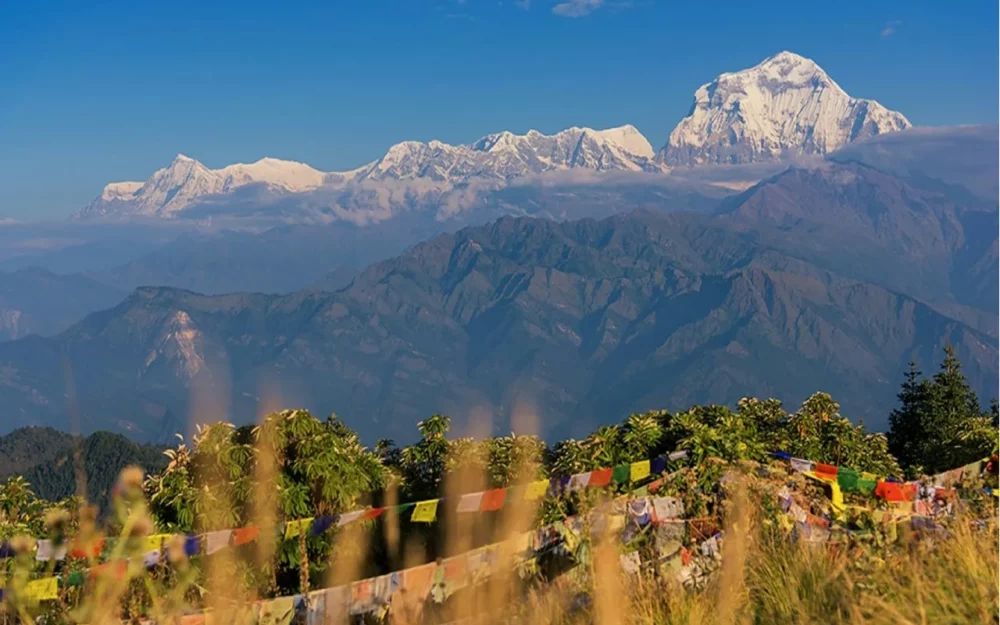
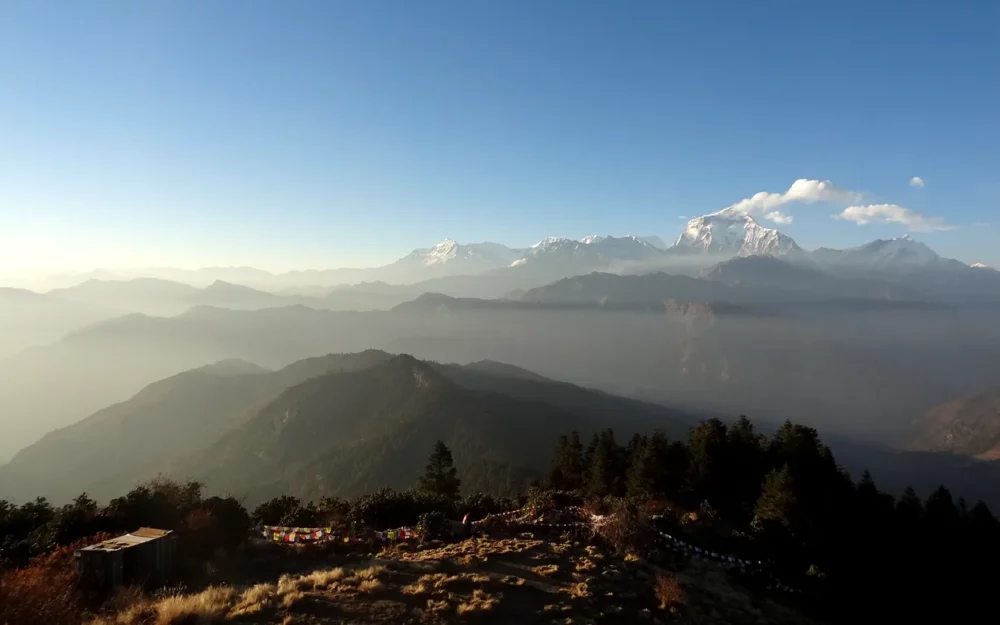
- Watch light sparkle from Poon Hill as it emerges from the mountains of Dhaulagiri and Annapurna.
- Walk along trails covered by rhododendron flowers that create a vibrant passage through the forest.
- Get firsthand knowledge about Gurung and Magar community traditions at Ghandruk and Ghorepani villages.
- Try the local Nepalese dishes dal bhat at homestyle teahouses that are family-owned.
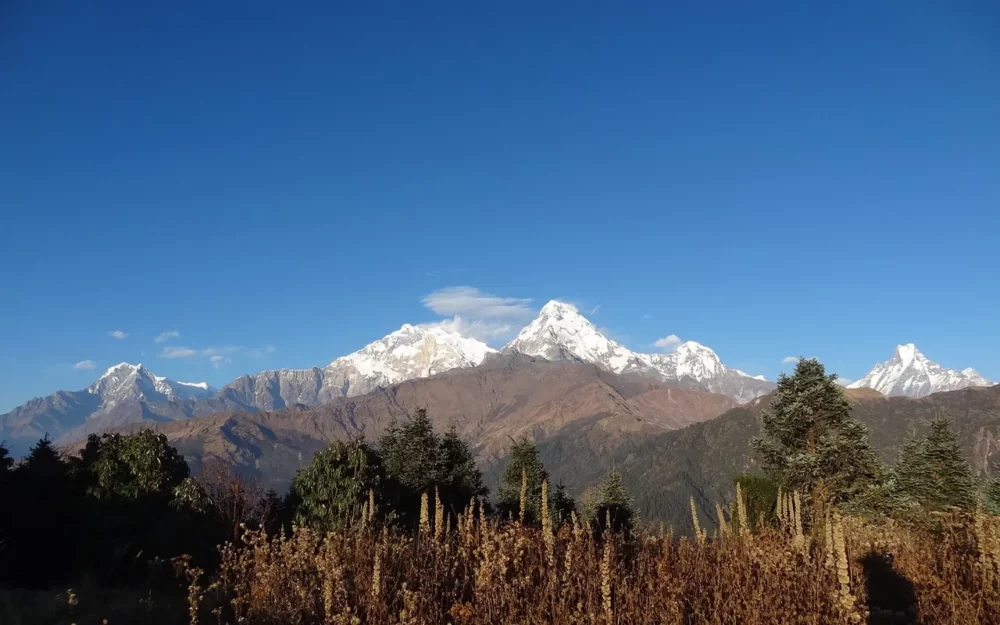
- See all 12 Himalayan mountains in one photographic view at this location.
- Take the stone steps that cross planted fields and date back to ancient times.
- Observe colorful pheasants and rare Himalayan monal birds at the trail path.
- Experience the sounds of birds and rustling leaves plus distant waterfalls in the peace of nature.
- Encounter spiritual sites made of shrines and prayer flags scattered across the hiking trail.
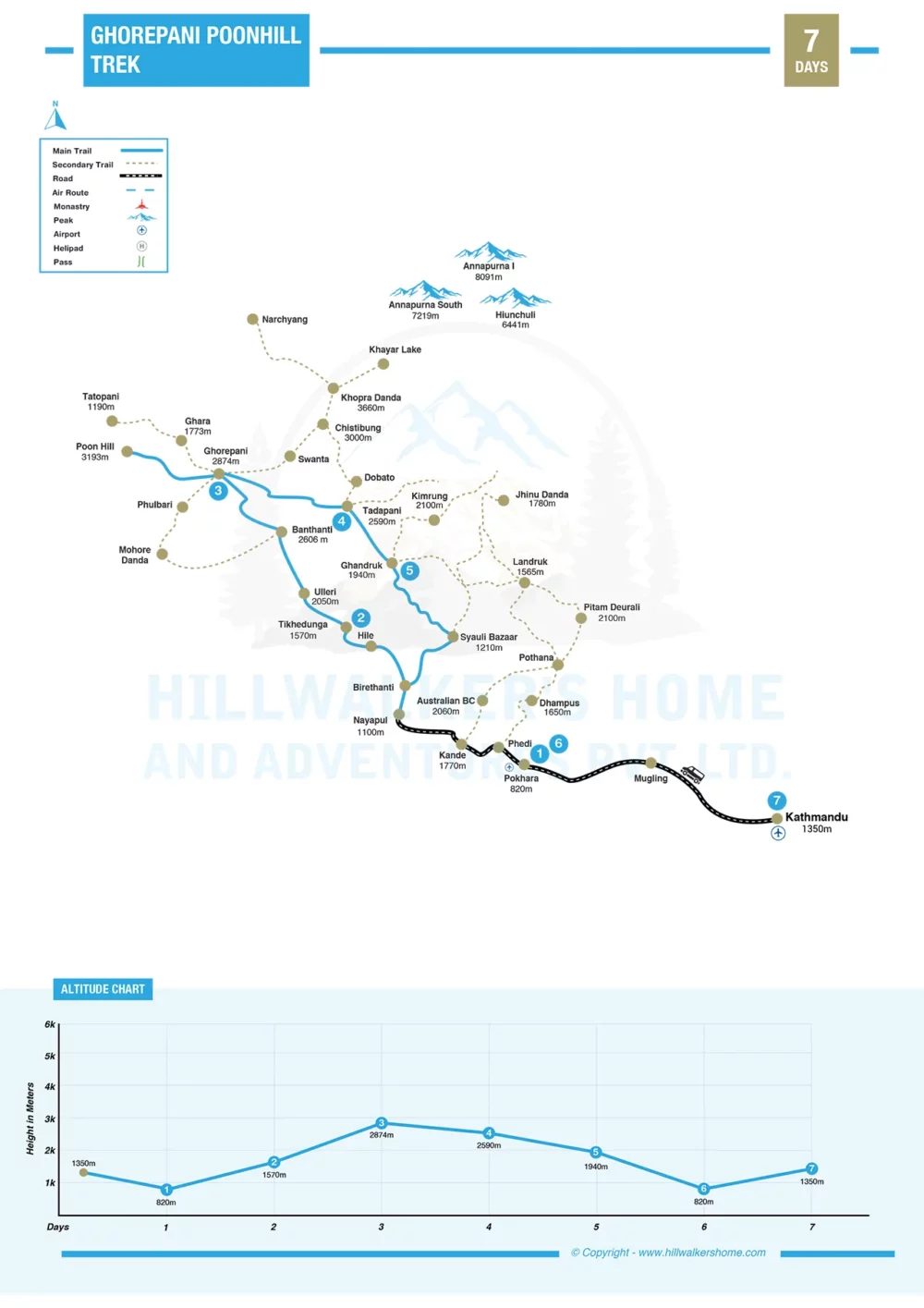
Overview of Ghorepani Poon Hill Trek
The Ghorepani Poon Hill Trek receives many visitors in Nepal because it combines natural scenery with vital local areas in a reasonably demanding hike. The 7-day trek takes everyone from first-time trekkers and experienced hikers at once through forest paths into mountain communities and stunning vistas within the Annapurna region.
The trek’s climax is reaching Poon Hill at sunrise (3,210 meters) to witness Annapurna and Dhaulagiri peaks become illuminated by morning sunlight.
The trail begins in Pokhara and moves through Tikhedhunga, Ghorepani, Tadapani, and Ghandruk as its stages. During their trek, hikers pass through various Nepalese ecosystems, including steplands and rhododendron forests alongside steep slopes.
The cultural exchange with Gurung, Magar, and mountain people, along with visits to family-owned teahouses, makes the adventure even more memorable.
Moderate climbing skills are needed throughout this 4 to 6 hours daily moderate walk. This pathway remains open throughout the year although fall and spring deliver the finest sights because of clear weather and blossoming trees.
Ghorepani Poon Hill Trek presents a perfect entry point for someone new to Himalayan hiking. It provides top sightseeing at lower altitudes with an easy hiking experience that matches the time and skills of new trekkers. Regardless of why you choose this trek, the Himalayas will provide an incredible adventure experience.
Who can do the Ghorepani PoonHill Trek?
A basic fitness level and passion for nature enable anyone to enjoy the Ghorepani Poon Hill Trek. Nepalese trekkers, from beginners to experienced, rate this path among the simplest in Nepal which welcomes all levels from novice hikers to seasoned seniors.
The trek suits everyone since you just need basic fitness and walking ability to handle 4 to 6 hours of hills daily. To tackle the stone steps leading to Ulleri you should perform basic physical training or walk before your trip.
Guided trips use experts to give additional trekking assistance. No matter your trekking level the Ghorepani Poon Hill Trek provides smooth paths and excellent views for all types of visitors.
History of Poon Hill
Long ago Poon Hill stood at 3,210 meters overseeing trade routes to this part of Nepal. Over many years the Gurung and Magar people lived on the hill to watch weather changes and protect their land from outside danger. Residents used the trade routes between Nepal and Tibet to move salt, wool and textiles through this region.
During the 1950s Nepal welcomed tourists after its first Everest expedition to Poon Hill caused trekkers to explore this area. People flocked to visit the Annapurna Circuit for its top-quality mountain views over Poon Hill which includes both Annapurna and Dhaulagiri.
When tourism expanded teahouses appeared to help hikers. Today Poon Hill represents both traditional Nepalese culture and new-age hiking vacations that serve to delight visitors.
Itinerary of Ghorepani Poon Hill Trek
Day 01: Kathmandu to Pokhara
The first day of Ghorepani Poon Hill Trek starts with a drive or a flight from Kathmandu to Pokhara. Tourists can select between a bus option that needs 6 to 7 hours driving or a faster flight that needs 25 minutes.
While driving you enjoy river views and forests plus villages but the path has many minor potholes. Pokhara offers tranquility and stretches beside a beautiful lakeside area compared to Kathmandu.
You can unwind and then head toward Phewa Lake before having food at a nearby café after hotel check-in. Early bedtime is important for the start of your trek tomorrow.

Accommodation
Hotel
Meals
Breakfast, Lunch
Max Altitude
822mDay 02: Pokhara to Tikhe Dhunga
The travel to Nayapul takes one and a half hours from breakfast as your starting point. The following breakfast marks your official start of trekking. The path runs along a river between Birethanti and Hile small suburban communities.
The path has gentle inclines as it passes through rural farms and forest roads today. Local farmers go about their work and a couple of donkeys carry supplies from one point to another.
You come to Tikhe Dhunga Village after 3 to 4 hours of walking where several basic lodges are available. People find peace here to prepare physically for the more challenging path before them.

Activity
Trek
Accommodation
Guest House
Meals
xBreakfast, Lunch, DinnerDay 03: Tikhe Dhunga to Ghorepani
The starting phase makes this day one of the most challenging stages of the trek. Directly after your breakfast, you start climbing over 3,000 stone steps leading to your destination. After walking steadily for three to four hours visitors can stop at Ulleri village.
The trail crosses into wooded land to enter a forest of tall rhododendrons and oak trees. The area offers chilly and peaceful surroundings with birds singing and monkeys hanging around. On the path you will meet small villages where you can get tea and food. You will need 6 to 7 walking hours to reach Ghorepani where you can enjoy breathtaking views from its position.
Activity
Trek
Accommodation
Guest House
Meals
Breakfast, Lunch, DinnerDay 04: Ghorepani to Tadapani (via Poon Hill)
Early Poon Hill ascent from your sleep will take you to the summit before dawn. The route takes one hour of walking and provides memorable rewards. The sunrise position grants you breathtaking mountain vistas from the peak.
Peaks like Dhaulagiri, Annapurna, and Machhapuchhre turn golden in the morning light. Once you admire the surroundings you return to Ghorepani where breakfast is served. After getting up early the route goes through forested areas and tiny settlements.
The path changes its elevation often but provides amazing views of nature. The walk leads you to Tadapani where you find solitude in its forested landscape and feel the mountains stare at you. The village provides excellent rest options for tired trekkers.
Activity
Trek
Accommodation
Guest House
Meals
Breakfast, Lunch, DinnerDay 05: Tadapani to Ghandruk
You leave Tadapani to start your descent to Ghandruk following your breakfast. Easier than other days lies ahead on this descent track between tree-filled forests that contain rhododendrons and oak plants.
Traversing the route is serene and presents chances to hear wildlife sounds or spot monkeys along the way. Over time you will notice the houses of Ghandruk which stands as the largest and most beautiful Gurung village in this area.
The traditional stone houses and cozy people make this village their home while huge mountains surround Annapurna. You have time in the afternoon to walk through the village and visit the museum. People start their non-trekking journey back to Pokhara from this point.
Activity
Trek
Accommodation
Guest House
Meals
Breakfast, Lunch, DinnerDay 06: Ghandruk to Pokhara
You will conclude your walk today. After eating breakfast you will take an uncomplicated downhill trail to choose Kimche or Nayapul according to your selected path. The hiking trail passes through tilted farmlands and small population areas offering many opportunities to take in the beautiful views.
You will travel 2 to 3 hours down to the road before finding your transport ride. You will enjoy a beautiful drive back to Pokhara after concluding the trek path. You can recharge at proper facilities before proceeding to explore the city’s restaurants, lakeside and hotels. The trek ends well and it serves as an excellent time to unwind.
Accommodation
Hotel
Meals
Breakfast, Lunch
Max Altitude
822mDay 07: Pokhara to Kathmandu
You make your return to Kathmandu at the end of the trip. Pick from either a tourist bus needing 6 to 7 hours or faster air travel options to complete your travel back.
The drive shows you the beautiful landscapes of Nepal one more time with your eyes. The busy Kathmandu lifestyle resumes after the trek but you return with an inner peace that you gained during the trek.
Your remaining energy determines your Kathmandu exploration options like Durbar Square, Basantapur, Swayambhunath and Pashupatinath Temple, or simply just stroll in Thamel. You should now review all you accomplished during your mountain adventure.
Accommodation
Hotel
Meals
Breakfast
Max Altitude
1350mTrip Information - Good to Know
Best Time to Trek to Ghorepani Poon Hill
Ghorepani Poon Hill Trek can be undertaken at best during the spring and autumn seasons.
Spring, between March and May, has gentle weather and the rhododendrons are blooming around the trails making beautiful colorful spots. September to November falls under Autumn, a favorite season because of clear skies and great mountain views.
Though trekking is feasible between December and February, you can expect cold weather, and chances of snow at higher altitudes can be high. The heaviest rains fall during the monsoon season (June to August) which makes trails slippery and sight obscured by clouds.
As a result, to get the most out of the trip where one can expect good weather and see the mountains clearly, the spring or autumn seasons are ideal.
Difficulty and Fitness Level of Ghorepani Poon Hill Trek
Ghorepani Poon Hill Trek is for beginners and families to do trek but also rewarding for experienced trekkers, fairly easy to moderate level trek. The trail consists of daily walks of 4 to 6 hours over all types of terrain, stone staircases, little forest trails, protracted climbs and very steep descents.
The second trekking day has one of the toughest parts as there is a long staircase climb to Ulleri which needs some stamina and patience. But the speed is calm, and there is a profusion of tea houses of the same to take rests.
There are no technical climbing skills at all though being in decent shape is useful. Trekking is made more comfortable by performing light cardio training or regular walking.
Climbing to the base camp does still put physical strain on the climber, but overall Ghorepani Poon Hill Trek can be done by anyone with reasonable fitness who is willing to adequately prepare beforehand.
Altitude Sickness and Acclimatization
The chance of altitude sickness is not too high on the Ghorepani Poon Hill Trek as it peaks on only 3,210 meters (10,531 feet) at Poon Hill. The risk is low, and it is best to remain vigilant about having the symptoms of Acute Mountain Sickness (AMS), including headaches, nausea, dizziness, or fatigue.
At even moderate elevations, however, even in some people, discomfort can occur if one ascends too quickly or does not remain properly hydrated. Walking at a steady pace, drinking a lot of fluids, and resting whenever is the best way to avoid altitude-related problems.
Gradual altitude gain is most itineraries’ nature and helps our body ease. Unless you are suffering from particular health conditions, there is no need for extra acclimatization days.
And as always, if symptoms do present, descend and rest. The route can be completed by most trekkers with basic precautions, without really upsetting altitude issues.
Ghorepani Poonhill Trek Essential Permits
Two official permits are required to trek on the Ghorepani Poon Hill Trek are the Annapurna Conservation Area Permit (ACAP) and the Trekking Information Management System (TIMS) card.
Since this is a protected conservation area and the trail goes through it the ACAP is necessary, and for foreigners, it costs approximately NPR 3,000 per person. The safety support TIMS card costs NPR 2,000 for independent trekkers, or NPR 1,000 should be if you are trekking with a registered guide or agency.
The two permits can be obtained in Kathmandu or in Pokhara usually in a few hours. You should always carry these on you as there are many checkpoints along the route where officials will ask to see them. Trekking without a permit is forbidden and may cost you your money.
These permits are in addition to the safety they provide you and also help finance the upkeep of the trail and local communities.
Flora and Fauna on the Ghorepani Poon Hill Trek
Ghorepani Poon Hill Trek is a trek that takes you through an amazing mix of vegetation and fauna in the lap of nature. One highlight of the trek is that dense rhododendron forests are passed through, particularly in spring when these beautiful flowers with red, white and pink shades bloom in their multitudes.
Oak and bamboo forests twine around the trail too, and you may pass by terraced farms, growing millet, barley, potatoes and more. Animals such as Himalayan langurs, barking deer and the occasional snow leopard inhabit the area but are less commonly seen.
Birdwatchers will be of particular delight since the area is famous for the Himalayan monal (Nepal’s national bird), woodpeckers and some other varieties of pheasants.
This adventure through lush vegetation, the sound of birds calling, and at times peering at animals has a peaceful, almost magical feel that will change you.
Cultural Experience during the trek
The Ghorepani Poon Hill Trek offers a chance to experience the local culture, and this is one of the most gratifying components of this trek. The trail runs through Gurung and Magar villages where you can see life in the Himalayas continuing from day to day.
In particular, Ghandruk is famous of its Gurung heritage where a small museum gives visitors an idea about local customs, tools and dress. The way is marked with prayer flags, small Buddhist shrines, and stone and wood homes.
Instead, they stay with local families who run teahouses where they can have many tasty homemade Nepali food and enjoy local hospitality. A simple “Namaste” is quite common and, if you ask, locals enjoy telling you stories or explaining their traditions.
This cultural immersion makes the trek a more meaningful trek in terms of a physical sense but rather a personal and memorable human experience.
Food and Accommodation along the Route
Accommodation during the Ghorepani Poon Hill Trek is simple and just enough to ensure that the trek has been a great one. The primary form of accommodation is in the teahouses, ubiquitous lodges run by people’s families in each of the villages along the trail.
Typically rooms are basic twin bedrooms with shared bathrooms (clean and very cozy). In colder months, wood or yak-dung stoves warmed dining areas that are ideal places to laze in the evenings.
Nepali meals are mostly traditional such as dal bhat (rice, lentils, and curry), noodles, soups, momos, pancakes and occasionally pasta or fried rice. Ginger tea or masala tea is always there and easily available.
The food is hearty and satisfying although the choices are limited the higher you go. Local businesses are encouraged to stay sustainable by this, and trekkers are encouraged to eat at the teahouse they stay in as well.
Drinking Water Availability
Drinking water is usual in teahouses on the Ghorepani Poon Hill trek. Although there is no rule about drinking the water, as it varies, travelers are advised to bring a water bottle and a purification system (iodine tablets or a filter) just in case.
Bottled water is available in some areas, yet having consideration for the environment helps to minimize plastic use. In general, in the popular teahouses water sources are safe, but for the utmost security, travelers are often boiling or treating water prior to drinking.
Travel Insurance for Ghorepani Poon Hill Trek
While the Ghorepani Poon Hill Trek is considered low risk, it is extremely advisable to have travel insurance. The trek is above 3,000 meters and is a long day of walking in remote areas where access to hospitals and emergency services is infrequent.
A good policy should at the same time cover emergency medical treatment, trip cancellation, lost luggage and more importantly, helicopter evacuation in case of serious illness or injury.
For example, being transported down from the slopes with altitude-related or sprained ankles and other minor health problems can be very expensive without coverage. Before you begin the trek, you will be asked for proof of insurance by many trekking agencies and the permit offices.
Remember that not all general plans cover trekking or hiking above 3,000 meters in Nepal, so make sure your policy covers this. A small cost that brings you peace of mind and lets you enjoy the trek without worry, well protected, should the worst happen.
Trip Add-ons
Ghorepani Poon Hill Trek is offered with a slew of exciting add-ons as trekkers could make it even more rewarding. Many trekking in Pokhara tend to spend a few extra days exploring this peaceful lakeside city of Pokhara by boating on Phewa Lake and visiting caves and hill-clinging views from the World Peace Pagoda.
If you are short on time, you can keep the trek moderate by following the ridge all the way to Australian Camp but if you have more time, you can go all the way to Annapurna base camp or Mardi Himal for great mountain adventures.
You can also experience cultural things in Kathmandu like visiting ancient temples, and UNESCO World Heritage sites before or after you go on a trek. For relaxing, visit Tatopani which has a short vast spa or natural hot spring.
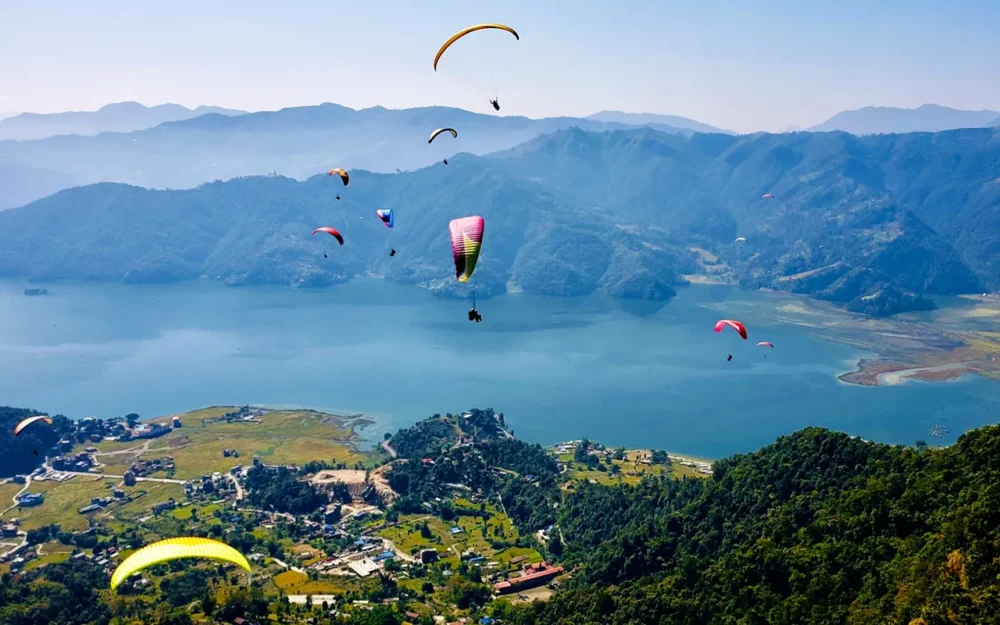
Near Pokhara, there is a lot to offer for adventure lovers who can try paragliding, ziplining, white water rafting, etc. These trip add-ons offer you the freedom to alter your journey to meet your interests, whichever it is, more trekking, more cultural immersions, or pure leisure.
Frequently Asked Questions
What kind of power options are available during the trek?
In most teahouses, you can pay a small fee to charge your phones and cameras. As far as power sources go, they are usually solar or limited, so it is good to bring a power bank.
How cold does it get on the Ghorepani Poon Hill Trek?
Temperatures vary by season. Daytime is mild in spring or autumn (10°C. to 20°C) but sometimes nights can fall to 0°C to 5°C. In winter it gets below freezing point, especially in places like Ghorepani which is high altitude.
Can I use my phone on the Ghorepani Poon Hill Trek, and what’s the network coverage like?
Some villages have Mobile signals e.g. Ghorepani & Ghandruk but barely any mobile signal is available in forests and remote areas. Ncell and NTC both work, but not consistently throughout the trial.
Are there any ATMs or card payment options on the Ghorepani Poon Hill Trek?
ATMs are not to be found on the trail and teahouses will not accept cards. Thus it is recommended to bring enough Nepali rupees from Pokhara or Kathmandu before starting the trek.
What kind of gear is available for rent in Kathmandu or Pokhara?
Rent sleeping bags, crampons, down jackets, trekking poles, backpacks. There are rental shops at both with good quality rental gear at reasonable day rates. Short treks are for rentals.
Do I need a guide or porter for the Ghorepani Poon Hill trek?
It is not necessary to use a guide, but it is useful for local knowledge and safety. They are able to carry on your heavy bags, making it easier for you to trek. At the least, most trekkers will hire at least one of the group.
Trip Reviews
 Write a Review
550 US$
Group Discount Price
-
1 -
1 person
US$ 600
-
2 -
5 people
US$ 550
-
6 -
10 people
US$ 500
-
11 + people
9999
US$
Total Cost:
US$ 600


How to book a trip?

make free inquiry

