



Trip Duration
3 Days
Group Sizes
1-16 People
Destination
Nepal
Max. Altitude
1,890m. / 6,201ft.
Activities
- Trekking

Difficulty
Easy
Meals
- 3 Breakfast
- 3 Lunch
- 2 Dinner

Accommodation
- Guest House
- Hotel
Trip Highlights
- Trek through the peaceful Modi Khola river, crossing over thrilling suspension bridges with breathtaking views.
- View the flourished colorful forests of rhododendron, especially in the spring.
- See the constant magnificent views of peaks like Annapurna South, Gangapurna, Tukuche Peak, Dhaulagiri, Hiunchuli and Machapuchare (Fishtail).
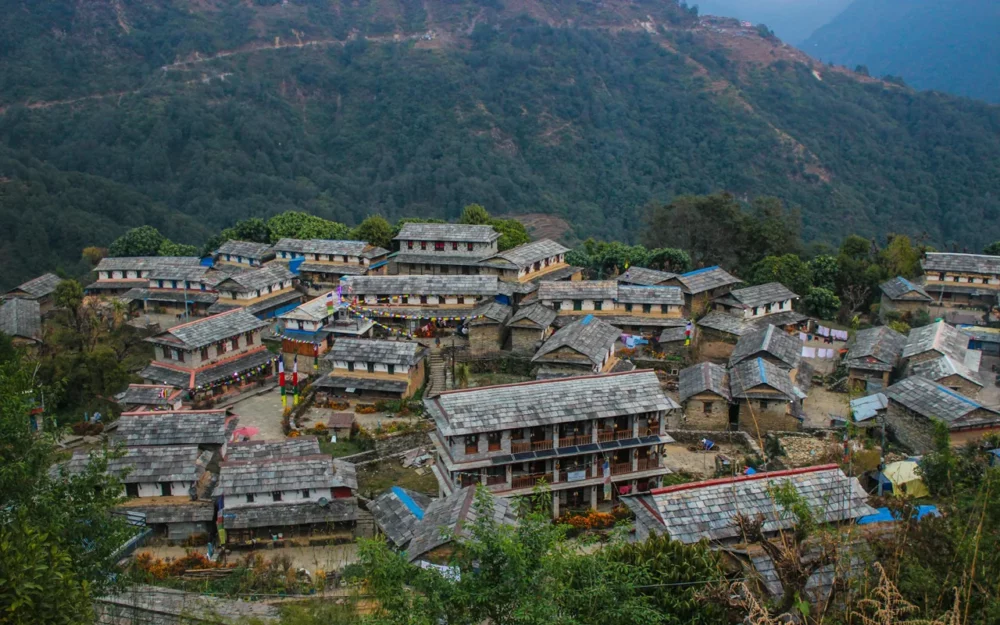
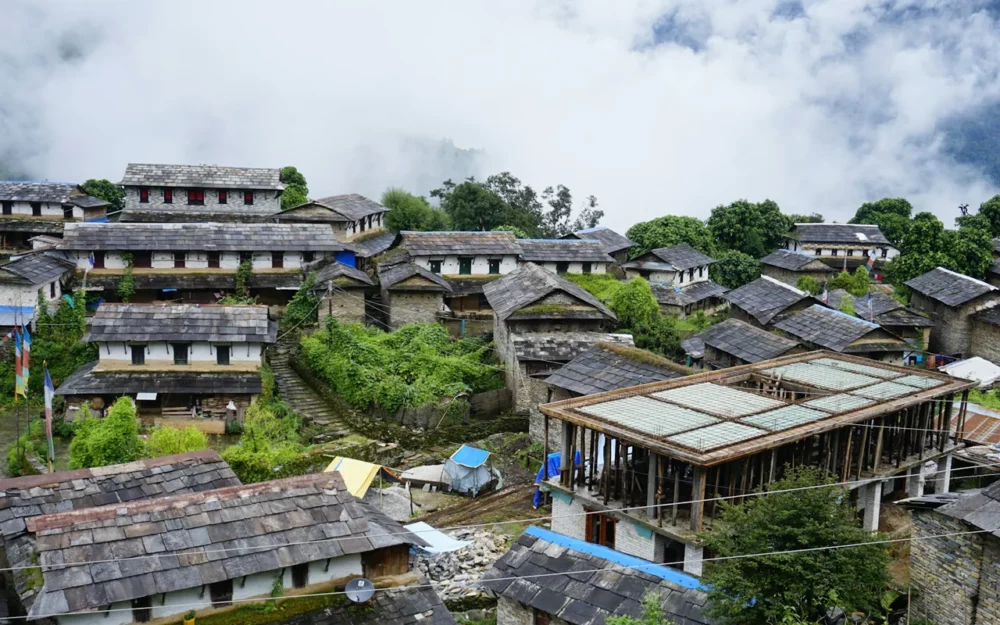
- Visit traditional Gurung villages and chat with the warm locals and get to experience the true mountain life.
- Witness the Ghandruk Cultural Museum to see in detail about rich history and culture of the area.
- Pass through terraced fields, past quiet oak woods that shall unfold peaceful natural beauty.
- Experience the golden glowing Annapurna ranges during sunrise and sunset.
Overview of Ghandruk Trek
The Ghandruk Trek is one of those treks that will stay with you forever. This is a very short trek starting from Pokhara, a tourist destination for many, where you can stroll the Phewa Lake. While you walk beside the peaceful Modi Khola river and cross the swaying suspension bridges while wandering through the colorful rhododendron forest, you will be truly part of nature.
Every step will be special with the views of Annapurna South, Hiunchuli, Gangapurna, Tukuche Peak, Dhaulagiri, and Machapuchare (Fishtail) in view the whole time. Passing through cozy Gurung villages, where life is calm and simple, you will be able to get to know warm, welcoming locals.
Ghandruk Cultural Museum gives you a taste of the rich tradition of the area. While walking through terraced fields and oak forests, you’ll always be greeted with beautiful views of the Annapurna range, it’s in its golden sunset glow that the mountains seem to glow.
Why Choose This Trek
The Ghorepani Ghandruk Trek is a splendid three-day trek which offers the amazing beauty of the Annapurna region. Swinging on suspension bridges, walking through rhododendron forests and seeing magnificent Annapurna South, Hiunchuli and Machapuchare (Fishtail) peaks all around you will make you feel as if you walked straight into heaven.
On your way, you will come across welcoming Gurung villages with the local people greeting you warmly and inviting you to their way of life. Long steeped in history, Ghandruk, especially associated with Gurkha recruitment, has not yet lost its authentic charm to the influx of trekkers.
You shouldn’t miss visiting the Ghandruk Cultural Museum, which provides an in-depth view of the area’s wealthy traditions and historical past. In this 3-day Ghandruk Trek, you will be embraced by nature, culture and the people’s warmth, for which you will have an unforgettable experience.
History of Ghandruk
The Gurung community has played an enormous role in the history of the picturesque village of Ghandruk, located in the Annapurna region. The Gurungs have lived here for centuries and the village is particularly famous for its impact in the Gurkha recruitment as many Gurung men served in the British and Indian armies.
Ghandruk gained prominence in trekking in the 1970s and opened itself to the world. However, when trekkers first started exploring the area, the village changed, but kept its old customs.
Trekking tourism has for economic opportunities, but the influence has in no other way changed the essence of Ghandruk. A perfect place for a brief stop that will help you to learn about village’s history, customs, and the Gurung community’s evolution is the Ghandruk Cultural Museum.
Itinerary of Ghandruk Trek
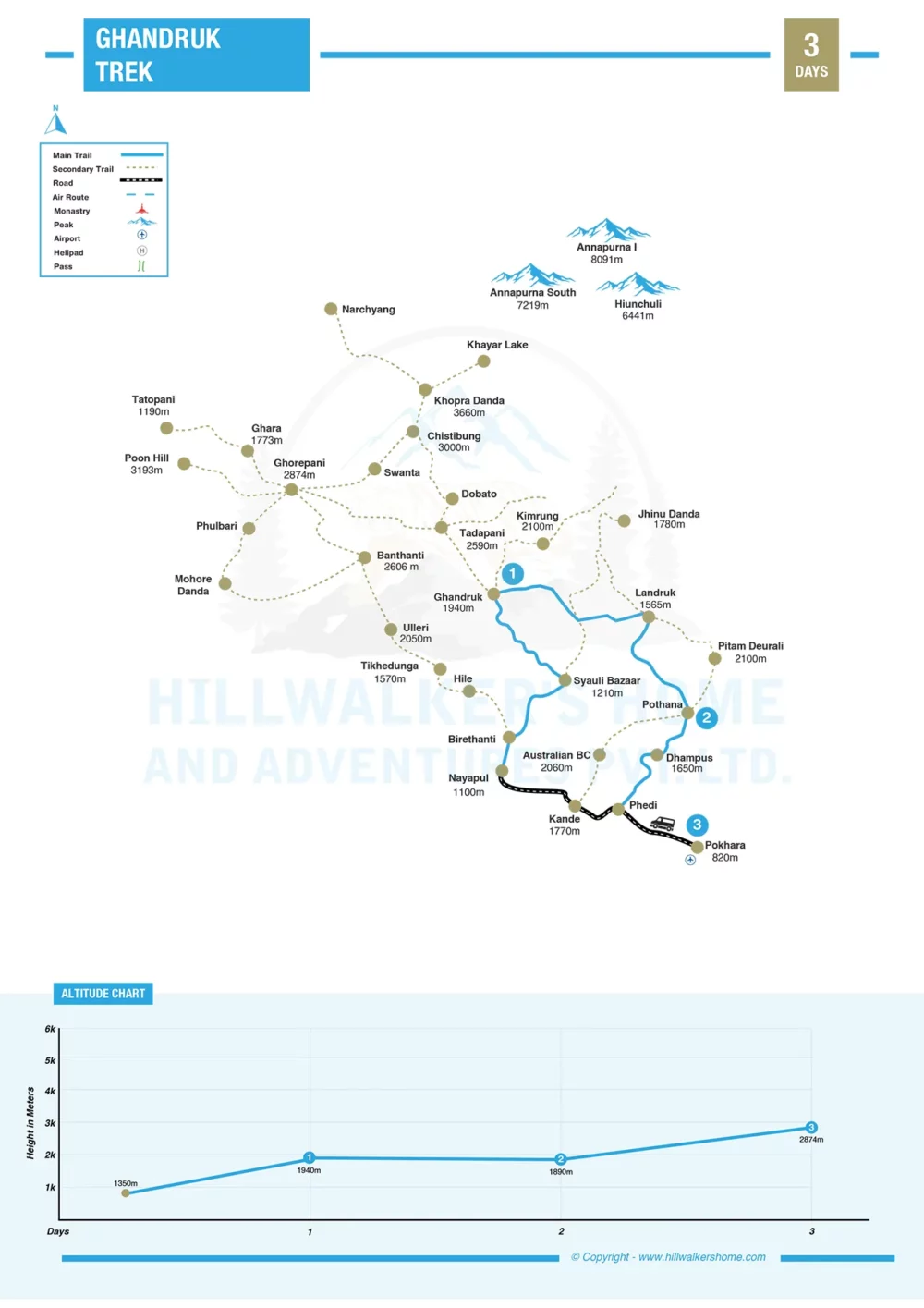
Day 01: Drive from Pokhara to Nayapul, then trek to Ghandruk
The Ghandruk Trek Itinerary is on, after we meet up early in Pokhara, also known as the city of lakes, we will start an early amazing drive ahead to Nayapul. Along the way through the valleys and past terraced fields, you will begin to feel the mountains calling you. It’s a great beginning to the next couple of days of trekking to come and getting a taste of the natural beauty that awaits us.
We’ll run straight from Nayapul. It is a pretty easy trail and we will be walking alongside the Modi Khola river. Initially, it starts off pretty relaxed with the occasional suspension bridge coming into view, providing us with a perfect place to stop and take pictures or two.
En route, there are little villages where we pass through and see the locals living their everyday lives, children laughing, farmers tending the fields and the peacefulness of mountain life.
When we arrive in Ghandruk, some of the most beautiful views will greet us. A Gurung village, Ghandruk is a charming one, from where the Annapurna South, Machapuchare and Hiunchuli mountains seem as close as touching. In addition, other peaks like Gangapurna, Dhaulagiri and Tukuche Peak will also welcome you.
We have almost stepped into nature’s paradise. Time will not be rushed, we will wander around the place and pay a visit to the Ghandruk Cultural Museum to have a glimpse into the Gurung people.
With the sun starting to go down, we will all stop to take in all the views of the setting sun. A wonderful first day ends peacefully.

Activity
Trek
Accommodation
Guest House
Meals
Breakfast, Lunch, DinnerDay 02: Trek from Ghandruk to Pothana
The morning sun will wake up Ghandruk with its soft touch on the mountains. We will have a warm breakfast and then lace up our boots for another day of the trek.
Our morning is accompanied by cool, fresh air and birds. The trail begins with a descent through forests, and if you trek during the spring, the forests are now filled with rhododendrons.
Walking through this little village as we walk into Landruk, we will stop for a breather and just take it as it is a peaceful little village. It was one of those places where the time is like time peels down a little.
There will be an opportunity to reach out with the locals, if we’re there for a while maybe even grab a cup of tea and really get to know where we are.
From here, we proceed on a trail through rhododendron and oak forests, and the Annapurna range gradually exposes itself. We’ll breeze over a couple of suspension bridges which sway slightly above the river below, those always are fun, if we take it slow and really enjoy the view there.
When we are nearer to Pothana, we are greeted with some of the most impeccable wide views of Annapurna III, Dhaulagiri, Lamjung Himal and Machhapuchhre.
This is the type of scene that brings you to a stop to just stare at everything. Tonight we will remember this sunset and we will end this day together by reflecting our experience of beauty.
Activity
Trek
Accommodation
Guest House
Meals
Breakfast, Lunch, Dinner
Max Altitude
1890mDay 03: Trek from Pothana to Phedi and drive to Pokhara
Though we will be sad to bid farewell to the mountains, it is the last day and we still have plenty of adventure left! We start our descent in a calm morning, walking past terraced fields where farmers are working hard in the morning. Before we are destined to reach Dhampus, we will take our time, relish the peaceful ambience and the pure air.
In Dhampus, we have one more opportunity to stop and enjoy the spectacular view of previously seen mountains of the Annapurna range. We are on top of the world and this is a chance to reflect on the ground we have covered.
Last but not least, we will descend to Phedi, where the vehicle will be waiting for its return to Pokhara. The ride back is short but long enough to discuss our trek, go over favourite moments, and on and on about the wonderful things we have seen.
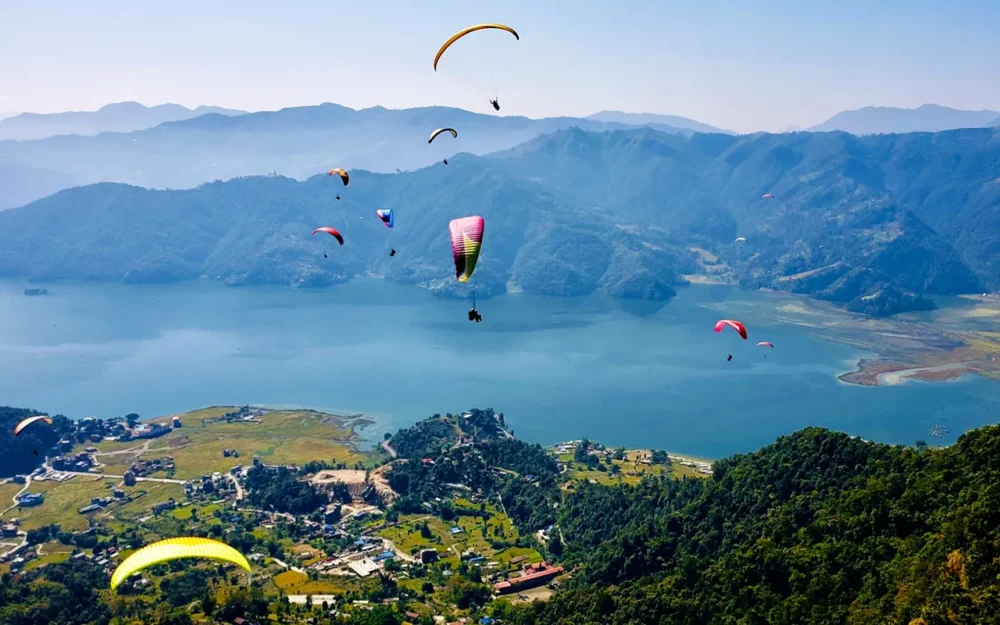
When we reach Pokhara, we will arrange separate ways but you will carry back memories of the mountains for a lifetime. If you do get time to spare, Phewa Lake will be a place to stroll around and find some of the authentic foods of Nepal, namely dal bhat and momo.
As we say bye, you will understand that it wasn’t the walk that these 3 days had been about, but rather, you had been experiencing something so special, together with fellow trekkers and Gurung locals.
Activity
Drive
Accommodation
Hotel
Meals
Breakfast, Lunch
Max Altitude
822mTrip Information - Good to Know
Best Time for Ghandruk Trek
The best time to undertake the Ghandruk Trek for you is during the spring (March to May) and autumn (September to November) months. At these times, clear skies, mild temperatures and beautiful views of the mountains are possible.
The landscape becomes crowded with fields of daffodils and you will walk through rhododendron forests to get there, all in full bloom. Crisp, refreshing air speaks for the autumn season, making the trek perfect.
There are beautiful views during the winter months (December to February) but they will be cold, especially on the higher altitudes, and can make your trek more strenuous.
The summer monsoon season (June to August) is the time to avoid the trails since the trails can be slippery, and the landslide might make the trek unsafe. If you wish to get the best experience, plan for spring or autumn.
Difficulty Level of Ghorepani Ghandruk Trek
The Ghorepani Ghandruk Trek is moderate and is made for both newbie trekkers and even for those who have some hiking experience. Although the trail is marked and the ascent is gradual, enjoy taking your time enjoying the trip.
There are a few uphill sections on the first day, but a few breaks and a steady pace will not be an issue. The altitude gain is gradual, so there is a low risk of altitude sickness.
Keep in mind to pay attention to your body any time it tells you to rest, to drink water, and to eat when hungry. And while it’s not a technical trek as you walk for a few hours a day which is all that is required. These few hours you trek will reward you with breathtaking views along the way as well as a memorable experience.
Fitness Preparation
Preparation for the Ghandruk Trek doesn’t require you to be a professional climber, but basic fitness preparation will go a long way. Begin your training by developing a routine that includes varying terrains of paths and inclines, similar to what you will see, for a length of time to get your body used to your plan.
To build stamina, you should aim at 30 to 60 mins cardio 3 to 4 times a week, for example, walking, jogging, cycling, swimming and so on. To prepare for the uphill stretches of the trek, concentrate on leg strength with lunges, squats, and step-ups.
Balance and stability will also be helped with the core exercises. It is also wise to train while carrying a loaded pack on treks to simulate conditions of the trek. Preparation is the only way you go to make sure you feel up for the trek and also keep up with ease.
What to Bring
Packing for the Ghorepani Ghandruk Trek is a tricky terrain, you need to bring all necessary things without going overboard. That said, the first item to have is a good pair of trekking shoes, something which you are comfortable with and ideal for all weather conditions.
Layered clothing and be able to adjust according to changing temperature, have warm clothing for cold nights and a light rain jacket just in case it does rain. Other essentials for sun protection like sunscreen, a hat, and sunglasses for protecting from the strong mountain sun should also be packed.
Keep a water bottle and purification tablets or filter to remain hydrated. Take a first aid kit, some snacks which will give you extra energy and do not forget a camera to photograph breathtaking views.
Last but not least, you can move around comfortably with a backpack that is lightweight and is properly fitted.
Accommodation & Meals
On the Ghorepani Ghandruk Trek, you will spend nights in locally operated and cozy teahouses along the trail. Simple and welcoming, lodges offer the ability to spend some time in local culture and get a good night’s sleep in the process. The rooms are basic, but they facilitate a warm bed and a shared bathroom.
Hearty meals and traditional dishes like dal bhat, momo, and fried rice will normally be on the menus of each teahouse along the trek. These meals not only offer a delicious taste of cultural food but also fill you up and provide you with a good source of energy.
Owners and staff of tea houses are very friendly and will prove to be a nice, warm place to just stop and relax after a day of trekking. Meals are also often served family style, so this is a wonderful chance to meet other trekkers and share stories. All in all, the food is healthy and natural for a nutritious, energetic trek.
Permits & Regulations
Taking the Ghandruk Trek is possible only with a couple of permits in hand. As long as you want to travel to the Annapurna region, you will first need to obtain the Annapurna Conservation Area Permit (ACAP), which goes to helping fund the conservation of the region.
The trekkers must have received this permit, which can be bought in either Pokhara or Kathmandu.
In addition, you will need the TIMS (Trekkers’ Information Management System) card, which tracks trekkers for safety. You can acquire both for fairly cheap, and this is easy to do.
You need to keep your permits with you at all times, as they are checked for you at various checkpoints on the trail. Make sure to always remember that the regulations are in place in order to protect our environment and the safety of trekkers.
Altitude Information
The Ghandruk Trek Itinerary reaches an altitude of at most 1,940 metres (6,365 feet), which is well within the limits that most trekkers are comfortable with. The trek not being a high-altitude trek, the chances of having altitude sickness are quite few. Still, it is valid to be cautious of your body’s signals.
You won’t be at altitudes susceptible to causing severe altitude sickness, but it’s advisable to take it slow, especially on the first day of the climb. To be better adjusted to the changes in elevation, your body has to be hydrated and get enough rest.
Before the trek, always consult your doctor if you have any history of altitude sickness. Just keep pace, have a break and enjoy the trek.
Additional Tips
In every trek, there are some extra tips for making your Ghandruk Trek better. First, since you are trekking in the rural areas, you will want to bring cash to have with you as ATM access is limited.
Take only important but lightweight gear, overpacking will make the trek harder. Bring a small book or something that will help you pass the downtime between teahouses. Don’t lose your camera because you will need it to take the cracking mountain shots.
Be aware of local customs and always respect the Gurung culture, a friendly smile can be appreciated. Finally, do not forget to enjoy every little bit of the trek as it is a trip once in a lifetime with both gorgeous landscapes as well as the intriguing cultural experiences.
Cultural Experience in Ghandruk
While trekking in Ghandruk will take you through a natural trail, it will also bring you into a rich cultural trail. The Gurung people who inhabit Ghandruk are known to be hospitable and have a rich culture.
Walking through the village, you can also mingle with locals and you may experience their traditions and stories as well as their way of life. You may get a chance to see the traditional Gurung dances, taste authentic Gurung food dal bhat and know more about what the community is like.
However, being a Gurung ethnic group, you will find deep links to the land and your ancient Gurung Tradition, and this is also where you will come across some of the small temples and shrines that showcase their beliefs. So, this is an incredible opportunity for you to have a bit of warmth and hospitality from a mountain community.
Wildlife and Nature
While trekking on the Ghandruk route, you will have some beautiful and varying wildlife and nature around you in the Himalayas. Ghandruk is located within the Annapurna Conservation Area, which has a number of plants, animals and birds.
Be on the lookout for Himalayan tahr, langur monkeys and if you’re even slightly lucky, then a snow leopard. Diverse species of flora of rhododendron, oak and pine trees thrive in the dense forests around Ghandruk.
For the birdwatchers, the rare species like the Himalayan griffon vulture or the colorful Danphe (Himalayan monal), Nepal’s national bird, are bound to make the head spin.
All around your trek, you will be engulfed in the beautiful sights offered by the land and you will feel free from all your worries, with the clean, crispness in the mountain air and the air surrounding you.
Safety and First Aid
Your safety is a priority all the time, especially when you are trekking the Ghandruk Trek, so remain well prepared. You should always have a first-aid kit on you and it must contain such basics as bandages, antiseptic, pain relievers and whatever personal medication you need.
Accidents are common while traveling in hills, so it’s a safety precaution to know basic first aid, especially in case of cuts, sprains or altitude-related issues. Be aware and take care of yourself against dehydration, drinking regularly of good, clean water during the trek.
If you are tired or sick, you can rest and get a guide or a local teahouse to assistance. You should always have emergency contact numbers and readily know where the nearest healthcare facility is or is not.
That is, of course, by being mindful of your well-being, and taking the precautions mentioned here, your trek can also be safe, enjoyable and unforgettable.
Sustainability Practices
On trek in Ghandruk, not only does its natural beauty surprise you, but also the measures for the conservation of the environment. To protect the landscape and the local communities, sustainable trekking practices are the only option.
So, as a responsible trekker, one can do their part by avoiding waste, carrying reusable water bottles and avoiding plastic wherever one can.
Remember that disturbing wildlife is not a good idea and do not damage plants. Marked trails should be adhered to and you should follow ‘leave no trace’ principle. The region is filled with many teahouse that also focuses on eco-friendly practices like using solar energy and handling waste.
You can also help feed the local economy by purchasing goods from the local vendors, as this creates an opportunity for community support and fostering of sustainable tourism in the region.
Travel Insurance
It is really recommended to do the Ghandruk trek with comprehensible travel insurance that includes trekking to cover any emergencies. Enclose that your policy incorporates medical crisis protection, evacuation, lost stuff and trip cancellation.
The trek is relatively safe however, unexpected things happen which makes bearing coverage just a good thing. Double check that your insurance covers trekking in higher altitudes and emergencies in remote places.
It is best to keep your insurance details with you, including emergency contact numbers, and check that your policy covers what you plan to do. Helpful in a particularly eventful situation, travel insurance will allow you to enjoy your adventure without worrying about anything.
Frequently Asked Questions
Is the Ghandruk Trek suitable for solo travelers?
Yes, the Ghandruk Trek is safe to solo travel through as it is well trodden with welcoming Gurung villages along the way. Yet, a guide brings a lot of depth in terms of culture, and it makes people feel much safer.
Can I charge my electronic devices along the trail?
Usually, it’s possible to charge electronics in teahouses at a small charge. For photo and navigation, it’s best to bring a power bank.
Will I experience motion sickness on the drive to Nayapul or from Phedi?
After rainfall, the drive can be a bit bumpy and winding. Taking medication like antihistamine in advance or sitting at the front of the vehicle is good if you are prone to motion sickness.
Are there ATMs or places to withdraw cash along the route?
None of the ATMs exist on the road after leaving Pokhara. Sufficient amount of Nepalese rupees in cash to cover your expenses probably for food, accommodation, snacks & tips there.
Is it possible to do this trek year-round?
Technically yes, but conditions vary. Slippery trails and leeches are a concern during monsoon season (June to August) and it can be chilly in winter (December to February). Clear skies and colorful territory are best in spring and autumn.
Trip Reviews
 Write a Review
250 US$
Group Discount Price
-
1 -
1 person
US$ 280
-
2 -
5 people
US$ 250
-
6 -
10 people
US$ 230
-
11 -
16 people
US$ 230
-
17 + people
9999
US$ 230
Total Cost:
US$ 280


How to book a trip?

make free inquiry

