



Group Sizes
1-16 People
Destination
Nepal
Max. Altitude
3,867m. / 12,687ft.
Activities
- Trekking

Difficulty
Difficult
Meals
- 6 Breakfast
- 5 Lunch
- 5 Dinner

Accommodation
- Hotel
- Guest House
Trip Highlights
- Watch the exciting flight to Lukla, one of the world’s most exciting landings.
- Sagarmatha National Park, an area of unique wildlife and vegetation, is a breathtaking UNESCO World Heritage site.
- Visit the lively Namche Bazaar, the Sherpa hub with incredible views of Everest, Lhotse and Ama Dablam.
- Reach the Hotel Everest View, one of the highest hotel which provides view of Everest and other peaks.
- Visit the Tengboche Monastery, a spiritual place where the view of the mountains and the Solukhumbu zone is serene.
- Connect with the Sherpa villages and its warmth, hospitality and its rich cultural tradition.
- Trek across the iconic suspension bridges, through rhododendron forests which add a touch of excitement and nature to the trip.
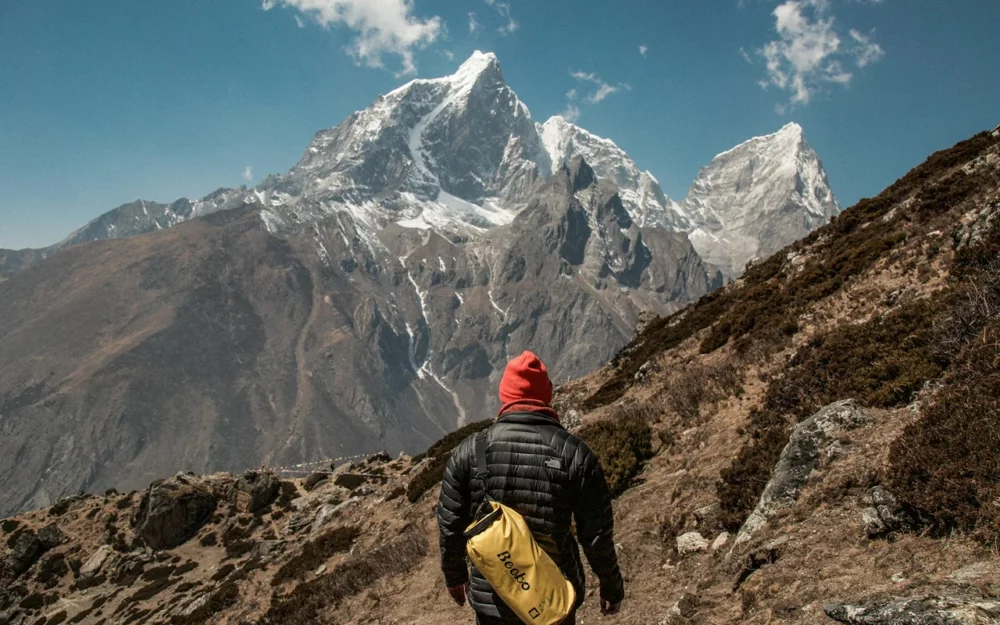
- Witness the tallest mountain in the world, the Everest, and various other tall peaks such as Lhotse, Thamserku, Ama Dablam and Nuptse.
Overview of Everest View Trek
Everest View Trek 7 days is a soul stirring adventure expedition in the Everest region which blends deep cultural richness and adventure. The exhilarating flight to Lukla commences, followed by an airstrip that seems like a daredevil challenge.
The walk from there gives you an opportunity to witness the amazing beauty of the Sagarmatha National Park, a UNESCO World Heritage site, rich with rare wildlife such as the Himalayan tahr and the coloruful Danphe bird.
Namche Bazaar, a lively Sherpa town, welcomes visitors with its warm hospitality and awe-inspiring views of Everest, the world’s tallest mountain. The trek also takes you to Tengboche Monastery, one of the holiest places in the area, a peaceful place to view some of the best surrounding peaks.
The trekkers on the Everest View Hotel Trek encounter ancient monasteries, mountain legends, the unmatched beauty of the Himalayas and retain memories for a lifetime.
History of Everest View Hotel
Everest View Hotel has a nice history of being built in 1971 by the Japanese Everest expedition team. At an incredible 3,880 meters, at an elevation of Syangboche, the hotel was built to accommodate trekkers seeking a place to sleep in between treks and take in the view of Everest without obstruction.
Besides the comfort the hotel provides, the design was also to bring attention to the beauty and potential of the region. The hotel is now a favourite among trekkers, not only for its unbelievable views but also because it has become home to the Himalayas heart.
What to Expect from the Lukla Flight?
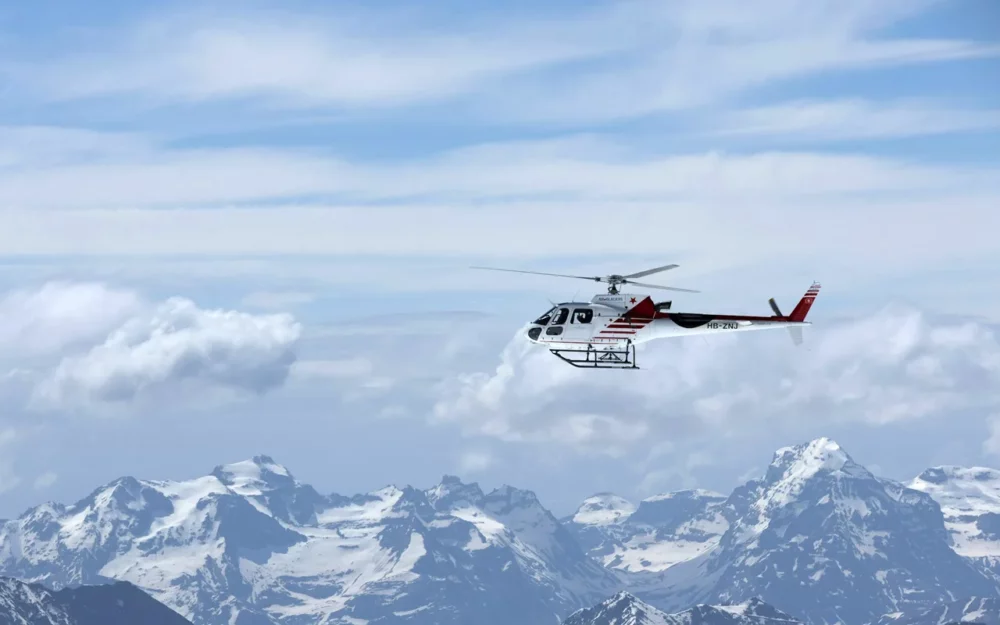
Flying to Lukla is something that will not be easily forgotten, as this trip is considered one of the most thrilling flights in the world. An hour northwest of Kathmandu, Tribhuvan Airport’s runway is endless, opening the door to the plane’s take off, into the dense valleys and towering peaks.
While on the flight, the aerial views of some of the world’s tallest mountains will catch the eyes. You’ll get to see the world’s highest mountain the Everest, together with various other peaks like Lhotse, Nuptse and Ama Dablam.
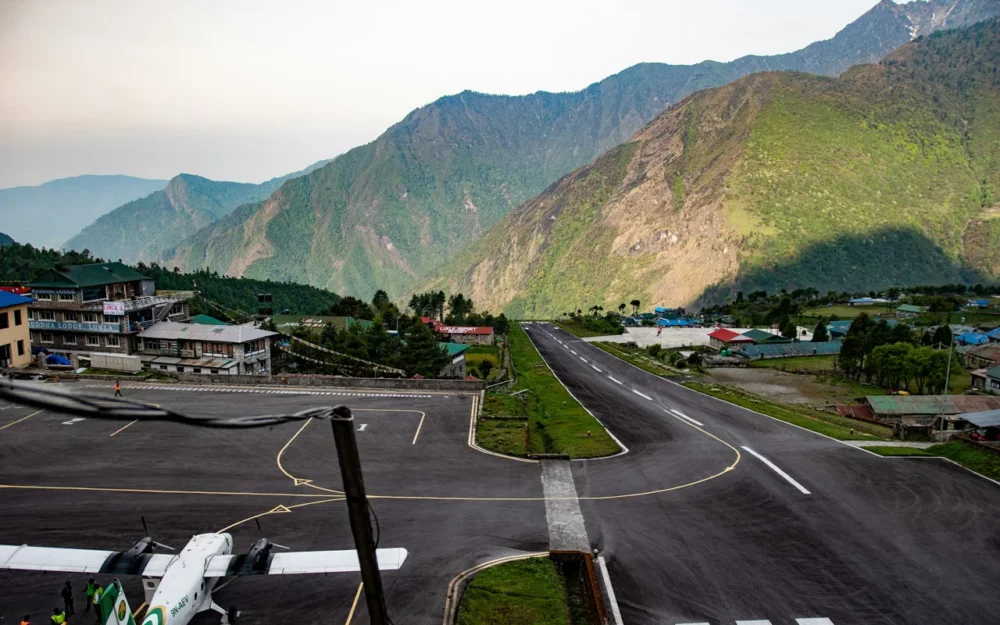
Finally, as you come onto Lukla, the excitement begins, the mini runway is at the end of the mountain with cliffs on each side. The pilot’s skill makes this a safe and a smooth landing, but the landing itself is more of a daring challenge. This is a short flight, which is a taste of the wild Himalayan spirit to come.
Lukla Flight Diversion
Diversions are common in peak seasons of spring and autumn when demand on flights to Lukla is normally high. There are typically around 30 to 35 flights departing from Kathmandu to Lukla each day, however, every flight has only around 15 to 20 passengers capacity because of the relatively small aircraft.
It has a limited capacity enough to cause overcrowding and delays. In such times, flights are diverted to Ramechhap, Manthali airports, which are approximately a 4 to 5-hour drive away from Kathmandu. However, this is an ordinary part of adventure and the journey to Lukla is memorable.
Itinerary of Everest View Trek
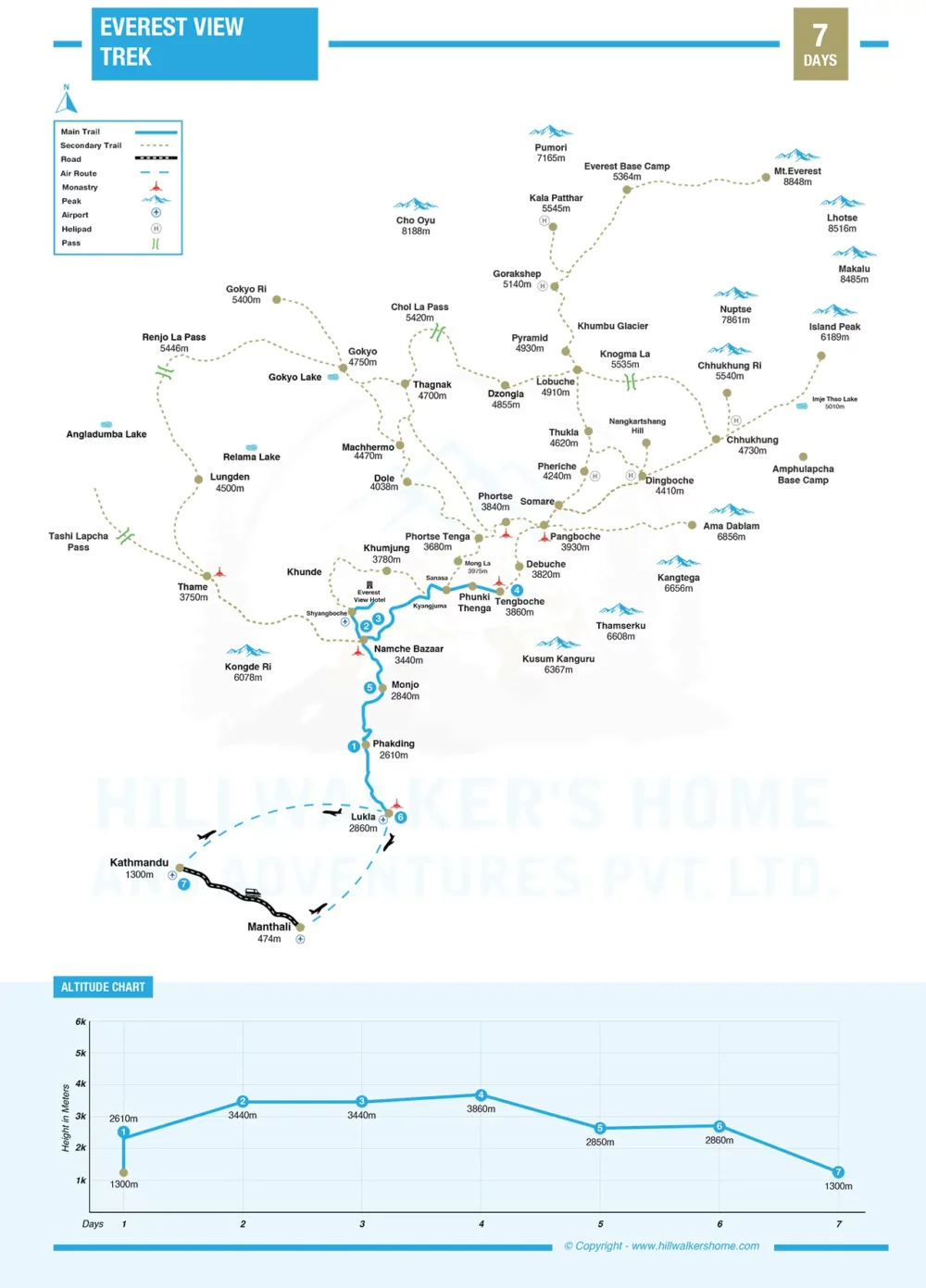
Day 01: Fly from Kathmandu to Lukla, then trek to Phakding
The first thrill of the Everest View Trek 7 Days is our flight from Kathmandu to Lukla, where the runway appears big enough for a plane to land. The excitement is enriched with the mountain fresh air starting to hit you.
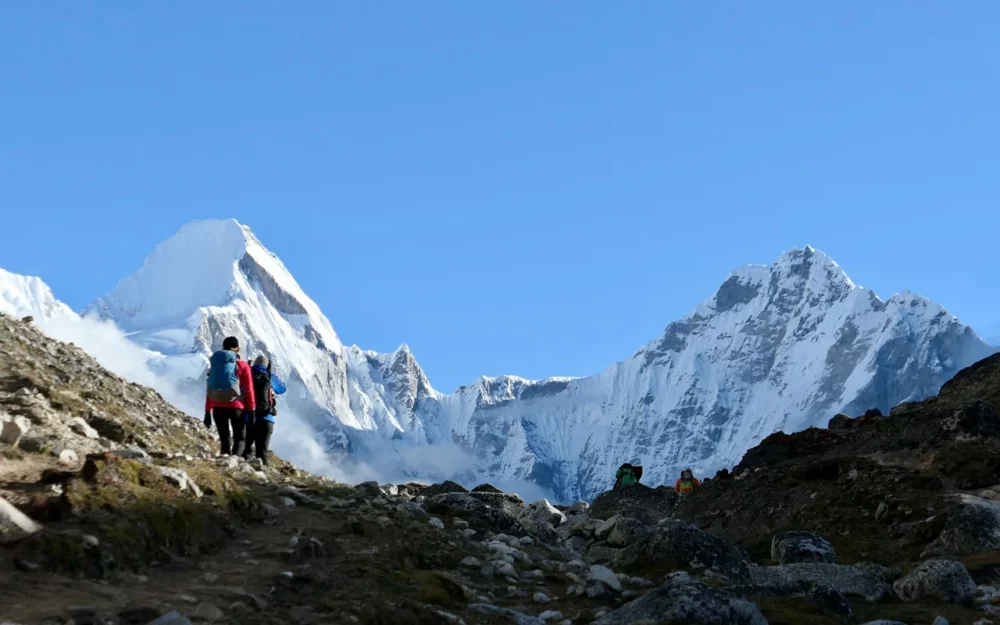
From Lukla, we start our trek to Phakding, passing through Chheplung and the entrance of the Khumbu and Sherpa villages. We watch over us stunning Thamserku, the air feels alive and we cross swinging suspension bridges. From a 3-4 hour walk, we arrive in Phakding tired enough to relax and enjoy the mountains from a cozy teahouse.

Activity
Trek
Accommodation
Guest House
Meals
Breakfast, Lunch, Dinner
Max Altitude
2600mDay 02: Trek to Namche Bazaar
Day 2 is more of a challenge by trekking from Phakding to Namche Bazaar (the hub of the Everest region). Entering Sagarmatha National Park, there is a sense of connection to the wild, wildlife spotted in the form of the Himalayan tahr and the striking Danphe bird.
We ascend gradually and move into the high suspension bridges with the tall peaks of Nuptse and Thamserku looking over us. With a good solid 6 hours of trekking, we reach fiery Namche Bazaar, which feels like the gateway to the Himalayas. You get a first glance at the mesmerizing views of Everest and have a bustling culture of the Sherpa markets.
Activity
Trek
Accommodation
Guest House
Meals
Breakfast, lunch, Dinner
Max Altitude
3440mDay 03: Acclimatization day in Namche
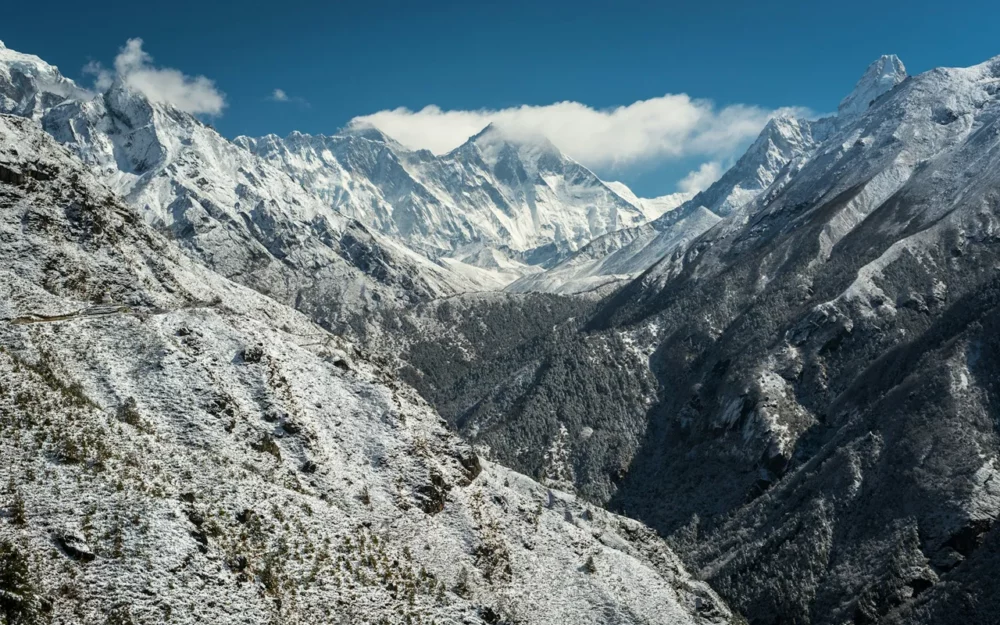
Day 3 is going to be the day of taking it easy and letting our bodies get used to the altitude of Namche. We’re not in a hurry, and so we drive on up to the Hotel Everest View, with a view that is arguably the most spectacular panorama on earth, with peaks like Everest, Lhotse and Ama Dablam in front of us.
Acclimatizing and being one with the beauty of the mountains through this short hike. We go ahead deeper into the local culture as we make our way to the Sherpa museum, where we learn about the Sherpa people, their traditions as well as the legendary expeditions of the past. This is a peaceful day of discovery.
Activity
Rest
Accommodation
Guest House
Meals
Breakfast, lunch, Dinner
Max Altitude
3440mDay 04: Trek to Tengboche Monastery
On Day 4, we traverse towards Tengboche Monastery located at an altitude of 3,867 m, where having spiritual peace is still possible. The trek begins with a fairly easy descent to the Phunki Tenga and then gradually ascends through a beautiful forest of rhododendrons which bloom in full color in spring.
Here, along the way, we cross Dudh Koshi River with breathtaking views of Ama Dablam, Everest and Lhotse. It takes about 5 hours to get to Tengboche Monastery, a serene and sacred spot which is carved beautifully out of the mountain. We rest for the night, taking the time to enjoy the peace and tranquility and the spiritual energy of the place.
Activity
Trek
Accommodation
Guest House
Meals
Breakfast, lunch, DinnerDay 05: Return via Namche to Monjo
On Day 5, we turn our steps toward Monjo and once again pass through the colorful Namche Bazaar. We descend and the air seems lighter, giving us one more view of the towering peaks, Everest and Ama Dablam.
We walk through the Sherpa Villages such as Namche Bazaar, Phortse, and Samtenling, where we will pause to appreciate the beauty of this adventure. We trek for about 7 hours and reach Monjo, a quiet village tucked off the Dudh Koshi River. For the night, we can’t help but to reminisce about the adventure so far.
Accommodation
Guest House
Meals
Breakfast, lunch, DinnerDay 06: Trek back to Lukla
Day 6 will be to make our way back to Lukla, where we started from. It is an easy 4-hour trek and you walk through views of the Dudh Koshi river and familiar landscapes roll out in front of us.
Our route continues through Phakding and we stop to take in the tranquility of the mountains we have travelled through for the last couple of days. As we reach Lukla at last, we are feeling accomplished and are thankful for the trip we have just finished and look forward to last day of our adventure.
Accommodation
Guest House
Meals
Breakfast, lunch, Dinner
Max Altitude
2860mDay 07: Fly back to Kathmandu
On the last day, we fly back from Lukla to Kathmandu and say goodbye to the mountains that will be part of us. On the way back, the flight is just as thrilling, we get one last look at the snow-covered peaks that have been our constant companion.
After landing in Kathmandu, we feel triumphant and achieve knowing that we’ve completed the amazing Everest View Trek 7 Days. We leave with our hearts full and memories that we will always have.
Accommodation
Hotel
Meals
Breakfast, lunch, Dinner
Max Altitude
1350mTrip Information - Good to Know
Best time for Everest View Hotel Trek
When it comes to the Everest View Trek, the best season to climb is during the spring (March to May) and autumn (September to November). Most days in these seasons bring the clearest skies, the best temperatures and the best trekking conditions.
Rhododendrons start blooming in spring with dense landscapes, while autumn offers crisp air and a clear sight of the surrounding mountains. One can find winters too cold and summers too rainy to disrupt trekking conditions.
In spring and autumn, the Everest View Trek is also more accessible and the weather is more stable for an ideal trekking experience for beginners and experienced trekkers alike.
Mountain Peaks from the Everest View Hotel
Trekkers are able to take in awe-inspiring, wide views of some of the world’s most famous Himalayan peaks when on the Everest View Trek. In the sunlight, its snow–covered summit glistens at 8,848 meters, and Mount Everest dominates the skyline.
Lhotse (8,516 meters) with its sharp, steep face, lies near the peak of Everest and Nuptse (7,861 meters) can be seen with its dramatic ridges nearby. The Matterhorn of the Himalayas, Ama Dablam (6,812 metres) rises with its pyramid shape.
To complete a stunning variety of peaks, one can see Thamserku, Kantega, Makalu, and Pumori. This trek is unforgettable because of the views from the hotel, towering mountains at every turn.
Wildlife and Plants in the Everest View Trek
The flora and fauna of the Everest region are indeed diverse and the Everest view trek allows a brilliant momentary peep into it. To the lower elevations, dense rhododendron forests and pine trees predominate, followed at higher elevations by juniper shrubs and alpine meadows.
You can also spot a Himalayan tahr, a goat type animal and birds like Danphe (Himalayan pheasant). Marmots and several species of monkeys can also be spotted, together with rare animals like snow leopards and red pandas.
Sagarmatha National Park is a UNESCO World Heritage site that protects the natural beauty and wildlife of this pristine Himalayan ecosystem and the trek leads trekkers through the park.
Difficulty and Preparation
Everest View Trek is of moderate-level trek, which can be done by all those with a reasonable fitness level. The trek comes with altitudes to be climbed too but the route is not that difficult compared to other Everest treks.
Namche Bazaar has a few acclimatization days that lower the risk of altitude sickness. The trek itself is not technically difficult, but it requires stamina as it entails walking on uneven and rocky terrain for several hours a day.
Cardiovascular exercises, such as hiking and running, and leg strength training should be done for trekkers. Other things that will ensure a good trip is to include good gear, hydration and a positive attitude.
Essential Permits for the Everest View Hotel Trek
Two main permits are required for trekkers to trek Everest View Hotel Trek. One is the Sagarmatha National Park Permit which allows entry into the Sagarmatha National Park (Mount Everest, other peaks). This permit is easily obtained at Nepal Tourism Board in Kathmandu or at the park entrance in the village of Monjo on the trekking route.
The second permit necessary is the Khumbu Pasang Lhamu rural municipality permit. It takes care that the funds of trekkers go for constructing and developing the nearby infrastructure, as well as helping to conserve the area. The two permits are necessary for a legal and smooth trekking experience in the region.
Cultural Meetings Along the Trail
The Everest View Trek that grants you a chance to meet the Sherpa people whose lives and culture are synonymous with the mountains. The trekkers along the trail pass through Sherpa villages which they can interact with the locals and know about their traditions.
The encounters often include visits to ancient Buddhist monasteries, namely the Tenboche Monastery and being able to indulge in traditional ceremonies and listen to Sherpa history and spiritual traditions.
There is something special in the Sherpa’s hospitality and great connection to the mountains that makes the trek not only about the walking, but also a part of getting closer to the culture.
Tea Houses and Food on the trek
The Everest View Trek passes through tea houses that are a wonderful place to stop for a rest, time to refuel and to enjoy the genuine Sherpa hospitality. The tea houses are normally simple and basic with amenities like a bedroom, a washroom and Wi-Fi needing to be shared.
Good thing about the tea house is the communal dining area, where you can meet up with fellow trekkers on the route and share stories and experiences.
Hearty meals of dal bhat (lentil soup and rice), momo (dumplings), and Tibetan bread round off the development by offering a taste of the local cuisine at these cozy lodges.
It also provides Western staples such as pasta, noodles and pizza in its menus. The food is plain, but nourishing, to provide one with energetic energy for the climb. Additionally, hot drinks, tea, coffee and hot chocolate are available from the tea houses, which make for a nice warm break when the cold Himalayan days.
Travel Insurance for the Everest View Trek
Everest View trek involves travel insurance since it covers for emergency cases, accidents and trip interruption. Medical coverage for high-altitude treks should be included (such as in case of altitude sickness or injury) as well as trip cancellation coverage in case some unforeseen circumstances occur.
So, it is imperative to buy a policy that covers the risks inherent to trekking in remote high altitude areas. However, many companies do offer insurance plans with trekking, so actual trekkers do not need to worry while they set foot onto this new adventure in the rugged Himalayan terrain.
Trip Add-ons
There are a few trip add-ons that can bring up the Everest View Trek experience. The Everest Helicopter Tour is one of the popular add-ons for trekkers who can enjoy the majestic mountains from above.
Alternatively, you can take a step further and reach for the Everest Base Camp Trek where u get the best aerial view of the entire Himalayan range.
For adventurous and experienced trekkers, they can try on the Everest Three Passes Trek, which leads through Kongma La Pass, Renjo La Pass and Cho La Pass.
Experiencing cultural immersion, one can take the guided tours to ancient Buddhist monasteries and Sherpa villages to learn more about the region’s history and spirituality. These make the trekker’s adventure more memorable as it can be more than just convenient, but also more exciting.
Frequently Asked Questions
How much does the Everest View Trek 7 Days cost?
Flights, permits, guide & porter fees, accommodation and meals are included in the usual 7 day trek that usually ranges from $900 to $1,200 per person. The cost will differ based on group size, other factors like whether private rooms or upgraded meals are arranged among other things.
Can I charge my phone or camera along the way?
There are charging stations at most of the teahouses along the trek but they will normally charge you a small fee. If you are going to rely on your devices, bring a power bank or solar charger, for sure, out of consistent power anywhere at higher elevation.
Are there ATMs or card payment options on the trail?
Beyond Lukla there are no ATMs, and card payments are almost non existent on the trail. When trekking in the Himalayas, it is another important thing to keep in mind, you will need to have enough cash to cover snacks, tips, Wi-Fi and other personal things along the way, so it’s important to withdraw enough cash in Kathmandu before your trek.
What kind of toilets should I expect?
You will find different types of toilets. In town’s of lower elevations like Namche, you’ll even find Western toilets, the rest of the altitude will be squat toilets. It is important to bring toilet paper and hand sanitizer since some places don’t have these things.
What should I pack for the Lukla–Tengboche trek?
To prepare for the trek, the important items to pack would be a sturdy pair of trekking boots and multiple clothing layers. A daypack, water bottle, a headlamp and hiking poles will be necessary. Also, don’t forget to carry sunglasses, a first aid kit, a camera and take along some snacks to capture the mesmerizing views.
Trip Reviews
 Write a Review
900 US$
Group Discount Price
-
1 -
1 person
US$ 950
-
2 -
6 people
US$ 900
-
7 -
14 people
US$ 875
-
15 + people
9999
US$ 800
Total Cost:
US$ 950


How to book a trip?

make free inquiry

