


Trip Duration
14 Days
Group Sizes
1-16 People
Transportation
Land Transportation
Destination
Nepal
Activities
- Trekking

Difficulty
Difficult
Meals
- 13 Breakfast
- 12 Lunch
- 12 Dinner

Accommodation
- Hotel
- Guest House
Trip Highlights
- See the world’s highest summit Mount Everest from close, from the best viewing points such as Kala Patthar.
- Trek through different landscapes such as lush forests, glacial valleys, rugged alpine trails etc.
- Watch the spiritual magnificence of Tengboche Monastery in front of that splendid Himalayan view.
- Traverse through stunning Sherpa culture in traditional mountain villages such as Namche Bazaar and Pangboche.
- View the awe-inspiring sunrise and sunsets over the peaks of Lhotse, Ama Dablam and Nuptse.
- Take an adventurous route where you will challenge yourself as you summit to over 5,500 meters.
- Explore Sagarmatha National Park, a UNESCO World Heritage site abundant in flora, fauna and nature’s beauty.
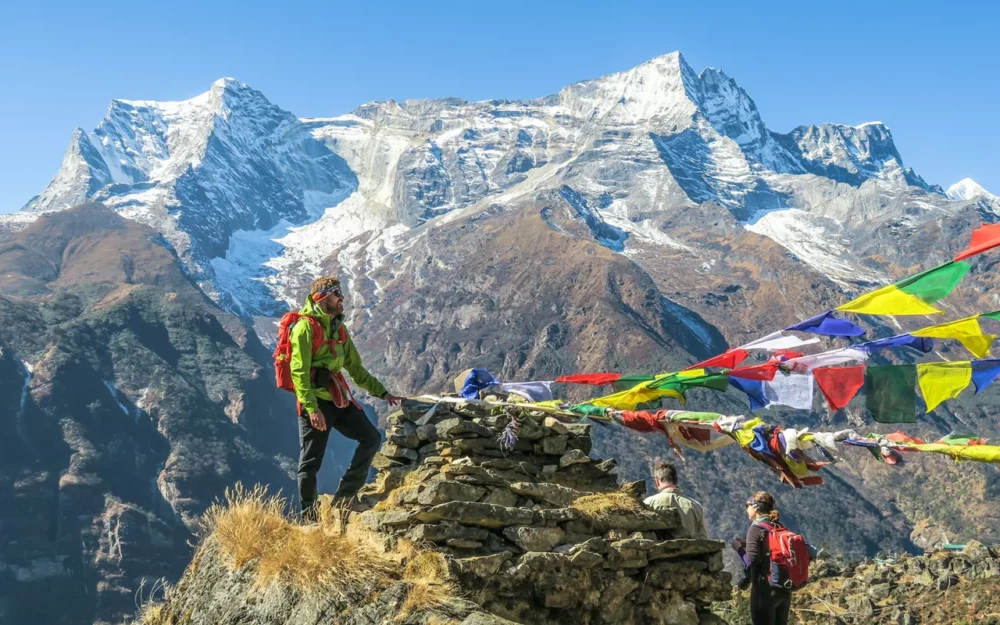
- Cross crossing iconic suspension bridges draped in colorful prayer flags during which you can capture unforgettable moments.
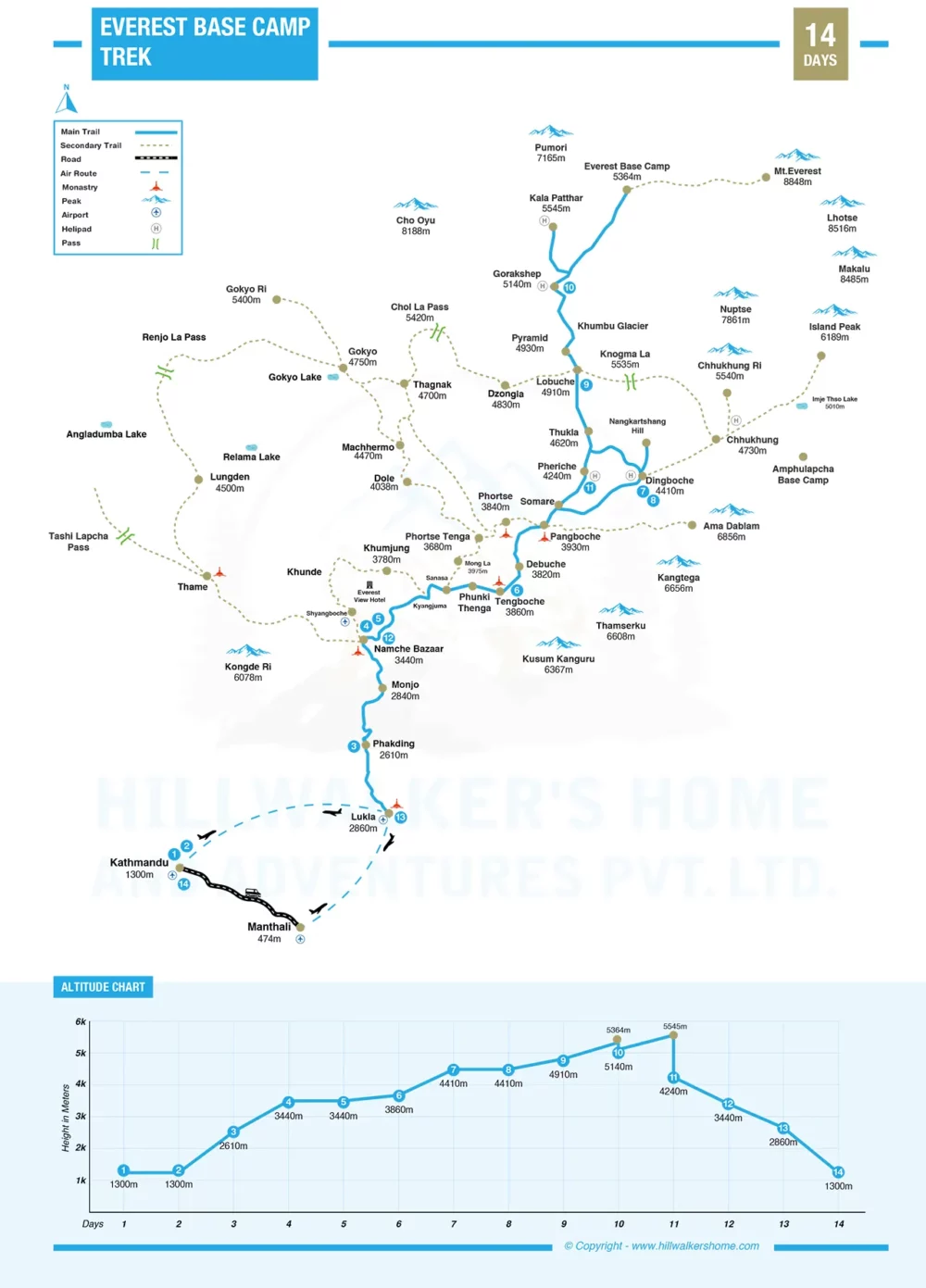
Overview of Everest Base Camp Trek | 14 Days
Everest Base Camp Trek is one of the most revered trekking adventures in the world. It attracts thousands of trekkers to the mountains every year, particularly to the Everest region.
The adventure takes you to the foot of the world’s tallest peak (8,848m), Mount Everest, passing through dramatic landscapes, passing through ancient Sherpa villages and passing by great monasteries.
Beginning from Lukla, the track goes through rich forests, high elevation fields, and views which come at Kala Patthar where you could get an awesome perspective of the dawn of Everest from here.
The trek is the very epitome of a cultural and spiritual experience. The EBC Nepal Trek is a life-affirming trip into the soul of the mountains whether you are chasing a lifelong dream or an escape that will transform you one way or another.
Itinerary of Everest Base Camp Trek | 14 Days
Day 01: Arrival in Kathmandu (1,300m)
When you land at Tribhuvan International Airport in Kathmandu, you will have the delightful experience of landing in the capital city of Nepal, Kathmandu. The air is different, it is fresh with excitement.
Our representative will pick you up and take you to your hotel where you have the option of resting or taking a walk through some nearby streets. But if you have time there is also a famous area like Kathmandu Durbar Square and beautiful Boudhanath Stupa.
Kathmandu is full of historical and cultural spots, some of which are even listed in UNESCO World Heritage Sites. You could also stroll in Thamel and try out traditional Nepali dinner like Dal bhat which also allows them the opportunity to meet other travelers.

Accommodation
Hotel
Meals
Lunch
Max Altitude
1300mDay 02: Trip Preparation and Rest Day
Today is knowing how to get ready as well as about staying out of the way. You will check your gear, buy whatever you forgot and be sure you have the proper permits. Thamel, full of tourists, is fun to experience last minute shopping, coffee shop visits or simply enjoying the vibe.
There are also people who go to visit nearby heritage sites such as Pashupatinath Temple or Swayambhunath (Monkey Temple). Later in the evening, you will allow your body to start adjusting to the higher elevation you will be soon facing, and allow you to enjoy the city before heading to the mountains.

Activity
Rest
Accommodation
Hotel
Meals
Breakfast, Dinner
Max Altitude
1300mDay 03: Fly to Lukla (2,840m) & Trek to Phakding (2,610m)
Starting the actual trek today, you will take a short and unforgettable early morning flight to Lukla. The snow-covered peaks straight across the horizon are stunning from the plane.
On the first day, after reaching Lukla, we make our way to Phakding through a downhill route. On the way you will be crossing swinging suspension bridges, passing through small villages and forests.
On the way you can see prayer wheels, Mani stones and prayer flags in color. After around 3 to 4 hours of walking, you will arrive at Phakding, a settlement by the river where you will rest.
Activity
Trek
Accommodation
Guest House
Meals
Breakfast, Lunch, Dinner
Max Altitude
2610mDay 04: Trek to Namche Bazaar (3,440m)
Today it is a bit more challenging, but the views make it worthwhile. Traversing several high suspension bridges, the trail traverses through the Dudh Koshi River finally ending at Hillary Bridge.
The pine forests and small villages come past you as you walk. When you go into the Sagarmatha National Park, the trail becomes steep. With clear weather, you will get your first glimpse of Mount Everest.
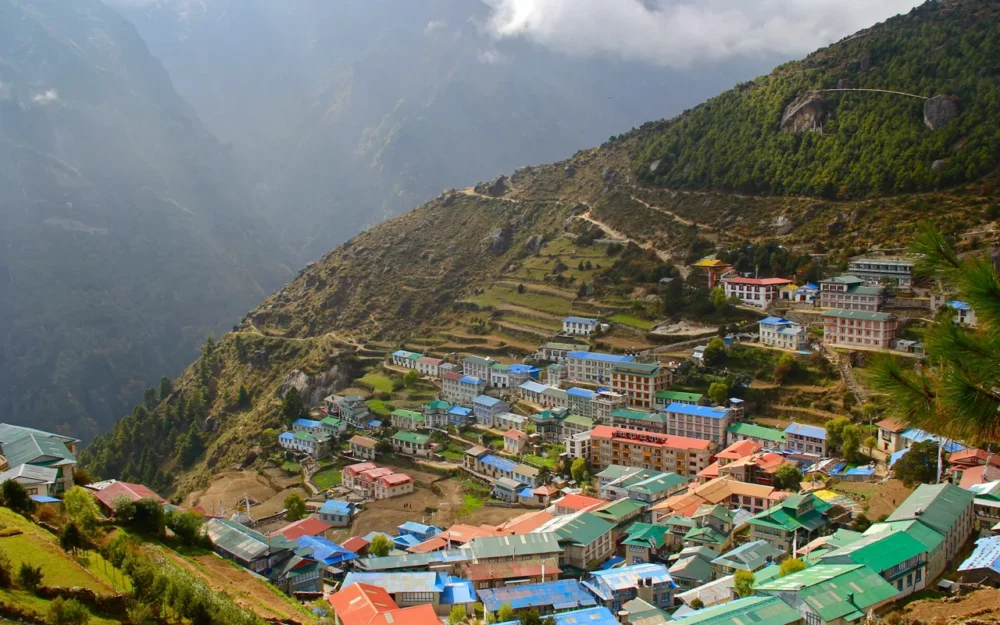
Finally, when you arrive at Namche Bazaar, you will find yourself in a lively mountain town with bakeries, shops, and some amazing mountain views. It’s a good place to restore and ready yourself for the days to come.
Activity
Trek
Accommodation
Guest House
Meals
Breakfast, Lunch, Dinner
Max Altitude
3440mDay 05: Acclimatization Day in Namche Bazaar
You won’t be going to a new place today. But this day is very significant in order to enable your body to acclimatize to the height. In the morning, most trekkers shorten their hike and make it to the Everest View Hotel where one can enjoy beautiful views of Mount Everest, Lhotse, Ama Dablam and other peaks.
You can also visit the Syangboche airstrip or Khumjung village on the way. While you are acclimatizing you are still enjoying the mountains. In the afternoon it is possible to relax in one of Namche’s cozy cafes, visit the Sherpa Museum or just wander around the market.
Activity
Rest
Accommodation
Guest House
Meals
Breakfast, Lunch, Dinner
Max Altitude
3440mDay 06: Trek to Tengboche (3,860m)
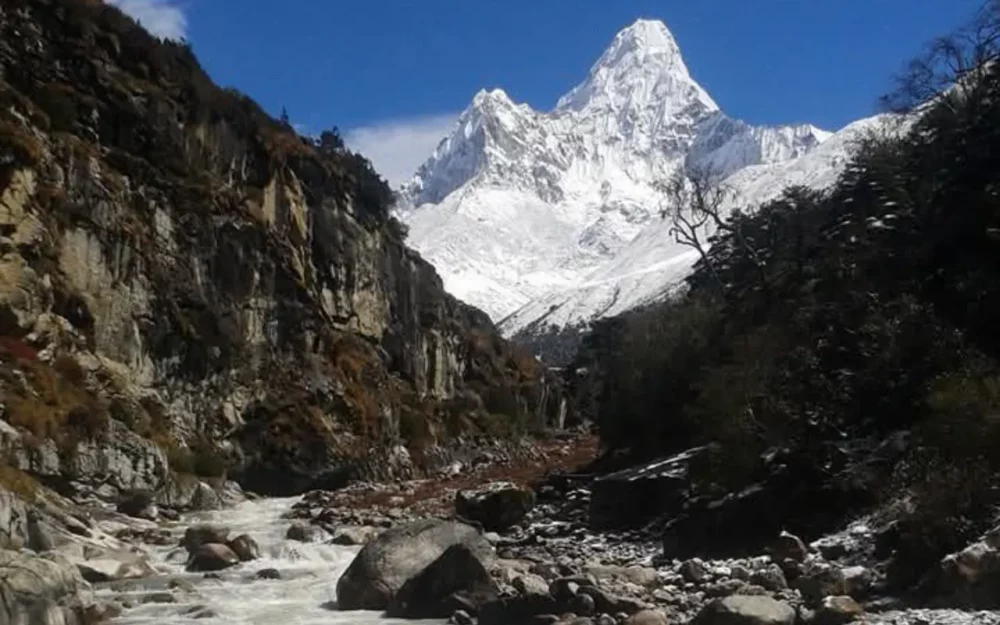
Today’s trail is filled with natural beauty and a chance at cultural experiences today. The beginning of the walk is gently up and down across pine forests with excellent views of mountains, including Ama Dablam.
From the Dudh Koshi River, the trail crosses a suspension bridge and moves to steady climb to Tengboche. Upon your arrival, you’ll find the largest monastery in the locale, namely the Tengboche Monastery.
If you are lucky, you can see the surrounding stunning Himalayan peaks and witness a prayer ceremony. The views of sunrise and sunset are definitely magical and unforgettable here.
Activity
Trek
Accommodation
Guest House
Meals
Breakfast, Lunch, Dinner
Max Altitude
3860mDay 07: Trek to Dingboche (4,410m)
Forests, open valleys and rushing rivers are something you pass along the route to Dingboche. After Tengboche, you will descend to Debuche and cross the bridge once more. You will be passing through chortens, Mani walls, and prayer flags all going their way.
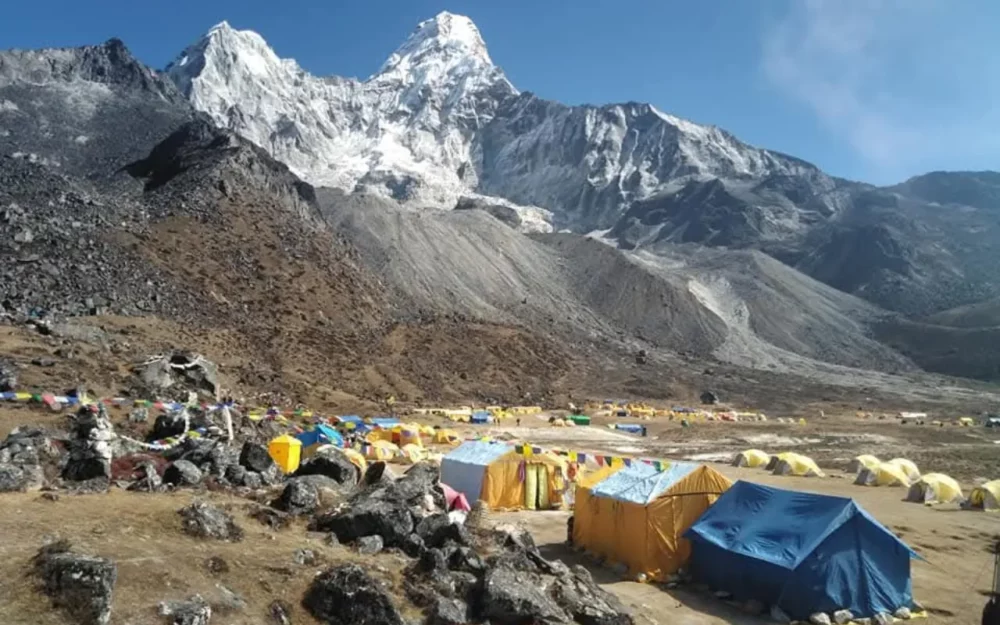
You shall also have close up sights of mountains like, Lhotse, Ama Dablam and the Island Peak. The trail gradually gets broader and broader, and you will find yourself in Dingboche, a peaceful village encompassed by gorgeous fields and stone walls. Dingboche is an open location which gives you beautiful wide views as well as a relaxed place to stay.
Accommodation
Guest House
Meals
Breakfast, Lunch, Dinner
Max Altitude
4410mDay 08: Acclimatization Hike to Nangkartshang Hill
We have our next acclimatizing day at Dingboche as our body will be adjusting to the higher altitude. You’ll take a steep but rewarding walk to Nangkartshang Hill, which is around 5,100 m high.
The direction takes the trail above Dingboche where the views are nonstop of mountains like Makalu, Lhotse and Ama Dablam. As you go up, the landscape opens up and perhaps you will see eagles flying high above.
Apart from acclimatizing, this hike will leave you with a feeling of accomplishment. Back in Dingboche you will rest and prepare for the next part of the trail.
Activity
Hike
Accommodation
Guest House
Meals
Breakfast, Lunch, DinnerDay 09: Trek to Lobuche (4,910m)
Todays’ trek is a bit deeper into the mountains as you move along a rocky trail, which has magnificent views of the snow covered mountains. You will go through the village of Dughla, where many of the trekkers have lunch and take a steep ridge to Thukla Pass.
This pass has memorials to the climbers who have lost their lives on Everest and is a moving and powerful moment of reflection. Further on, the landscape gets desolate but the views of Lobuche Peak and Khumbu Glacier are spectacular. By afternoon you will reach Lobuche, a small village where you will rest the night before you have a big day tomorrow.
Accommodation
Guest House
Meals
Breakfast, Lunch, Dinner
Max Altitude
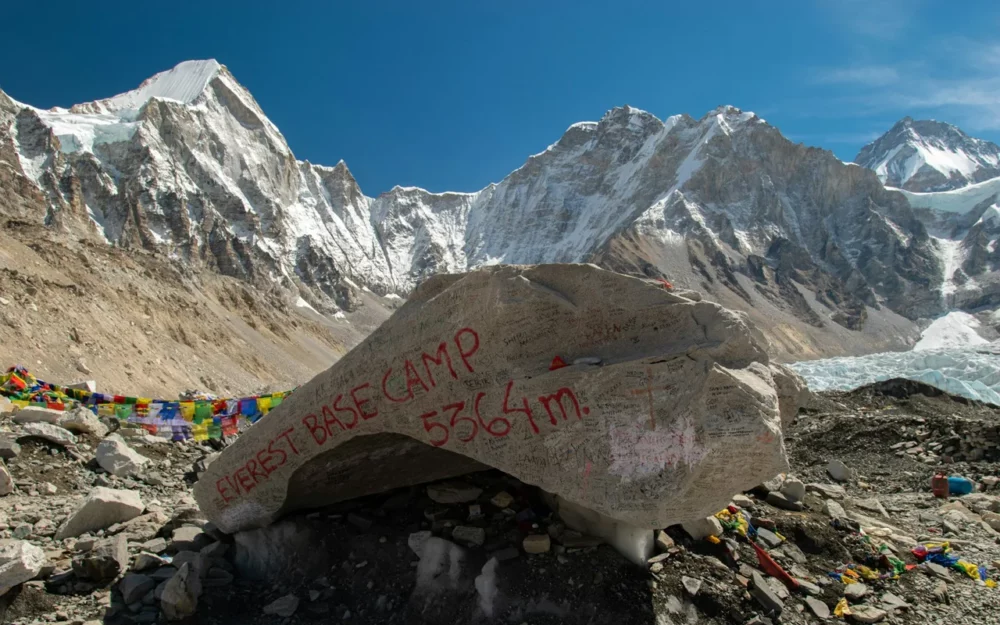
4910mDay 10: Trek to Everest Base Camp (5,364m) & Return to Gorakshep (5,140m)
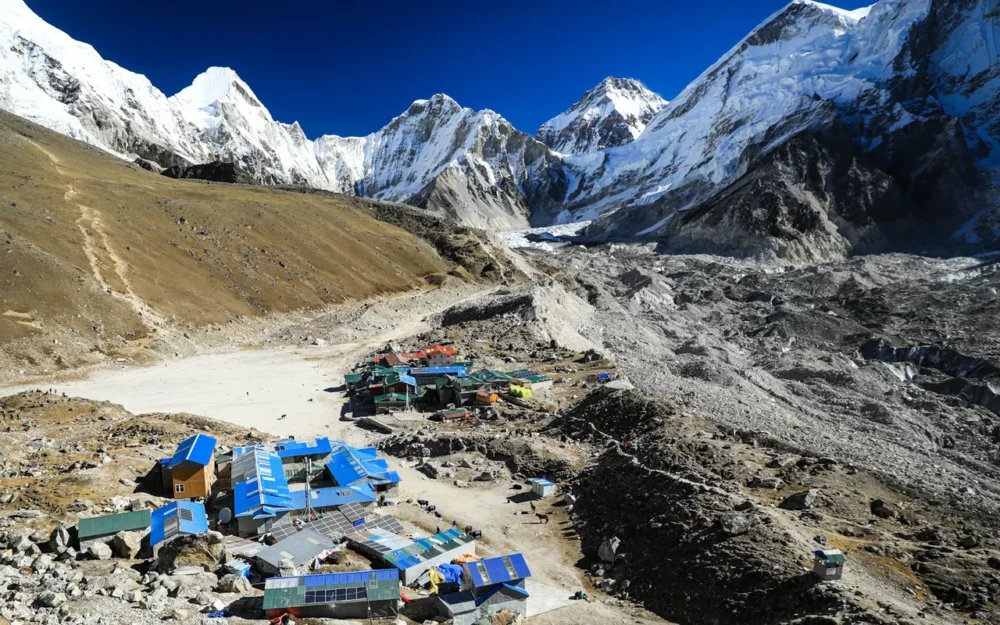
This is the most exciting, one of the most emotional days of the trek. The walk to Gorakshep is the start of the trip on this trek and also the last settlement before Base Camp. During your short rest you’ll take in the beautiful view and then trek a rocky path beside the Khumbu Glacier.
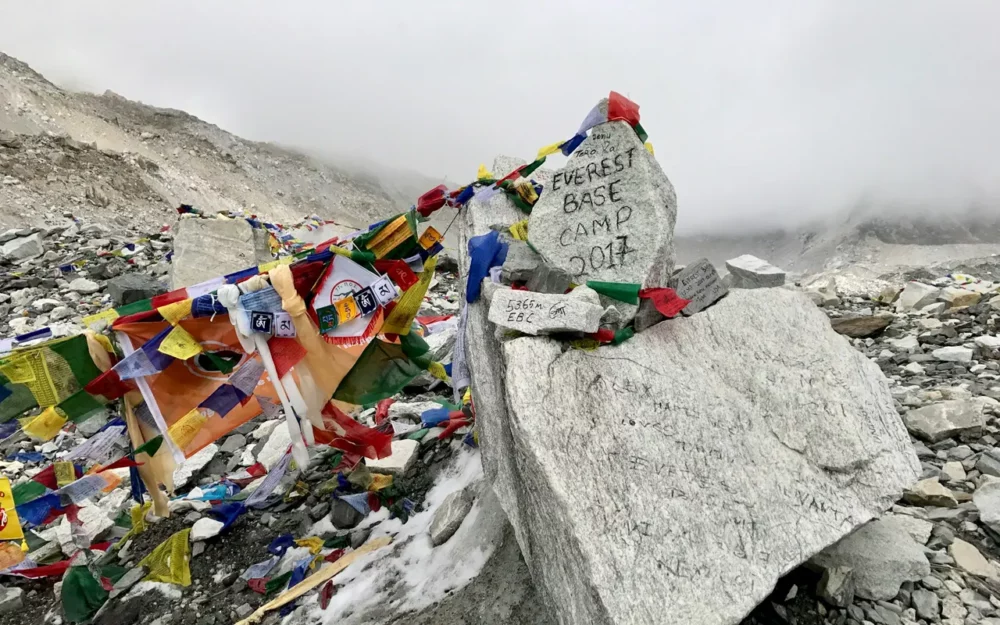
The trail is a challenging one but very rewarding when you arrive at Everest Base Camp and the climbers make their preparations to attempt the summit. You can climb up, you can take pictures, you can explore the area and just sit and soak in the moment of being under the foot of the world’s tallest mountain.
After some time spent here, you return to Gorakshep for the night, having memories that you won’t soon forget.
Activity
Trek
Accommodation
Guest House
Meals
Breakfast, Lunch, Dinner
Max Altitude
5140mDay 11: Hike to Kala Patthar (5,545m) & Trek to Pheriche (4,240m)
The most iconic view of Mount Everest can be seen from Kala Patthar after an early morning hike. The climb is steep, and cold, but the sunrise lighting up Everest, Nuptse and the surrounding peaks is absolutely magical.
For most trekkers, this is the best spot to see Everest close up. After taking in the view and having the photos snapped, you will descend to Gorakshep for breakfast and then have to trek downhill to Pheriche.
It will be much easier walking than going up, and as you lose altitude, you will have your energy back and have the pleasure of seeing the Himalayas from a new angle.
Activity
Hike
Accommodation
Guest House
Meals
Breakfast, Lunch, Dinner
Max Altitude
4240mDay 12: Trek to Namche Bazaar (3,440m)
Today you’ll trek back towards Namche Bazaar through alpine countryside, passing over a number of suspension bridges. On the trail you are going through familiar villages, Pangboche and Tengboche where you can think about how far you have gone.
If you have time, you can visit the Tengboche Monastery again and view the broad mountains once again. While going deeper you will feel the air thicker and your body stronger. Back in Namche you can relax in a warm teahouse, grab a good meal and perhaps even treat yourself with a celebratory cup of coffee or cake.
Activity
Trek
Accommodation
Guest House
Meals
Breakfast, Lunch, Dinner
Max Altitude
3440mDay 13: Trek to Lukla (2,840m)
You will retrace your steps to Lukla today. It’s a much easier and faster descent than the climb. You will cross suspension bridges, pass through familiar villages and forests and look up to the looming peaks, one last time.
Trek will be completed in 6 to 7 hours and once in Lukla, you can relax and reflect on the trek well before you head back home. The period of relaxation and celebration of your achievements is a good period to do that.
Activity
Trek
Accommodation
Guest House
Meals
Breakfast, Lunch, Dinner
Max Altitude
2840mDay 14: Fly to Kathmandu (1,300m)
On the last day, you will take a brief but nice flight from Lukla to Kathmandu. When flying back to the capital you get such stunning views of the mountains. Once you get to the airport, you will be taken to the hotel of your stay or the final shopping. It is the end of your Everest Base Camp Trek.
Accommodation
Guest House
Meals
Breakfast, Lunch, Dinner
Max Altitude
1300mIncludes/Excludes
What's included?
- 3-star hotel stay during your time in Kathmandu, on a twin-sharing basis.
- Nightly stay in tea houses for the entire duration of the trekking days.
- Breakfast, lunch, and dinner are provided for the entire duration of the trekking days.
- Farewell dinner at the end of the trek.
- Breakfasts during your stay in Kathmandu.
- Water purification tablets during the trekking days.
- Pick up and drop off at the Tribhuvan International Airport.
- Flight to and from Lukla.
- The daily wages of the guides and porters who will help you complete this trek.
- For a group of 7 people or fewer, 1 guide will be allocated; any additional trekkers will require 2 guides.
- Insurance fees for the guides and porters.
- Sagarmatha National Park Permit
- Pasang Lhamu Rural Municipality Permit
- TIMS (Trekkers’ Information Management System)
- Local taxes included in everyday expenses will be covered.
What's not included?
- Visa fees upon arrival at the Tribhuvan International Airport in Kathmandu, Nepal.
- Personal expenses such as hot shower fees, WiFi fees, laundry bill, device charging fees, rented gear, shopping, drinks, and more.
- Extra meals and additional accommodation.
- Tips for the guides, porters, and drivers.
- Personal travel and medical insurance.
- Emergency evacuation services.
- Any expense not mentioned a part of the Everest Base Camp Trek 14 Days Package.
Trip Information - Good to Know
Best Time to Trek to EBC
The recommended times for Everest Base Camp Trekking (EBC) are spring (March to May) and autumn (September to November). Everest and the surrounding peaks are at their best and the clearest skies, most stable weather for climbing are found in these seasons.
Rhododendrons bloom in spring, while cool autumnal air and some cultural festivals, such as Mani Rimdu, also speak of the region. Due to these conditions, trekking is safe and photography is better.
The rainy season is summer (June to August), when rain is heavy and trails slick, and visibility is bad; the cold season is winter (December to February), when temperatures are extreme and snow falls, though the trails are quiet.
To enjoy the best of Everest Base Camp Trek, plan a spring or autumn visit, when lodges are open, flights are more reliable and where trail conditions reward a rewarding journey.
Difficulty and Fitness Level of Everest Base Camp Trek
Mount Everest Base Camp Trek is a challenging adventure for good physical fitness and mental stamina as well as preparation. Foot traffic is more than 130 km, sometimes walking 5 to 7 hours per day over steep inclines, rocks and high altitudes. The trek is on levels higher than 5,500 meters that enhances fatigue and oxygen deficiency.
However, prior mountaineering experience is not required and trekkers can gain benefits from cardio exercises (running, swimming, and cycling), leg-building exercises, and hiking practice using a backpack.
Mental readiness is also no less important, such as expecting unpredictable weather and basic conditions. EBC Nepal Trek is possible with proper training in advance. If you are a beginner then start training 2 to 3 months before the trek so that the trek becomes both smooth and enjoyable.
Altitude Sickness and Acclimatization
Everest Base Camp Trekking has altitude sickness as a real concern above 3,000 meters because of declining oxygen levels. The common symptoms are headaches, nausea, fatigue, and dizziness.
A major aspect to avoid Acute Mountain Sickness (AMS) is the proper acclimatization. Almost all EBC Nepal itineraries have rest days, Namche Bazaar (3,440m), the most common, and Dingboche (4,410m) are a couple of places where you will spend a few days acclimatizing.
To reduce your risk, avoid alcohol, eat well, stay hydrated, trek slowly, and so on. Preventive medication for AMS is available for some trekkers and they carry Diamox.
The Guides are specifically trained to monitor symptoms and give oxygen if required. Never ignore the signs, lack of it can put you at the risk of High Altitude Pulmonary or Cerebral Edema, both serious concerns, so always prioritize safety and rest when required.
Essential Permits for the EBC Trek
Getting two mandatory permits is required for Everest Base Camp Trekking.
The first is the Khumbu Pasang Lhamu Rural Municipality Permit for NPR 2,000 ($15) which can be collected in Lukla or Monjo. The second is the Sagarmatha National Park Entry Permit costing NPR 3,000 ($25) is available in Kathmandu or Monjo.
These allow local conservation and community development. If you have travelled by way of any registered agency, they will usually do the paperwork for you. While for most regions the TIMS card is required, for EBC it has been replaced with the municipal permit.
Checkpoints are throughout the Everest Base Camp Trek and so you should always carry several photocopies of your passport and permits.
Flora and Fauna on the Everest Base Camp Trek
While the EBC Nepal trek achieves its notoriety mostly for the incredible mountain views, don’t discount its biodiversity. You will ascend through different ecological zones as you go up. Further down, particularly in the vicinity of Lukla and Phakding, there are lush forests of rhododendrons, birch, pine and juniper.
Himalayan tahr, musk deer, pikas and the very elusive snow leopard all make the habitat their home. The forests are also home to a variety of bird species, Danphe (Nepal’s national bird) blood pheasants, and Himalayan monals.
This vegetation thins up to alpine shrubs and finally the barren, glacial terrain as altitude increases. It is this natural transformation that makes the trek every step a combination of Himalayan wilderness and wonder.
Cultural Experience during the Trek
With a challenging adventure, the Mount Everest Base Camp Trek has an equal cultural adventure. Local Sherpa villages like Namche Bazaar, Tengboche and Pheriche have you walking through them, where the traditional Buddhist lifestyle is still being upheld.
Prayer flags adorned on monasteries, mani wheels spinning and intricate thangka paintings give deep divine insight. A spiritual highlight is the Tengboche Monastery with Everest as its backdrop.
Sacred rituals may be witnessed and trekkers may be able to catch festivals such as Mani Rimdu, danced with masked dances and chants. Locals, who have been welcoming visitors all these years with warmth and tales that they have passed down through their generations.
Unlike other countries, a part of their lives can truly be felt through touring a Sherpa home or experiencing chants of spirits resonating in the mountains.
Food and Accommodation Along the Route
The Mount Everest Base Camp Trek has accommodation and food that are basic but satisfying. The main type of accommodation is a teahouse that offers warm meals and simple rooms with twin beds, blankets and shared bathrooms. Some lodges in lower villages can have hot showers and WiFi (for charges).
Hearty dishes like dal bhat (rice, lentil soup, vegetables), momos (dumplings), noodle soups and pasta are usually eaten. The farther up you travel, the more variety can disappear, and the prices increase as transportation gets challenging. There is also a wide availability of teas, hot chocolate, and energy snacks.
The modest tea houses seen along the trail serve the purpose of uniting trekkers and provide a warm place to retire following a long day. It is also recommended to pack snacks and a reusable water bottle with purification tablets.
Travel Insurance for Everest Base Camp Trek
Since the Everest Base Camp Trekking is in a remote location, there are altitude risks and the weather can be very unpredictable, one needs to get travel insurance while going there. The only rapid rescue option in emergencies is a helicopter, so emergency evacuation coverage is necessary to 6,000 meters as a minimum.
Just make sure it also covers altitude sickness, trip cancellations, flight delays, lost or damaged gear and so on. In Nepal, medical costs are upfront and the fees for evacuation can be expensive without insurance.
Furthermore, Lukla Airport is notorious for delays due to weather, so missed connection and extension of stay coverage is very appreciated. Ensure your policy includes high altitude trekking before buying and always bring a copy of it with you.
Frequently Asked Questions
What kind of power options are available during the trek?
Charging facilities are also offered by most teahouses with the help of solar or generator power. Usually, charging is for each device. Pack a power bank or solar charger as a backup since electricity could be restricted in higher altitudes.
How cold does it get on the Everest Base Camp Trek?
At night, above 4,000 meters, temperatures can go down to -10°C or lower. When sunny days are mild, it is generally so. This is comfort and safety, period and you will need a quality sleeping bag and proper layering.
Can I use my phone on the Everest Base Camp trek, and what’s the network coverage like?
In some areas, especially village areas, there are some mobile networks like Ncell and NTC. Coverage is spotty higher up. There are tea houses with Wi-Fi for a fee but Wi-Fi may be slow or unreliable in out of the way regions.
Are there any ATMs or card payment options on the Everest Base Camp trek?
In Namche Bazaar you can find ATMs but they are not reliable. Enough Nepalese Rupees may be carried from Kathmandu. Apart from these first few days, there’s nothing else and in case, most of the shops and lodges only accept cash and the option of card payment is absolutely zero.
What kind of gear is available for rent in Kathmandu or Lukla?
In Kathmandu, you can also rent some of the gear such as sleeping bags, down jackets, trekking poles and duffle bags. Lukla has limited rental options. Renting is great for occasional trekkers who just need a pair of trekking boots, for example.
Do I need a guide or porter for the Everest Base Camp trek?
Having a guide or porter is not essential, but it is safer, helps the local economy, as well as takes stress off your body. They also aid with navigation, cultural thinking, and assist in altitude associated difficulties.
Trip Reviews
 Write a Review
1250 US$
Group Discount Price
-
1 -
1 person
US$ 1500
-
2 -
6 people
US$ 1250
-
7 -
14 people
US$ 1200
-
15 + people
9999
US$ 1100
Total Cost:
US$ 1500


How to book a trip?

make free inquiry

